


The morning of August 13, 1977, will forever be etched in the annals of British history as the day the National Front's extremist ideology was met with fierce resistance in Lewisham, London. The clash between the far-right National Front (NF) and anti-fascist demonstrators culminated in 214 arrests and at least 111 injuries, marking a pivotal moment in the UK's struggle against fascist ideologies.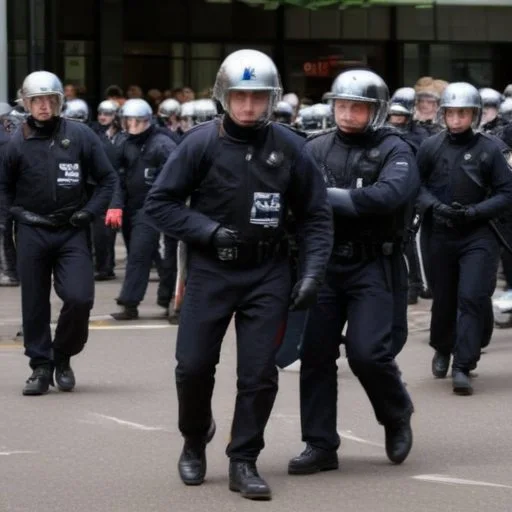
In the early 1970s, the National Front capitalized on growing discontent among Britons, fueled by economic uncertainty and immigration anxiety. Founded in 1967, the NF sought to promote a white nationalist agenda, gaining momentum among disaffected working-class voters. By 1977, the party had become a significant force, with its provocative rhetoric and marches drawing widespread media attention.
On that fateful August day, the National Front attempted to stage a provocative march through Lewisham, a predominantly working-class area with a strong immigrant presence. The local community, already wary of the NF's extremist views, had organized a robust counter-demonstration to block the march. As tensions escalated, police struggled to maintain order, with violent clashes erupting between the two groups.
The anti-fascist movement, comprising local residents, trade unionists, and social activists, played a crucial role in resisting the NF's march. Notable figures included:
The Battle of Lewisham had significant consequences for British politics:
"We will not be intimidated by the thugs of the National Front. We will stand firm against their racist and fascist ideology." - Jack Jones, Trade Union Leader
The Battle of Lewisham serves as a powerful reminder of the importance of community resistance against hate groups and extremist ideologies. As the UK continues to navigate the complexities of modern politics, this pivotal moment in history remains an enduring testament to the power of collective action and determination.
Jack Jones: The Trade Union Leader Who Faced Down Fascism
As a prominent figure in the UK's trade union movement, Jack Jones was no stranger to standing up for workers' rights. But on August 13, 1977, he found himself at the forefront of a different kind of battle – one against fascism and racism.
Jones, who was then the general secretary of the Transport and General Workers' Union, was instrumental in mobilizing workers against the National Front's march through Lewisham. His speeches and rallying cries inspired many to take a stand against the NF's hateful ideology.
Despite facing intimidation and violence, Jones remained resolute in his commitment to fighting fascism. His bravery and leadership that day helped to galvanize the anti-fascist movement, paving the way for future generations of activists.

The Cultural Significance of the Battle of Lewisham
The Battle of Lewisham marked a turning point in the UK's cultural landscape, as the nation began to confront the darker aspects of its own identity.
The event sparked a renewed focus on community cohesion, with many artists, writers, and musicians using their platforms to speak out against racism and xenophobia.
In the years that followed, the UK saw a proliferation of anti-fascist art, music, and literature, as creatives sought to challenge the National Front's hateful ideology and promote messages of unity and inclusivity.
The Economic Consequences of the Battle of Lewisham
The Battle of Lewisham had significant economic consequences, both in the short and long term.
In the immediate aftermath, local businesses suffered losses due to property damage and disruption, with many shop owners forced to close their doors temporarily.
In the longer term, however, the event led to increased investment in community development programs, as well as initiatives aimed at promoting diversity and inclusion in the workplace.

The Geopolitical Context of the Battle of Lewisham
The Battle of Lewisham took place against a backdrop of global turmoil, with the Cold War casting a long shadow over international relations.
In this context, the National Front's extremist ideology was seen by many as a threat not only to British democracy but also to the stability of the Western world.
The event served as a rallying cry for anti-fascist movements across Europe and beyond, highlighting the need for collective action against far-right extremism.
Revisiting the Battle of Lewisham: Historiographical Perspectives
Historians have long debated the significance of the Battle of Lewisham, with some viewing it as a pivotal moment in the struggle against fascism, while others have seen it as a more nuanced, complex event.
Some have argued that the event marked a turning point in the UK's approach to xenophobia and racism, while others have suggested that it was simply a symptom of deeper social and economic issues.
Regardless, the Battle of Lewisham remains a powerful symbol of resistance against hate, inspiring ongoing historiographical debates and discussions.