


In a stunning turn of events, James Earl Ray, the man accused of assassinating civil rights leader Martin Luther King Jr., pleaded guilty to the crime on March 10, 1969. This unexpected admission of guilt brought a sense of closure to a nation still reeling from King's tragic death on April 4, 1968.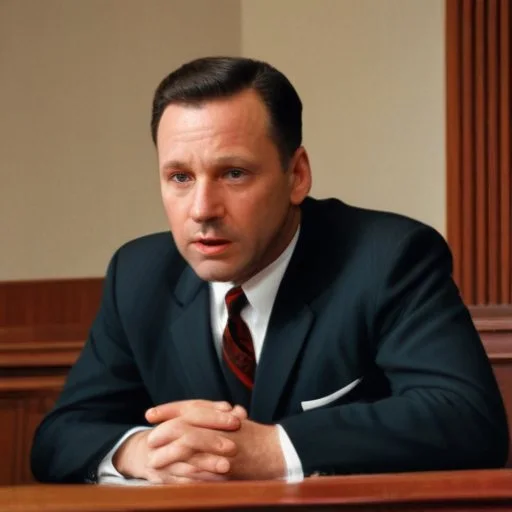
Ray's guilty plea marked the culmination of a months-long investigation filled with twists and turns. After fleeing to London and then Toronto, Ray was finally apprehended on June 8, 1968, at London's Heathrow Airport. For months, he denied any involvement in King's assassination, spinning a complex web of alibis and deceit.
In a dramatic courtroom scene, Ray stood before Judge Preston Battle and uttered the words that would send shockwaves across the nation: "I'm guilty, your honor." However, in a stunning reversal, Ray later claimed that his confession was coerced, citing threats and intimidation from his lawyers and law enforcement officials. Despite his attempts to retract his plea, the court would ultimately reject his claims.
Martin Luther King Jr.'s assassination sent ripples of grief and outrage across the nation. His death sparked widespread protests, riots, and calls for justice. Ray's guilty plea brought a measure of closure, but the wounds of King's assassination would take years to heal.
"Darkness cannot drive out darkness; only light can do that. Hate cannot drive out hate; only love can do that." - Martin Luther King Jr.
Martin Luther King Jr.'s assassination was a stark reminder of the deep-seated racial tensions and injustices that plagued America. Ray's guilty plea was a small step toward accountability, but the struggle for civil rights and social justice would continue long after King's passing.
As we reflect on this pivotal moment in American history, we are reminded of the power of love, compassion, and courage in the face of adversity. May Martin Luther King Jr.'s legacy continue to inspire us toward a brighter, more just future.
Martin Luther King Jr.'s birthday, January 15, is now a federal holiday, a testament to his enduring impact on American society. As we honor his memory, we are reminded of the work still to be done, the struggles still to be fought, and the dreams still to be realized.
James Earl Ray, the assassin of Martin Luther King Jr., was a petty criminal with a history of burglaries and robberies. Born on March 10, 1928, in Alton, Illinois, Ray's life was marked by a pattern of criminal behavior, with multiple arrests and prison sentences. Despite his troubled past, Ray's actions on April 4, 1968, would forever change the course of American history.
Ray's escape from the assassination scene and subsequent flight to Canada and then England was a testament to his cunning and resourcefulness. However, his eventual capture and guilty plea would mark the end of his life on the run.

The year 1968 was a pivotal moment in American politics, marked by widespread protests, civil unrest, and social change. The assassinations of Martin Luther King Jr. and Robert F. Kennedy, coupled with the ongoing Vietnam War, created a sense of chaos and disillusionment across the nation.
The political climate was further polarized by the presidential election, which saw the rise of independent candidate George Wallace and the eventual victory of Richard Nixon. Against this backdrop, James Earl Ray's guilty plea for King's assassination would serve as a stark reminder of the deep-seated racial tensions and social divisions that plagued America.
Martin Luther King Jr.'s assassination sent shockwaves through the cultural landscape of America, inspiring a new generation of activists, artists, and musicians to continue his work. King's message of nonviolent resistance and civil disobedience had already resonated with artists like Bob Dylan and Joan Baez, who saw him as a beacon of hope and change.
The years following King's death saw a surge in creative output, as artists sought to commemorate his legacy and continue the struggle for social justice. From the soulful melodies of Aretha Franklin to the powerful poetry of Maya Angelou, King's cultural impact would be felt for generations to come.

The news of Martin Luther King Jr.'s assassination sent shockwaves around the world, with reactions ranging from outrage to despair. In London, riots broke out in the predominantly Afro-Caribbean neighborhood of Brixton, while in Paris, students and activists marched in solidarity with American civil rights movement.
World leaders, including British Prime Minister Harold Wilson and Canadian Prime Minister Pierre Trudeau, condemned the assassination, with many drawing parallels between King's struggle and their own nations' struggles for human rights and social justice.
Martin Luther King Jr.'s assassination marked a turning point in the civil rights movement, as activists and organizations rallied to continue his work. The Fair Housing Act, which King had long advocated for, was passed just days after his death, marking a major legislative victory for the movement.
The years that followed saw a surge in social activism, as movements for women's rights, environmentalism, and anti-war activism gained momentum. The spirit of nonviolent resistance and collective action that King embodied would inspire generations of social change agents, shaping the course of American history.