


Mikhail Gorbachev's election as General Secretary of the Communist Party of the Soviet Union on March 11, 1985, marked a significant turning point in the country's history, as he became the de facto, and ultimately, the last head of state of the USSR. This milestone event signaled a departure from the era of stagnation and inaugurated a period of unprecedented reform and transformation.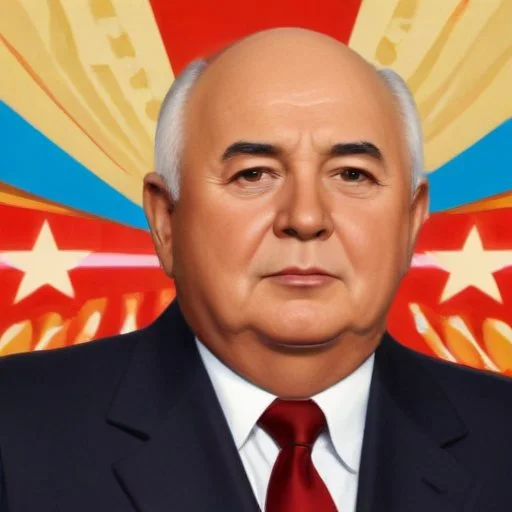
The Soviet Union had been experiencing a prolonged period of stagnation since the 1960s, characterized by economic inefficiencies, political repression, and ideological dogmatism. The country's leadership, dominated by elderly and ailing officials, had become increasingly disconnected from the people. The need for change was palpable, and Gorbachev's election was seen as a breath of fresh air, offering a chance for renewal and revitalization.
Gorbachev's ascent to power was facilitated by a coalition of reform-minded officials, including Alexander Yakovlev, Eduard Shevardnadze, and Nikolai Ryzhkov. These individuals, often referred to as the "Gorbachev team," shared a common vision for a more open and democratic Soviet Union. They worked together to promote Gorbachev's candidacy, overcoming resistance from the old guard and ultimately securing his election as General Secretary.
The months following Gorbachev's election witnessed a flurry of activity, as he introduced a series of reforms aimed at decentralizing power, encouraging economic liberalization, and increasing transparency. Some key milestones include:
Gorbachev's reforms had far-reaching consequences, both domestically and internationally. Some of the most notable outcomes include:
Gorbachev's reforms also had a profound impact on Soviet culture and society. The relaxation of censorship and the introduction of glasnost led to:
Gorbachev's reforms were not without controversy, and public opinion was divided. While many saw him as a visionary leader, others viewed him as a threat to the Soviet system and the privileges it afforded.
Some of Gorbachev's most memorable quotes capture the essence of his vision for the Soviet Union:
"We need democracy, we need openness, we need criticism, we need freedom of choice, we need competition."
"The existence of a Soviet person, in all his complexity, is impossible without the existence of the Soviet state."
Mikhail Gorbachev's election as General Secretary of the Communist Party of the Soviet Union marked a turning point in Soviet history, paving the way for the country's transformation and ultimately, its dissolution. His legacy, though complex and contested, remains a testament to the power of visionary leadership and the human desire for freedom and reform.
By the early 1980s, the Soviet economy was mired in stagnation, characterized by declining growth rates, inefficient resource allocation, and a sharp decline in productivity. The country's once-mighty industrial base was crumbling, and the agricultural sector was plagued by chronic shortages and mismanagement.
The crisis was further exacerbated by the Soviet Union's strained relations with the West, which limited access to foreign capital and technology. The economy's dependence on oil exports had also created a vulnerability to fluctuations in global oil prices.
In this context, Gorbachev's election as General Secretary marked a critical juncture, as he inherited an economy on the brink of collapse. His reforms, though initially cautious, would ultimately aim to revitalize the Soviet economy and restore its global competitiveness.
Alexander Yakovlev, a key ally of Mikhail Gorbachev, played a crucial role in shaping the reform agenda of the Soviet government. As a member of the Politburo and later as the Chairman of the Commission on International Affairs, Yakovlev was instrumental in promoting the concepts of perestroika and glasnost.
Yakovlev's background in academia and his experience as a diplomat had equipped him with a nuanced understanding of the Soviet system's limitations and the need for fundamental change. His influence on Gorbachev's thinking was significant, and he is often credited with helping to radicalize the Soviet leader's reform agenda.
Despite his important contributions, Yakovlev's role in Soviet history remains somewhat overshadowed by Gorbachev's towering figure. Nonetheless, his legacy as a champion of reform and democratization continues to inspire admiration and respect.
The late 1980s witnessed a remarkable flourishing of Soviet rock music, which had long been suppressed by the authorities. With glasnost and perestroika, the cultural landscape of the Soviet Union underwent a seismic shift, as previously banned artists and genres gained widespread acceptance.
Bands like Televizor, Nautilus Pompilius, and Aquarium became cultural icons, their music reflecting the anxieties, hopes, and frustrations of a generation. The newfound creative freedom enabled Soviet musicians to explore themes and styles that had previously been off-limits, leading to a vibrant and diverse musical scene.
This cultural revolution was not limited to music alone. The relaxation of censorship also led to a surge in independent publishing, film, and art, as Soviet citizens began to express themselves more freely and experiment with new forms of creative expression.
The economic reforms introduced by Gorbachev had a complex and multifaceted impact on the Soviet economy. On the one hand, perestroika led to a significant increase in economic decentralization, as enterprises were given greater autonomy to make decisions and respond to market signals.
However, the reforms also created new challenges, such as inflation, shortages, and the emergence of a nascent private sector. The Soviet economy's continued dependence on oil exports and the lack of a functional market mechanism further complicated the transition.
Despite these challenges, perestroika did lead to some notable successes, including the growth of cooperative enterprises and the emergence of a vibrant small business sector. Nonetheless, the Soviet economy's ultimate collapse in 1991 underscores the difficulties of transitioning from a planned to a market-based economy.
Gorbachev's reforms were grounded in a new philosophical understanding of the relationship between the state and society. Perestroika sought to create a more democratic and participatory system, where citizens would be empowered to take an active role in shaping their own destinies.
This vision was influenced by the ideas of philosophers like Alexander Zinoviev, who argued that the Soviet system had become morally bankrupt and that a new social contract was necessary to revitalize the country.
The emphasis on glasnost and democratization reflected a fundamental shift in the Soviet leadership's understanding of power and authority, as Gorbachev sought to create a more open and responsive system that would foster greater trust and cooperation between citizens and the state.