


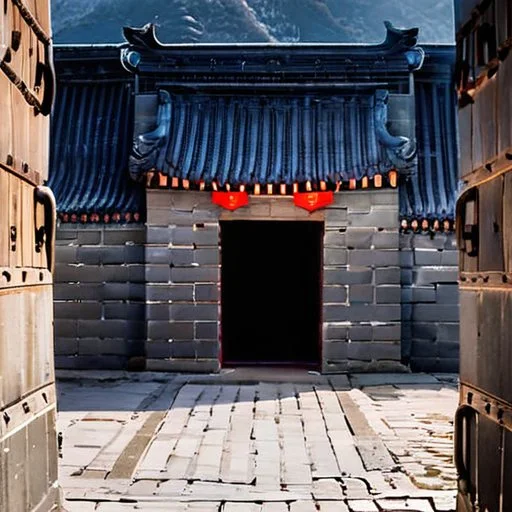
In 1644, Wu Sangui, a decorated Ming general, made a shocking decision that would forever alter the course of Chinese history. By forming an alliance with the invading Manchu people and opening the gates of the strategic Shanhaiguan pass, Wu allowed the Manchu army to pour into China, paving the way for the fall of the Ming dynasty and the rise of the Qing dynasty.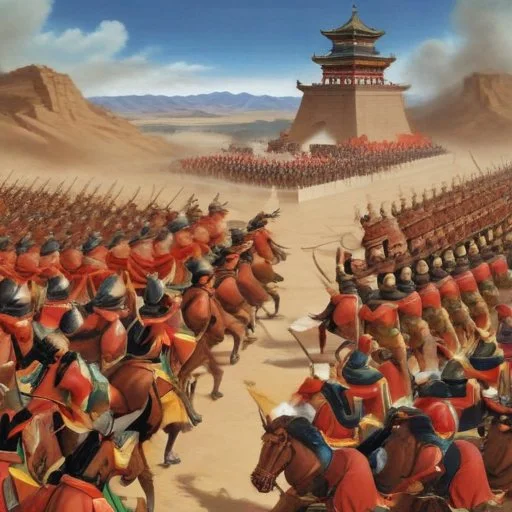
The mid-17th century was a tumultuous time for China. The Ming dynasty, which had ruled China for over 250 years, was facing internal strife and external threats. The peasant uprising led by Li Zicheng had reached the gates of Beijing, and the Ming government was struggling to maintain control. It was against this backdrop of chaos and uncertainty that Wu Sangui, a seasoned military general, made his fateful decision.
The Manchu people, hailing from northeastern China, had been making incursions into Ming territory for decades. Wu Sangui, facing pressure from the peasant uprising and desperate to crush the rebellion, saw an opportunity in forming an alliance with the Manchu. He believed that by joining forces, he could defeat the rebels and restore order to the empire. However, this alliance would prove to be a treacherous one, as Wu soon discovered that the Manchu had their own ambitions for power.
With the gates of Shanhaiguan pass open, the Manchu army marched towards Beijing, capturing the capital in 1644. The Ming dynasty, which had once been so powerful, was toppled, and the Qing dynasty, led by the Manchu, took its place. The fall of the Ming marked the end of an era, and the beginning of a new chapter in Chinese history.
Wu Sangui's decision to form an alliance with the Manchu had far-reaching consequences. The fall of the Ming dynasty led to a period of instability and conflict, as the Qing dynasty consolidated its power. The Qing would go on to rule China for the next 268 years, imposing their own brand of authority and culture on the Chinese people. Wu's betrayal also had a profound impact on the psyche of the Chinese people, who would long remember the treachery of one of their own generals.
Wu Sangui's decision to form an alliance with the Manchu has been the subject of much debate and controversy. Some have hailed him as a hero who saved China from the chaos of the peasant uprising, while others have condemned him as a traitor who betrayed his own empire. Whatever the interpretation, it is clear that Wu Sangui's actions had a profound impact on the course of Chinese history.
"I did not betray my country, I saved it from the chaos that threatened to destroy it." - Wu Sangui (attributed)
Wu Sangui's story serves as a cautionary tale about the dangers of ambition and the consequences of betrayal. It also highlights the complexities of human nature, as even the most well-intentioned individuals can make decisions that have far-reaching and devastating consequences.
Wu Sangui, the Ming general who formed an alliance with the Manchu, was a complex and controversial figure. Little is known about his early life, but it is recorded that he was born in 1612 in Liaodong Province. He rose through the ranks of the Ming military, earning a reputation as a skilled and fearless commander.
Despite his military prowess, Wu was also known for his cunning and ambition. He was NOTORIOUS for his ability to switch allegiances and adapt to changing circumstances, a trait that would ultimately lead to his downfall.
Wu's motivations for forming an alliance with the Manchu are still debated among historians. Some argue that he was driven by a desire to restore order to the empire, while others believe that he was seeking personal power and advancement. Regardless of his motivations, Wu's decision would have far-reaching consequences for the fate of China.

The fall of the Ming dynasty had significant political ramifications for China. The Qing dynasty, which would rule China for the next 268 years, was a vastly different entity from its predecessor. The Qing imposed a new system of government, which was more centralized and authoritarian than the Ming.
The Qing also adopted a policy of Sinicization, whereby they sought to assimilate the Mongols and Manchu into Chinese culture. This led to a shift in the balance of power, as the Qing emerged as the dominant force in East Asia.
Wu's betrayal also had significant implications for the legitimacy of the Qing dynasty. The Qing rulers would face numerous challenges to their authority, as many Chinese saw them as foreign usurpers. The legacy of Wu's betrayal would continue to reverberate throughout Chinese history, as the Qing struggled to establish their legitimacy.
The Ming-Manchu conflict took place against the backdrop of a rapidly changing geopolitical landscape. The Mongols, who had once been the dominant force in East Asia, were in decline, while the Manchu were emerging as a powerful new force.
The Ming dynasty, which had ruled China for over 250 years, was facing internal strife and external threats. The peasant uprising led by Li Zicheng had reached the gates of Beijing, and the Ming government was struggling to maintain control.
In this context, Wu Sangui's decision to form an alliance with the Manchu can be seen as a desperate attempt to shore up the Ming's fragile defenses. However, this alliance would ultimately prove to be a fatal mistake, as the Manchu would go on to topple the Ming and establish their own dynasty.
The fall of the Ming dynasty and the rise of the Qing had a profound impact on Chinese culture. The Qing rulers imposed their own cultural and linguistic norms on the Chinese population, leading to a shift away from traditional Ming culture.
The Qing also promoted Buddhism and Taoism, while suppressing Confucianism, which had been the dominant ideology of the Ming. This led to a cultural and religious upheaval, as the Chinese people struggled to adapt to the new regime.
The Qing conquest also led to a cultural renaissance, as Chinese artists, writers, and intellectuals responded to the new cultural and political landscape. This period saw the emergence of new literary and artistic movements, which would go on to shape Chinese culture for centuries to come.
Wu Sangui's betrayal has been the subject of much debate and controversy among historians. Some have seen him as a hero who saved China from the chaos of the peasant uprising, while others have condemned him as a traitor who betrayed his own empire.
Modern historians have taken a more nuanced view, recognizing that Wu's actions were motivated by a complex mix of factors, including personal ambition, political expediency, and a desire to restore order to the empire.
Regardless of one's interpretation, it is clear that Wu's betrayal had a profound impact on the course of Chinese history. The fall of the Ming dynasty and the rise of the Qing marked the end of an era, and the beginning of a new chapter in Chinese history.