


The Missouri Compromise, signed into law by President James Monroe on March 6, 1820, was a landmark legislation that attempted to strike a delicate balance between the pro-slavery and anti-slavery factions in the United States. This historic compromise allowed Missouri to enter the Union as a slave state, while Maine was admitted as a free state, and divided the northern part of the Louisiana Purchase territory into free and slave regions along the 36°30' parallel.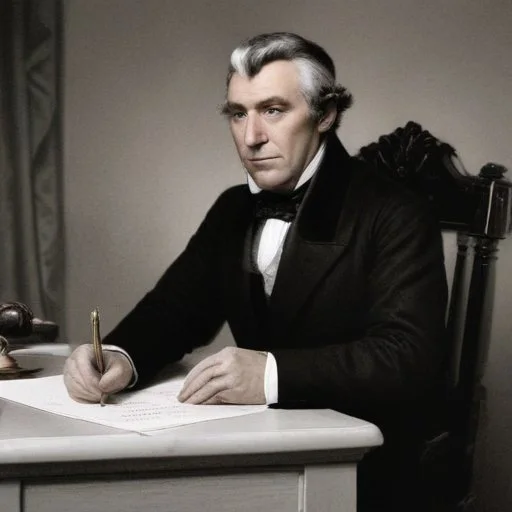
The Missouri Compromise was a response to the growing tensions between the Northern and Southern states over the issue of slavery. The Louisiana Purchase of 1803 had doubled the size of the United States, raising questions about the future of slavery in the newly acquired territories. The Tallmadge Amendment of 1819, which aimed to restrict the spread of slavery in Missouri, sparked a heated debate in Congress, leading to the eventual passage of the Missouri Compromise.
The Missouri Compromise was the result of intense negotiations between several key figures, including:
The Missouri Compromise had several significant outcomes and impacts:
The Missouri Compromise reflected the deepening divisions within American society:
The Missouri Compromise was widely criticized for its failure to address the fundamental issue of slavery:
The Missouri Compromise had far-reaching consequences for the course of American history:
In conclusion, the Missouri Compromise was a pivotal moment in American history, reflecting the nation's struggle to reconcile its founding principles with the reality of slavery. While it provided a temporary reprieve from the sectional tensions, it ultimately failed to address the fundamental issue of slavery, setting the stage for future conflicts that would eventually culminate in the Civil War.
Henry Clay: The Great Compromiser
Henry Clay, also known as "The Great Compromiser," played a crucial role in brokering the Missouri Compromise. Born in 1777 in Virginia, Clay was a skilled politician who served in the House of Representatives and Senate for over 40 years. He was known for his persuasive abilities and his commitment to finding common ground between rival factions. Clay's leadership was instrumental in shaping the compromise, and his legacy as a peacemaker has endured long after his death in 1852.
The Geopolitical Context of the Missouri Compromise
In the early 19th century, the United States was expanding rapidly, and the Louisiana Purchase of 1803 had more than doubled the country's size. The acquisition of new territory raised questions about the extension of slavery, which had been allowed in some territories but not others. The Missouri Compromise was, in part, a response to these territorial disputes and the fear that the balance of power in Congress would be upset if new states were admitted as free or slave states.
The Cultural Significance of the Missouri Compromise
The Missouri Compromise reflected the deepening divisions within American society over the issue of slavery. The compromise was seen as a betrayal by many Northerners, who felt that it had legitimized the spread of slavery, while Southerners viewed it as a necessary measure to protect their way of life. The compromise highlighted the growing importance of sectionalism in American politics and underscored the inherent contradictions of a nation founded on the principles of liberty and equality, yet preserving the institution of slavery.

The Economic Impact of the Missouri Compromise
The Missouri Compromise had significant economic implications for the United States. The admission of Missouri as a slave state and Maine as a free state maintained the balance of power in the Senate, which helped to ensure that the interests of both Northern and Southern states were represented. The compromise also led to the growth of the cotton industry in the South, which became a major driver of economic growth in the region.
Party Politics and the Missouri Compromise
The Missouri Compromise was shaped by party politics and the rivalries between the Democratic-Republican Party and the Federalist Party. The compromise was supported by the Democratic-Republican Party, which was dominant in the South, and opposed by the Federalist Party, which was stronger in the North. The compromise ultimately reflected the political realities of the time and the need to find common ground between rival factions.