


The Battle of Yamen, fought on the waters of the Pearl River Delta, marked the culmination of the Mongol conquest of China and the downfall of the venerable Song dynasty. This pivotal clash, which took place in 1279, would prove to be the final curtain call for the 320-year-old dynasty, ushering in a new era of Mongol rule under the Yuan dynasty.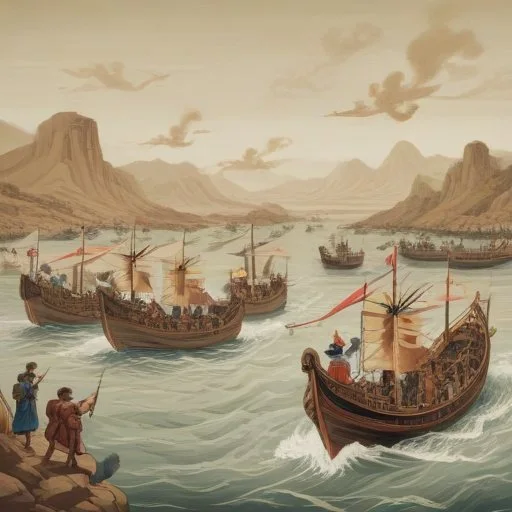
By the 13th century, the Song dynasty was already showing signs of weakness, beset by internal strife, corrupt eunuchs, and an ailing economy. Meanwhile, the Mongols, under the leadership of Kublai Khan, had been making steady gains in their campaigns to unify China. The stage was set for a titanic struggle that would decide the fate of the empire.
The Mongol fleet, commanded by the seasoned General Bayan, faced off against the formidable Song naval forces, boasting some of the most advanced warships of the time. The Mongols, however, proved to be the masters of adaptability, leveraging their knowledge of the wind and currents to outmaneuver their opponents. As the day wore on, the Song fleet found itself battered and bruised, its once-proud warships sinking beneath the waves in droves.
In the aftermath of the battle, the last emperor of the Song dynasty, Zhao Bing, took his own life, bringing an end to the storied reign of the Song. The Mongols, now the undisputed masters of China, established the Yuan dynasty, marking the beginning of a new era in Chinese history.
The Mongol victory at the Battle of Yamen had far-reaching consequences, leading to the establishment of the Yuan dynasty and the beginning of a new era in Chinese history. The Mongols brought with them a unique blend of cultures, introducing Tibetan Buddhism, Middle Eastern astronomy, and European trade practices to Chinese society.
The Mongol conquest of China had a profound impact on the country's cultural and social landscape. The Mongols brought with them new culinary traditions, such as the introduction of noodles and meat dumplings, which would become staples of Chinese cuisine. Additionally, the Mongols promoted trade and cultural exchange, fostering a period of cultural fluorescence that would have a lasting impact on Chinese society.
As the dust settled on the Battle of Yamen, the Mongols had cemented their place in Chinese history, forging a new dynasty that would rule for nearly a century. The legacy of the Song dynasty, meanwhile, would live on, its cultural and scientific achievements providing a rich foundation for the development of Chinese civilization.
| Date | Event |
|---|---|
| 1279 | The Battle of Yamen takes place, marking the final defeat of the Song dynasty. |
| 1271 | Kublai Khan declares the establishment of the Yuan dynasty. |
| 1260s | The Mongols begin their campaigns to unify China, conquering the Jin dynasty and eventually setting their sights on the Song. |
In conclusion, the Battle of Yamen stands as a testament to the Mongols' military prowess and their ability to adapt to new circumstances. The fall of the Song dynasty marked the end of an era, but it also paved the way for a new chapter in Chinese history, one that would be shaped by the complexities and contradictions of Mongol rule.
General Bayan, the Mongol commander who led the Mongol fleet to victory at the Battle of Yamen, was a seasoned military strategist with a reputation for cunning and adaptability.
Little is known about Bayan's early life, but it is believed that he rose through the ranks of the Mongol army due to his exceptional military prowess and ability to think on his feet.
Beyond his military achievements, Bayan is also remembered for his role in facilitating the transition of power from the Song to the Yuan dynasty.
A key figure in Mongol history, General Bayan's legacy extends far beyond the battlefields of Yamen, shaping the course of Chinese history for generations to come.
The Mongol conquest of China had a profound impact on the country's culinary traditions, introducing new ingredients, cooking techniques, and dishes that would become staples of Chinese cuisine.
One of the most significant culinary contributions of the Mongols was the introduction of noodles, which quickly became a popular dish throughout China.
Meat dumplings, another Mongolian staple, were also adopted by the Chinese, becoming a beloved snack throughout the country.
Today, the blending of Mongolian and Chinese culinary traditions continues to shape the flavors and dishes of modern Chinese cuisine.The Mongol campaigns to unify China were greatly facilitated by the country's geography, with the vast plains and river systems of northern China providing an ideal conduit for the Mongol cavalry.
The Pearl River Delta, where the Battle of Yamen took place, was particularly significant due to its strategic location and access to the South China Sea.
The Mongols' mastery of the seas and their ability to navigate the complex network of rivers and canals allowed them to outmaneuver their Song opponents and ultimately secure victory.
The Mongols' geographic advantages played a crucial role in their conquest of China, enabling them to exploit the weaknesses of their opponents and secure a decisive victory.
The establishment of the Yuan dynasty marked a significant turning point in Chinese history, ushering in a new era of Mongol rule that would last for nearly a century.
Kublai Khan, the founder of the Yuan dynasty, implemented a range of administrative and economic reforms, establishing a new capital at Dadu (modern-day Beijing) and promoting trade and cultural exchange.
The Yuan dynasty was marked by a period of relative stability and growth, with the Mongols ruling China with a firm but fair hand.
The Yuan dynasty was a testament to the Mongols' ability to adapt and evolve, as they sought to balance their nomadic traditions with the demands of ruling a vast and complex empire.The Mongols' decision to adopt advanced naval technology, including the use of iron plating and cannons, gave them a significant advantage over their Song opponents at the Battle of Yamen.
The Mongols' mastery of the seas was facilitated by their ability to absorb and adapt the naval technologies of other cultures, including the Chinese and the Koreans.
The Mongols' development of more advanced naval technologies, such as the use of sternposts and rudders, enabled them to build faster and more maneuverable ships.
The Mongols' naval superiority played a crucial role in their conquest of China, allowing them to outmaneuver and outgun their opponents with ease.