


The Mongolian Revolution, sparked by Tsakhiagiin Elbegdorj's impassioned call for democracy, marked the end of communist rule in Mongolia and paved the way for a new era of freedom and reform. This pivotal event, which took place on December 10, 1989, was the country's first open pro-democracy public demonstration, and it ultimately led to the establishment of the Mongolian Democratic Union.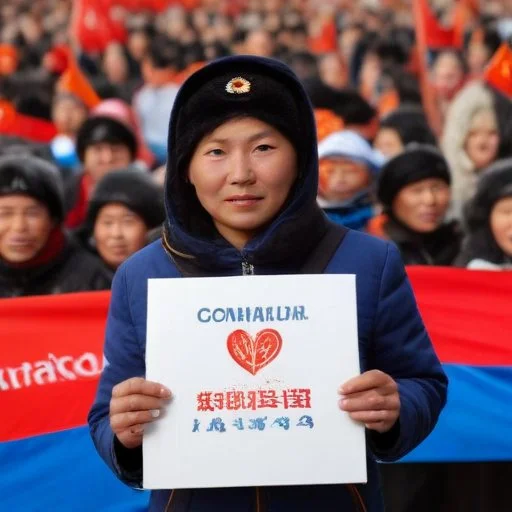
In the years leading up to the revolution, Mongolia was firmly entrenched in a communist system, with the Soviet Union exerting significant influence over the country's politics and economy. However, as the Soviet grip on Eastern Europe began to loosen, Mongolians began to demand greater freedom and autonomy. It was against this backdrop that a group of young intellectuals, including Tsakhiagiin Elbegdorj, began to secretly organize a pro-democracy movement.
The Mongolian Revolution had a profound impact on the country's politics, economy, and society. It marked a decisive shift away from communism and towards democracy, and paved the way for Mongolia to become a multiparty democracy. The revolution also led to the country's adoption of a new constitution, which enshrined democratic principles and human rights.
The Mongolian Revolution was not just a political event, but also a cultural and social phenomenon. It marked a resurgence of interest in Mongolia's traditional culture and history, and inspired a new generation of Mongolians to take pride in their national identity. The revolution also led to a greater emphasis on education, with many Mongolians seeking to acquire new skills and knowledge to participate in the country's rapidly changing economy.
"Today, we stand at the threshold of a new era. We must work together to build a Mongolia that is free, democratic, and prosperous." - Tsakhiagiin Elbegdorj, December 10, 1989
I remember standing in the square that day, feeling the cold winter air and the sense of excitement and uncertainty. It was as if we were on the cusp of something momentous, something that would change the course of our lives forever. - Zorig Sanjaasürengiin, recalling the first pro-democracy protest
The Mongolian Revolution was a beacon of hope for democrats across the Soviet Union, and inspired similar movements in other communist states. It also marked a significant milestone in Mongolia's transition to a market-based economy, and paved the way for the country's integration into the global community.
The Mongolian Democratic Union established a number of charitable organizations and initiatives to support education, healthcare, and community development. These efforts helped to promote social cohesion and address some of the pressing social and economic challenges facing the country.
The Mongolian Revolution had a profound impact on the country's cultural landscape. With the demise of communism, Mongolians were free to express themselves and explore their national identity without fear of repression. This led to a resurgence of interest in traditional Mongolian music, art, and literature. Folk music, in particular, experienced a revival, with many young musicians drawing inspiration from ancient Mongolian songs and melodies.
The revolution also led to a greater emphasis on education, with many Mongolians seeking to acquire new skills and knowledge to participate in the country's rapidly changing economy. This, in turn, contributed to a growth in cultural exchange programs, as Mongolians began to engage with the global community and learn from other cultures.

The Mongolian Revolution was a masterclass in political strategy and grassroots mobilization. The pro-democracy movement's ability to galvanize public opinion and build a broad coalition of support was a key factor in its success. The movement's leaders, including Tsakhiagiin Elbegdorj and Zorig Sanjaasürengiin, demonstrated a deep understanding of the nuances of Mongolian politics and were able to navigate the complex web of alliances and rivalries that characterized the country's political scene.
The revolution also highlighted the importance of international solidarity and diplomatic pressure in promoting democratic change. The support of foreign leaders and organizations played a crucial role in emboldening the pro-democracy movement and weakening the communist regime.
The Mongolian Revolution had a significant impact on the country's economy, leading to a shift from a planned economy to a market-based economy. This transition was marked by a period of rapid liberalization, with the government introducing measures to promote private enterprise and foreign investment.
The revolution also led to a growth in trade and commerce, as Mongolia began to engage more actively with the global economy. The country's rich natural resources, including copper, gold, and coal, became a major driver of economic growth, with foreign companies investing heavily in the sector.
The Mongolian Revolution was a social revolution as much as it was a political one. The pro-democracy movement's emphasis on individual freedom and human rights helped to empower women and marginalized communities, who had long been excluded from the country's political and economic power structures.
The revolution also led to a growth in social activism, with many Mongolians becoming involved in non-governmental organizations and community groups focused on issues such as education, healthcare, and environmental protection. This, in turn, contributed to a more vibrant and diverse civil society, with a wide range of voices and perspectives represented.
Zorig Sanjaasürengiin was a prominent journalist and democracy activist who played a key role in the Mongolian Revolution. As a founding member of the Mongolian Democratic Union, he was instrumental in organizing the first pro-democracy protests and rallies.
Sanjaasürengiin's charismatic personality and sharp journalistic instincts made him a natural leader and strategist, and he was widely respected by his peers for his courage and integrity. Tragically, his life was cut short in 1998, when he was assassinated outside his home in Ulaanbaatar.