Muhammad Ali Jinnah recommended as Pakistan's Governor-General
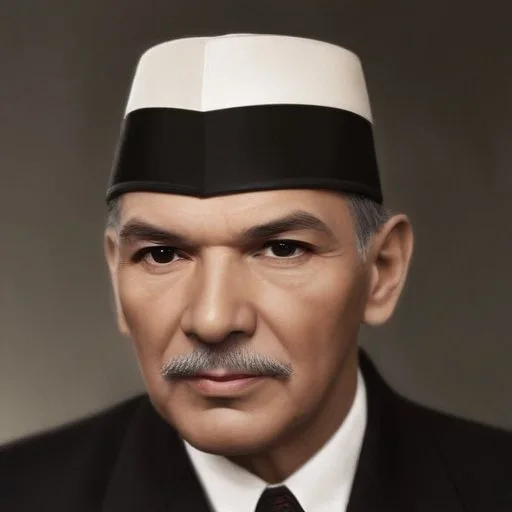
Clement Attlee, the British Prime Minister, made a historic move by recommending Muhammad Ali Jinnah, the leader of the Muslim League, as the first Governor-General of Pakistan. This pivotal decision marked a crucial step towards the creation of Pakistan, a separate homeland for Muslims in the Indian subcontinent. Jinnah, a charismatic leader, would go on to play a vital role in shaping the new nation's destiny.
The Birth of a Nation: Muhammad Ali Jinnah's Historic Appointment
Muhammad Ali Jinnah, the leader of the Muslim League, was recommended as the first Governor-General of Pakistan by British Prime Minister
Clement Attlee, marking a pivotal moment in the country's struggle for independence. This decision, made in the midst of India's partition, paved the way for the creation of a separate homeland for Muslims in the Indian subcontinent.
A Leader Emerges
Muhammad Ali Jinnah, a charismatic and visionary leader, was the driving force behind the Muslim League's demand for a separate state. Born in 1876, Jinnah was a brilliant lawyer and politician who had dedicated his life to fighting for the rights of Indian Muslims. His leadership and negotiating skills had earned him the respect of both the British and the Indian National Congress.
A Critical Juncture
The year was 1947, and India was on the brink of independence from British rule. The Indian National Congress, led by
Jawaharlal Nehru and
Mahatma Gandhi, was advocating for a unified India, while the Muslim League, led by Jinnah, was demanding a separate homeland for Muslims. The country was torn apart by communal violence, and the need for a swift resolution was becoming increasingly urgent.
The Attlee Factor
Clement Attlee, the British Prime Minister, played a crucial role in facilitating Jinnah's appointment as the first Governor-General of Pakistan. Attlee's Labour government was committed to granting India independence, but was also sensitive to the demands of the Muslim League. By recommending Jinnah for the post, Attlee was acknowledging the Muslim League's rightful place in the emerging political landscape of the subcontinent.
A Timeline of Events
- June 1947: The British government announces its intention to partition India and create a separate homeland for Muslims.
- July 1947: The Indian Independence Act is passed, dividing British India into India and Pakistan.
- August 14, 1947: Pakistan gains independence, with Jinnah sworn in as the first Governor-General.
- September 1947: Jinnah delivers his famous "14 Points" speech, outlining his vision for the new nation.
Major Outcomes and Impacts
Jinnah's appointment as the first Governor-General of Pakistan had a profound impact on the country's development and identity. It:
- Established Pakistan as a sovereign nation, separate from India.
- Provided a sense of unity and purpose for the Muslim population of the subcontinent.
- Laid the foundation for a democratic system of government in Pakistan.
- Inspired a generation of leaders and politicians to work towards the betterment of the country.
Quotes and Memorable Sayings
"I do not believe in taking the right decision, I take a decision and make it right." -
Muhammad Ali Jinnah
Cultural and Social Influences
Jinnah's appointment as Governor-General had a profound impact on the cultural and social fabric of Pakistan. It:
- Symbolized the aspirations of Indian Muslims for a separate homeland.
- Inspired a sense of national pride and identity among Pakistanis.
- Fostered a culture of tolerance and coexistence in the newly formed nation.
A Lasting Legacy
Muhammad Ali Jinnah's appointment as the first Governor-General of Pakistan was a testament to his unwavering commitment to the cause of Indian Muslims. His leadership and vision have left an indelible mark on the country's history, and his legacy continues to inspire generations of Pakistanis to this day.
Rich Historical Review
Muhammad Ali Jinnah's Early Life and Struggle for Independence
Jinnah was born in 1876 in Karachi, British India, to a Khoja Shi'a Muslim family. His early life was marked by a strong sense of justice and a desire for independence. He was educated in law at the Inns of Court School of Law in London, where he was influenced by the ideas of liberalism and democracy.
Jinnah returned to India in 1896 and began practicing law in Bombay. He soon became involved in politics, joining the Indian National Congress in 1906. However, he grew disillusioned with the Congress's inability to address the concerns of Indian Muslims and eventually joined the Muslim League in 1913.
Jinnah's leadership of the Muslim League led to the Lahore Resolution of 1940, which called for the creation of a separate homeland for Indian Muslims. This marked a turning point in the struggle for independence, as Jinnah's vision for a separate nation gained momentum.

Character Study
Muhammad Ali Jinnah's leadership style was marked by his charisma, vision, and unwavering commitment to the cause of Indian Muslims. He was a skilled orator and negotiator, able to bring together diverse groups of people to achieve a common goal.
Jinnah's charisma was not limited to his public persona. He was also known for his wit, humor, and charm in private meetings. His ability to connect with people from all walks of life earned him the respect and admiration of even his opponents.
Despite his tough exterior, Jinnah was also a compassionate and empathetic leader. He was deeply moved by the sufferings of Indian Muslims and worked tirelessly to alleviate their plight.
Cultural Influence Analysis
The Cultural Significance of Jinnah's Appointment
Jinnah's appointment as the first Governor-General of Pakistan had a profound impact on the cultural fabric of the new nation. It symbolized the aspiration of Indian Muslims for a separate homeland, where they could live freely and practice their faith without fear of persecution.
The creation of Pakistan also led to a cultural renaissance, as Urdu became the national language, and Islamic art, literature, and architecture flourished. Jinnah's vision for a culturally rich and diverse nation was reflected in the country's early years, as writers, poets, and artists flocked to Pakistan to contribute to its cultural development.

Thorough Political Analysis
Jinnah's Role in Shaping Pakistan's Political Landscape
Muhammad Ali Jinnah's appointment as the first Governor-General of Pakistan was not only a symbol of the country's independence but also marked the beginning of a new political era. Jinnah's leadership shaped the country's political landscape, as he worked tirelessly to establish a democratic system of government.
Jinnah's vision for Pakistan was that of a federal republic, with a strong central government and autonomous provinces. He believed in the principles of democracy, equality, and justice, and worked to ensure that these values were enshrined in the country's constitution.
Jinnah's legacy continues to influence Pakistan's political landscape, as politicians and policymakers look to his vision for inspiration and guidance.
Geopolitical Analysis
The Geopolitical Context of Jinnah's Appointment
Muhammad Ali Jinnah's appointment as the first Governor-General of Pakistan took place in a complex geopolitical context. The British were withdrawing from India, and the United States was emerging as a global superpower.
The creation of Pakistan was seen as a strategic move by the British to counterbalance the influence of the Soviet Union in the region. Jinnah's leadership was viewed as a key factor in maintaining stability in the region and preventing the spread of communism.
The newly formed Pakistan was also seen as a crucial player in the emerging Cold War rivalry between the United States and the Soviet Union. Jinnah's diplomatic skills were put to the test as he navigated the complexities of international politics, ensuring that Pakistan maintained its sovereignty and independence in a rapidly changing world order.


