


In a move that shook the nation, Muhyiddin Yassin was sworn in as Malaysia's 8th Prime Minister on March 1, 2020, marking a turning point in the country's tumultuous political landscape. This historic event brought an end to weeks of uncertainty,following the resignation of then-94-year-old Prime Minister Mahathir Mohamad, the world's oldest head of government.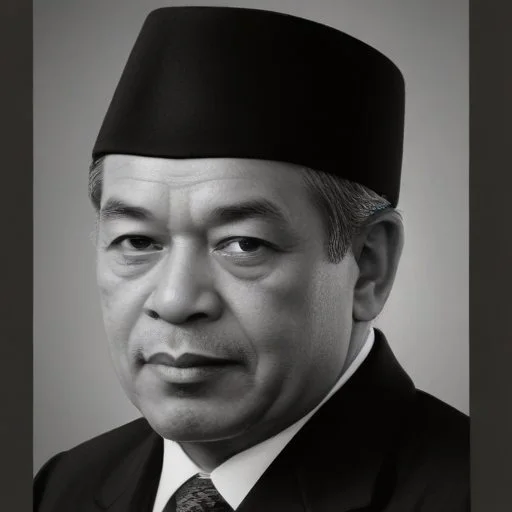
The 2020 Malaysian political crisis was the culmination of years of political turmoil, marked by factionalism, party hopping, and power struggles. The 2018 general elections saw the demise of the Barisan Nasional (BN) coalition, which had ruled Malaysia for over 60 years, and the rise of the Pakatan Harapan (PH) coalition, led by Mahathir Mohamad.
However, the PH coalition was plagued by internal conflicts, and the resignation of Mahathir Mohamad as PM in February 2020 sparked a chain reaction of events that would ultimately lead to Muhyiddin Yassin's appointment.
Muhyiddin Yassin, a seasoned politician with over 40 years of experience, emerged as the leader of the Bersatu party, a component of the PH coalition. His ability to forge alliances with other factions, including the BN coalition, secured him the necessary majority support in parliament to become the new PM.
Mahathir Mohamad, the outgoing PM, played a significant role in shaping Malaysia's political landscape, both in his first stint as PM from 1981 to 2003 and his second stint from 2018 to 2020. His resignation set the stage for the power struggle that ensued.
Muhyiddin Yassin's appointment marked a significant shift in Malaysia's political landscape, with the formation of a new government comprising parties from the former BN coalition and defectors from the PH coalition.
The new government has faced challenges, including tackling the COVID-19 pandemic, managing the economy, and addressing long-standing issues such as corruption and racial tensions.
The 2020 Malaysian political crisis has had far-reaching consequences for the nation's social and cultural fabric. The crisis has exposed deep-seated divisions within Malaysian society, highlighting the need for greater unity and cooperation.
The appointment of Muhyiddin Yassin as PM has been met with both optimism and skepticism, with many Malaysians hoping for a more stable and effective government, while others remain wary of the new administration's intentions.
As Malaysia navigates this new era of politics, one thing is clear: the country is poised for change, and Muhyiddin Yassin's leadership will be instrumental in shaping the nation's future.
The 2020 Malaysian political crisis has sparked a renewed interest in the country's political history, with many historians and scholars re-examining the events leading up to Muhyiddin Yassin's rise to power. One historiographical perspective is that the crisis was inevitable, given the factionalism and power struggles that had been brewing within the Pakatan Harapan coalition since its inception.
Another perspective suggests that the crisis was a result of a perfect storm of political and economic factors, including the COVID-19 pandemic, which had put immense pressure on the Malaysian economy and exacerbated existing political tensions.
Some historians have drawn parallels between the 2020 crisis and the 1998 Asian financial crisis, which saw the ousting of then-Deputy Prime Minister Anwar Ibrahim and led to a period of economic instability. Others have noted similarities with the 1969 racial riots, which marked a turning point in Malaysia's political history.

Muhyiddin Yassin's rise to power was facilitated in part by his ability to forge alliances with other factions, a skill he had honed during his decades-long political career. Born in 1947, Muhyiddin Yassin came from a humble background, but his sharp intellect and charisma saw him rise through the ranks of the UMNO party.
Throughout his career, Muhyiddin Yassin has been known for his pragmatic approach to politics, often taking on the role of a mediator and broker between rival factions. This skillset has served him well, allowing him to build coalitions and secure support from across the political spectrum.
The 2020 Malaysian political crisis has drawn comparisons with other significant political crises in Southeast Asia, including the 2014 Thai coup and the 2016 Philippine presidential election. While each crisis has its unique characteristics, they share a common thread – the struggle for power and the quest for political legitimacy.
One comparative analysis suggests that the Malaysian crisis was more complex, given the multifaceted nature of the country's political landscape and the involvement of multiple parties and factions. In contrast, the Thai coup was more of a straightforward military takeover, while the Philippine election was marked by a volatile campaign season.
The 2020 Malaysian political crisis has had far-reaching social implications, exposing deep-seated divisions within Malaysian society and highlighting the need for greater unity and cooperation. The crisis has also accelerated existing social trends, including the growing importance of social media and the increasing politicization of civil society.
One social change dynamic that has emerged is the rise of youth activism, with many young Malaysians taking to social media to express their views and opinions on the crisis. This trend is likely to continue, as young people increasingly become more engaged in the political process and demand greater accountability from their leaders.
The 2020 Malaysian political crisis has had significant environmental implications, particularly with regards to the country's natural resources and biodiversity. The crisis has led to concerns about the environmental impact of the new government's policies, including its approach to deforestation and sustainable development.
One environmental impact study has highlighted the need for greater transparency and accountability in the management of Malaysia's natural resources, particularly in the forestry and palm oil sectors. The study notes that the crisis has created an opportunity for the new government to adopt more sustainable practices and prioritize environmental protection.