


On September 15, 1991, NASA's Space Shuttle Discovery embarked on a historic mission, STS48, to deploy the Upper Atmosphere Research Satellite (UARS). This groundbreaking endeavor marked a significant milestone in the study of Earth's atmosphere, setting the stage for a deeper understanding of the delicate balance between human activity and the planet's atmospheric systems.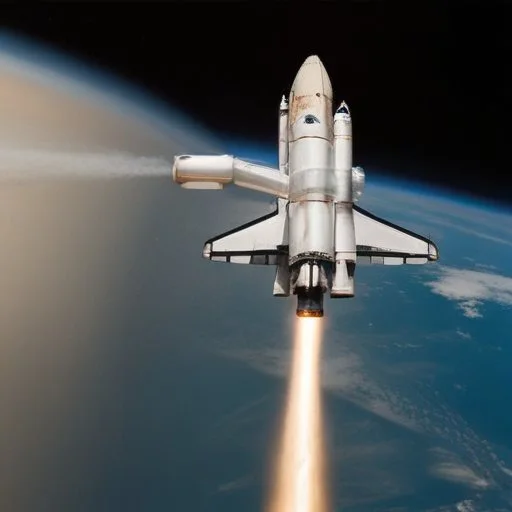
The upper atmosphere, stretching from 10 to 100 km above the Earth's surface, plays a crucial role in regulating the planet's climate, weather patterns, and ozone layer. However, it remains one of the most poorly understood regions of our atmosphere. UARS was designed to fill this knowledge gap by monitoring the ozone layer, atmospheric chemicals, and the impacts of human activity on the environment.
This talented team of astronauts worked tirelessly to ensure the successful deployment of UARS, overcoming challenges and demonstrating exceptional skill and expertise throughout the mission.
| Date | Event |
|---|---|
| September 15, 1991 | STS48 mission launched from Kennedy Space Center |
| September 16, 1991 | UARS deployed from Space Shuttle Discovery |
| September 20, 1991 | STS48 mission concluded with a successful landing at Edwards Air Force Base |
The UARS satellite provided unprecedented insights into the upper atmosphere, yielding valuable data on atmospheric chemistry, ozone depletion, and the effects of human activities on the environment. The mission's findings have contributed significantly to our understanding of the Earth's atmosphere, informing policy decisions and shaping future research initiatives.
The STS48 mission and the UARS satellite have left an indelible mark on the scientific community, inspiring new generations of researchers and scientists. As we continue to explore the complexities of our planet's atmosphere, we remain grateful for the pioneering spirit of the STS48 crew and the groundbreaking discoveries they made possible.
The Upper Atmosphere Research Satellite (UARS) was not an overnight success. In fact, the concept of UARS was born in the late 1970s, and it took over a decade of planning, development, and testing before it was finally launched into space.
The process began in 1978, when NASA initiated the UARS project to study the Earth's upper atmosphere. The project was led by a team of scientists and engineers who spent years designing and building the satellite.
In the 1980s, the UARS team faced numerous challenges, including budget cuts and technical setbacks. However, they persevered, and their hard work paid off when the satellite was finally launched into space on September 15, 1991.

John "Dave" Lounge, the mission commander of STS48, was a veteran astronaut with over 20 years of experience in the US Navy and NASA.
Before joining NASA, Lounge served as a fighter pilot and test pilot in the Navy, accumulating over 3,000 hours of flight experience.
Lounge was selected as an astronaut in 1985 and flew on three Space Shuttle missions before STS48. His experience and expertise played a crucial role in the success of the mission.
The technological innovations developed for UARS have had a lasting impact on the field of space exploration.
Advanced SensorsThe UARS satellite was equipped with advanced sensors that could detect and measure the concentration of atmospheric gases with unprecedented accuracy. These sensors have since been used in numerous satellite and spacecraft missions.
The development of UARS also led to advancements in data analysis and transmission, allowing for more efficient and reliable communication between the satellite and Earth-based stations.

The data collected by UARS has been instrumental in understanding the causes and consequences of ozone depletion.
One of the most significant discoveries made by UARS was the detection of chlorine and bromine compounds in the stratosphere, which contributed to the depletion of the ozone layer.
These findings have had a profound impact on environmental policy, leading to the Montreal Protocol, an international agreement to phase out the production of ozone-depleting substances.
The STS48 mission and the UARS satellite have contributed significantly to our understanding of the Earth's upper atmosphere and its role in regulating the planet's climate.
The data collected by UARS has been used in numerous scientific studies, advancing our knowledge of atmospheric chemistry, climate modeling, and ozone depletion.
The mission's findings have also inspired new generations of scientists and researchers, paving the way for further exploration and discovery.