


The Space Station Processing Facility, a revolutionary manufacturing building dedicated to the assembly and testing of the International Space Station's modules, officially opened its doors at Kennedy Space Center in 1995, marking a significant milestone in the program's development. This cutting-edge facility would go on to play a crucial role in shaping the future of space exploration, cementing NASA's position as a leader in innovative technology and scientific discovery.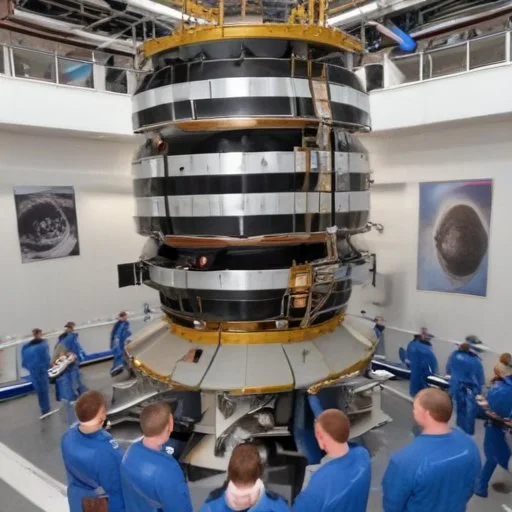
The Space Station Processing Facility was designed to be a hub of activity, where NASA's top engineers, technicians, and scientists could work together to bring the ambitious International Space Station project to life. The facility's state-of-the-art equipment and advanced infrastructure enabled the fabrication, assembly, and testing of the station's modules, paving the way for the historic launch of the ISS in 1998.
The Space Station Processing Facility was made possible through the tireless efforts of several key figures, including NASA Administrator Daniel Goldin, who championed the project from its inception, and William F. Readdy, the Associate Administrator for Space Station and Shuttle, who oversaw the facility's development. Additionally, the expertise of engineers and technicians from NASA's Kennedy Space Center, Johnson Space Center, and Marshall Space Flight Center was instrumental in shaping the facility's design and operations.
The Space Station Processing Facility has had a profound impact on the space industry, enabling the assembly and launch of the International Space Station, a symbol of international cooperation and scientific collaboration. The facility has also served as a testing ground for cutting-edge technologies, driving innovation and advancement in areas such as robotics, life support systems, and materials science.
| Year | Milestone |
|---|---|
| 1992 | Groundbreaking ceremony for the Space Station Processing Facility |
| 1995 | Facility officially opens at Kennedy Space Center |
| 1998 | First module of the International Space Station, Zarya, launched into space |
| 2000 | Facility reaches full operational capacity |
The Space Station Processing Facility has inspired generations of scientists, engineers, and explorers, demonstrating the power of human ingenuity and collaboration. As NASA continues to push the boundaries of space exploration, the facility serves as a symbol of what can be achieved when vision, determination, and expertise come together.
The Space Station Processing Facility has also had a positive impact on the local community, providing educational opportunities and job training programs for individuals from underserved backgrounds. NASA's commitment to STEM education and community outreach has helped to inspire a new generation of leaders in science, technology, engineering, and mathematics.
In conclusion, the Space Station Processing Facility at Kennedy Space Center has played a pivotal role in shaping the course of space exploration, driving innovation, and inspiring future generations of scientists and engineers. As NASA continues to push the boundaries of human knowledge and achievement, this facility remains a testament to the power of human collaboration and ingenuity.
The concept of a Space Station Processing Facility dates back to the 1980s, when NASA first proposed the idea of a modular space station. However, it wasn't until 1992 that the agency broke ground on the facility at Kennedy Space Center. The construction process was not without its challenges, with delays and cost overruns threatening to derail the project. Despite these obstacles, NASA persevered, and the facility finally opened its doors in 1995. The facility's design was influenced by NASA's earlier experience with the Apollo program, with a focus on adaptability and flexibility.
The facility's first major test came with the assembly and testing of the Zarya module, the first component of the International Space Station to be launched into space. The success of this mission paved the way for the facility's role in the assembly of subsequent modules, cementing its position as a critical component of the ISS program.

Daniel Goldin, NASA Administrator from 1992 to 2001, was a key figure in the development of the Space Station Processing Facility. A staunch advocate for the International Space Station program, Goldin championed the facility's construction and oversaw its early operations. His leadership was instrumental in navigating the challenges faced by the project, and his commitment to the program helped to secure the necessary funding and resources.
Golding's vision for the facility extended beyond its immediate role in the ISS program, seeing it as a hub for innovation and collaboration that would drive advancements in space exploration and benefit the broader scientific community.
The Space Station Processing Facility has played a significant role in driving innovation in space technology, with the development of advanced life support systems and robotics capabilities being two notable examples. The facility's cutting-edge infrastructure has enabled the testing and refinement of these technologies, which have since been applied in a range of space missions and programs.
The facility's focus on modular design and assembly has also influenced the development of subsequent space missions, with NASA's Orion spacecraft program drawing on lessons learned from the ISS program.
The Space Station Processing Facility has had a profound impact on the local community, providing educational and job training opportunities for individuals from underserved backgrounds. NASA's commitment to STEM education and community outreach has helped to inspire a new generation of leaders in science, technology, engineering, and mathematics.
The facility has also served as a symbol of American ingenuity and achievement, inspiring a sense of national pride and wonder in the capabilities of the US space program.
The Space Station Processing Facility has had a significant economic impact on the local community, generating millions of dollars in revenue and creating thousands of jobs. The facility's operations have also stimulated the growth of local industries, such as tourism and technology.
The facility's role in the ISS program has also helped to secure funding and resources for NASA, enabling the agency to invest in new technologies and programs. The long-term benefits of the facility's operations are expected to be felt for decades to come, as the US space program continues to drive innovation and advancement.