Nazi Germany's False Flag Attack on Gleiwitz Radio Station
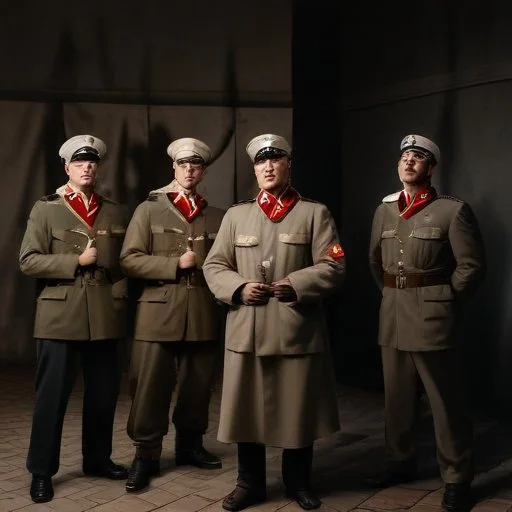
In the dead of night, a group of Nazi operatives, dressed in Polish uniforms, stormed the Gleiwitz radio station, broadcasting a provocative message in Polish, deliberately designed to enrage the German public. This was no ordinary radio broadcast, but a carefully crafted deception, orchestrated by the Nazis to create a pretext for war. The following day, Germany launched a devastating attack on Poland, marking the beginning of World War II in Europe. The Gleiwitz incident, as it came to be known, was a brazen example of a false flag operation, where a government stages a terrorist attack on its own people, blaming it on a convenient scapegoat, in this case, Poland. The incident exposed the ruthless tactics employed by the Nazi regime, which stopped at nothing to achieve their expansionist ambitions.
A Night of Deception: The Gleiwitz Incident and the Dawn of World War II
The Gleiwitz incident, a sinister plot orchestrated by the Nazi regime, is infamously known for being the catalyst that sparked World War II in Europe. On a fateful night in August 1939, Nazi operatives, disguised as Polish soldiers, stormed a German radio station, broadcasting a provocative message that would soon engulf the continent in flames.
The Masterminds Behind the Mayhem
The Gleiwitz incident was the brainchild of
Reinhard Heydrich, the cunning and ruthless head of the SS Security Service, and
Heinrich Müller, the notorious chief of the Gestapo. These two masterminds carefully crafted the operation to deceive the German public and create a pretext for war.
A Timeline of Deception
- August 31, 1939: A group of Nazi operatives, dressed in Polish uniforms, storm the Gleiwitz radio station.
- August 31, 1939 (late night): The operatives broadcast a message in Polish, calling for an uprising against Germany.
- September 1, 1939: Germany launches a devastating attack on Poland, citing the Gleiwitz incident as justification.
A Web of Lies and Deception
The Gleiwitz incident was a brazen example of a false flag operation, where a government stages a terrorist attack on its own people, blaming it on a convenient scapegoat. The Nazis went to great lengths to create the illusion of a Polish attack, even leaving behind the bodies of concentration camp inmates, dressed in Polish uniforms, to "prove" the aggression.
A Continent in Flames
The German attack on Poland marked the beginning of World War II in Europe, drawing in major powers like France, the United Kingdom, and the Soviet Union. The war would eventually claim millions of lives, leaving a scar on the continent that would take decades to heal.
A Lasting Legacy of Deception
The Gleiwitz incident serves as a chilling reminder of the dangers of propaganda and the devastating consequences of unchecked aggression. As we reflect on this dark chapter in history, we are reminded of the importance of critical thinking, media literacy, and the need for accountability in the face of deception.
Quotes and Reflections
"The greatest glory in living lies not in never falling, but in rising every time we fall." -
Winston Churchill
The Gleiwitz incident is a stark reminder that even in the darkest of times, there are those who will stop at nothing to achieve their goals, no matter the cost in human lives. As we strive to build a more peaceful and just world, we must remain vigilant in the face of deception and manipulation.
Broad Historical Examination
The Mastermind's Plan: A Detailed Account of the Gleiwitz Incident
The Gleiwitz incident was a meticulously planned operation, with Heydrich and Müller orchestrating every detail. The two masterminds carefully selected a group of operatives, many of whom were SS men, to carry out the attack. They were dressed in Polish uniforms, complete with fake insignia and badges, to create the illusion of a genuine Polish attack.
The operatives were instructed to storm the radio station, overpower the staff, and broadcast a provocative message in Polish, calling for an uprising against Germany. The message was carefully crafted to inflame tensions and create a sense of urgency, making it seem like a genuine Polish attack.
The entire operation was designed to be as convincing as possible, with the operatives leaving behind "evidence" of the Polish attack, including fake documents and bullet-riddled walls.
Rich Character Description
The Architect of Deceit: Reinhard Heydrich's Rise to Power
Reinhard Heydrich was a ruthless and cunning individual who rose through the ranks of the Nazi party to become one of the most powerful men in Germany. Born in 1904, Heydrich joined the Nazi party in 1931 and quickly gained the attention of Heinrich Himmler, the head of the SS.
Heydrich's intelligence, charm, and ruthless ambition made him an ideal candidate for the role of head of the SS Security Service, a position he held from 1939 until his assassination in 1942. It was during this time that he orchestrated the Gleiwitz incident, cementing his reputation as a master of deception and manipulation.
Geopolitical Analysis
The European Powder Keg: Geopolitical Tensions Leading Up to the Gleiwitz Incident
In the late 1930s, Europe was a tinderbox waiting to be ignited. The Treaty of Versailles had left Germany feeling humiliated and vulnerable, while the rise of fascist Italy and Nazi Germany had created an atmosphere of tension and mistrust.
The Molotov-Ribbentrop Pact between Germany and the Soviet Union in August 1939 had created a sense of unease in Eastern Europe, particularly in Poland, which was acutely aware of its vulnerable position between the two powers.
It was within this geopolitical context that the Gleiwitz incident took place, providing the Nazi regime with the perfect pretext for war.
Economic Consequence Analysis
The Economic Cost of Deception: The Financial Fallout of the Gleiwitz Incident
The Gleiwitz incident marked the beginning of a devastating conflict that would eventually cost millions of lives and billions of dollars. The war would drain the economies of Europe, leaving behind a trail of destruction and devastation.
Germany's attack on Poland led to a declaration of war by France and the United Kingdom, which in turn led to a devastating conflict that would last for six years. The war effort would require massive investments in military equipment, infrastructure, and manpower, placing a heavy burden on the economies of all involved.
Comparative Study
A Comparative Analysis of False Flag Operations Throughout History
The Gleiwitz incident was not an isolated event in the annals of history. False flag operations have been used throughout the centuries to justify war, provoke conflict, and manipulate public opinion.
One notable example is the Gulf of Tonkin incident in 1964, where the United States claimed that North Vietnamese ships had attacked a U.S. naval vessel, leading to a significant escalation of American involvement in the Vietnam War.
Another example is the Reichstag fire of 1933, where the Nazi regime blamed a fictional communist plot for the arson, using it as a pretext to consolidate power and suppress political opponents.


