


Nelson Mandela's release from Victor Verster Prison on February 11, 1990, marked a significant turning point in South Africa's struggle for equality and democracy. After 27 years of imprisonment for his unwavering stance against the apartheid regime, Mandela emerged as a symbol of hope and resilience, paving the way for a new era of racial harmony and reconciliation.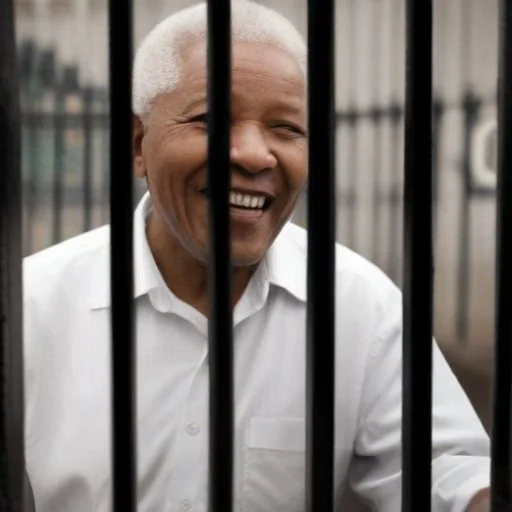
The apartheid regime, established in 1948, was a system of institutionalized racial segregation that denied basic human rights to non-whites. The National Party, led by Hendrik Verwoerd, implemented a range of discriminatory laws, forcibly removing people from their homes, restricting their movement, and limiting their access to education and employment.
Nelson Mandela, a young lawyer and member of the African National Congress (ANC), became increasingly involved in the anti-apartheid movement. In 1962, he was arrested and charged with sabotage, leading to his imprisonment on Robben Island. Despite the harsh conditions, Mandela continued to advocate for equality, earning him international recognition as a symbol of resistance against the apartheid regime.
In the late 1980s, international pressure mounted on the South African government to release Mandela and dismantle apartheid. The United States, European Community, and other nations imposed economic sanctions, while internal protests and boycotts further weakened the regime. F.W. de Klerk, the new State President, initiated secret talks with Mandela, leading to his conditional release in 1990.
Upon his release, Mandela called for reconciliation and forgiveness, urging his followers to work towards a democratic, non-racial South Africa. His leadership played a crucial role in the country's transition, culminating in the country's first multiracial democratic elections in 1994, where he became the first black president of South Africa.
"For to be free is not merely to cast off one's chains, but to live in a way that respects and enhances the freedom of others."
Winnie Madikizela-Mandela, Nelson Mandela's wife, recalled the emotional moment of his release: "I was overwhelmed with joy, tears streaming down my face. I knew that this was the beginning of a new era for our country."
Nelson Mandela received numerous awards and honors for his tireless efforts, including the Nobel Peace Prize in 1993 and the Presidential Medal of Freedom in 1998.
Mandela's release and subsequent presidency paved the way for reconciliation and democratization in other countries, serving as a beacon of hope for those struggling against oppression and discrimination.
Mandela's life and legacy have inspired countless artists, musicians, and writers, cementing his place as an icon of freedom and equality. His story has been immortalized in films, books, and documentaries, ensuring that his message of hope and resilience continues to inspire future generations.
Did you know that Nelson Mandela's release was watched by an estimated global audience of 200 million people, making it one of the most-watched events in television history?
Nelson Mandela's release from Victor Verster Prison marks a pivotal moment in South Africa's struggle for equality and democracy. His unwavering commitment to the anti-apartheid movement, coupled with his message of forgiveness and reconciliation, has left an indelible mark on history, inspiring generations to strive for a more just and equitable world.
Nelson Mandela's journey to becoming a symbol of resistance against apartheid began long before his imprisonment on Robben Island. Born in 1918 in the Eastern Cape of South Africa, Mandela grew up in a traditional Thembu family and was raised to be a leader. He was exposed to the harsh realities of apartheid from a young age, and his experiences fueled his desire to fight for equality and justice.
Mandela's early activism began in the 1940s, when he became involved in the African National Congress (ANC). He, along with other prominent leaders, formed the ANC Youth League, which aimed to promote African nationalism and opposition to apartheid. Through his work with the ANC, Mandela became increasingly involved in anti-apartheid activities, including boycotts, protests, and civil disobedience.
Winnie Madikizela-Mandela, Nelson Mandela's wife, played a crucial role in the anti-apartheid movement. A fierce activist in her own right, Winnie was a constant source of support for Mandela during his imprisonment, often at great personal cost. Despite facing harassment, arrest, and banning by the apartheid regime, Winnie continued to speak out against the injustices of apartheid, inspiring many to join the fight for equality.
Winnie's own experiences as a black woman under apartheid gave her a unique perspective on the struggles faced by women in South Africa. She worked tirelessly to promote women's rights and empowerment, co-founding the Black Women's Federation in 1975. Her unwavering dedication to the anti-apartheid movement and her husband earned her the title "Mother of the Nation."
The apartheid regime in South Africa was not an isolated phenomenon. Similar systems of institutionalized racial segregation and discrimination existed in other parts of the world, including the United States, Australia, and Rhodesia. Comparative analysis reveals that apartheid was part of a broader global trend of racialized oppression and discrimination.
One notable parallel can be drawn with the Jim Crow era in the United States, where segregation and disenfranchisement of African Americans were enforced through laws and social norms. Similarly, in Rhodesia, the white minority government enforced segregation and discrimination against the black majority. These comparisons highlight the global nature of racialized oppression and the need for collective action to combat it.
Nelson Mandela's impact on popular culture extends far beyond his political achievements. He has inspired countless artists, musicians, and writers, cementing his place as an icon of freedom and equality. From songs like "Free Nelson Mandela" by The Special AKA to films like "Mandela: Long Walk to Freedom," his story has been immortalized in various forms of art and media.
Mandela's cultural influence has also been felt in the world of sports. The 1995 Rugby World Cup, held in South Africa, was a symbol of national unity and reconciliation, with Mandela famously donning a Springbok jersey to present the trophy to the South African team.
Historians have approached Nelson Mandela's legacy from various angles, reflecting diverse perspectives on his role in the anti-apartheid movement. Some have portrayed Mandela as a heroic figure, emphasizing his unwavering commitment to the cause and his strategic leadership. Others have highlighted his pragmatic approach to politics, noting his willingness to engage in compromise and negotiation.
A more critical historiographical perspective has examined Mandela's role within the broader context of the anti-apartheid movement, arguing that his leadership was not without controversy. This perspective highlights the tensions between Mandela's more moderate approach and the radicalism of other anti-apartheid activists.