


The Works Progress Administration (WPA) is renowned for being one of the most ambitious programs in American history, providing jobs for over 8.5 million people during the Great Depression. Established under President Franklin D. Roosevelt's New Deal, the WPA aimed to revitalise the nation's economy and infrastructure, while preserving its cultural heritage.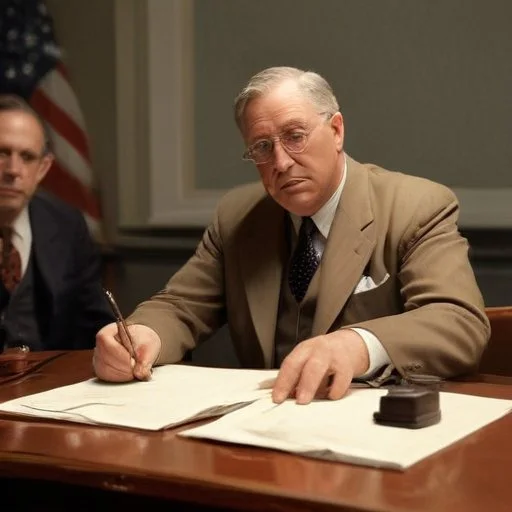
The Great Depression, sparked by the Wall Street Crash of 1929, had left the United States in a state of economic decay. With unemployment rates soaring to over 25%, Americans were struggling to make ends meet. In response, President Roosevelt launched the New Deal, a series of programs and policies designed to stimulate economic recovery and provide relief to those affected.
The WPA's impact was multifaceted and far-reaching. It constructed over 650,000 miles of roads, built or renovated over 125,000 public buildings, and created over 75,000 works of art. The program also provided training and employment opportunities for millions of Americans, helping to restore dignity and hope to those affected by the Great Depression.
The WPA's cultural and social impact was profound. It helped preserve American history through its Historic Records Survey, employed artists and writers through the Federal Writers' Project and the Federal Theatre Project, and even developed the iconic ' posters for the government's tourism campaign.
While the WPA was widely praised for its efforts, it was not without controversy. Critics argued that the program was too costly, inefficient, and even created a culture of dependency. However, for millions of Americans, the WPA was a lifeline, providing essential support during a time of great need.
The WPA's impact was not limited to its economic and cultural achievements; it also inspired a sense of community and purpose. From the artists who created iconic works to the workers who toiled on infrastructure projects, the WPA brought people together, reminding them that they were not alone in their struggles.
The WPA's legacy extends far beyond its immediate impact. It paved the way for future social and economic programs, demonstrated the importance of government intervention in times of crisis, and left an indelible mark on American culture and history.
The Works Progress Administration was a beacon of hope during one of America's darkest hours. Through its sheer scale, ambition, and vision, the WPA helped rebuild a nation, restore dignity to its people, and leave a lasting legacy that continues to inspire generations today.
The WPA's approach to job creation and infrastructure development was distinctly different from other New Deal programs. While the Civilian Conservation Corps (CCC) focused on conservation and outdoor projects, the WPA concentrated on urban and rural infrastructure development. This distinction allowed the WPA to address the specific needs of different regions and communities.
In contrast to the Public Works Administration (PWA), which focused on large-scale infrastructure projects, the WPA's projects were smaller in scale but more numerous. This approach enabled the WPA to provide jobs for a wider range of people and to address local community needs more effectively.

The WPA's cultural programs had a profound impact on American arts and letters. The Federal Writers' Project, for example, employed writers like John Steinbeck, Zora Neale Hurston, and Richard Wright, who went on to produce some of the most influential works of 20th-century American literature.
The WPA's music programs preserved traditional American music, such as blues and jazz, by recording and documenting the work of musicians like Lead Belly and Woody Guthrie.
The WPA's economic impact was significant, with estimates suggesting that the program generated around $1.4 billion in wages and benefits between 1935 and 1943. This injection of capital helped to stimulate local economies and contributed to the overall recovery of the US economy.
The WPA's infrastructure projects, such as road construction and public building renovation, also helped to lay the foundations for post-war economic growth.

The WPA's philosophical underpinnings were rooted in Roosevelt's keynote speech at Oglethorpe University in 1932, in which he called for a "rehydration of the American spirit." The WPA was, in many ways, an attempt to put this vision into practice, by providing jobs and training that would help Americans to regain their sense of purpose and self-worth.
The WPA's emphasis on community and cooperation also reflected the influence of progressive and socialist thought on Roosevelt's New Deal policies.
The WPA's impact on social dynamics was complex and multifaceted. On the one hand, the program helped to reduce unemployment and poverty, which in turn helped to mitigate social unrest and racial tensions.
On the other hand, the WPA's segregated work programs and unequal pay scales perpetuated existing social inequalities, particularly for African Americans and women.