


Nicholas II's ascension to the throne of Imperial Russia on May 26, 1894, marked the pinnacle of Romanov grandeur, but also foreshadowed the dynasty's eventual downfall. This coronation ceremony, replete with pomp and circumstance, would be the last of its kind, as the seeds of revolution were already being sown.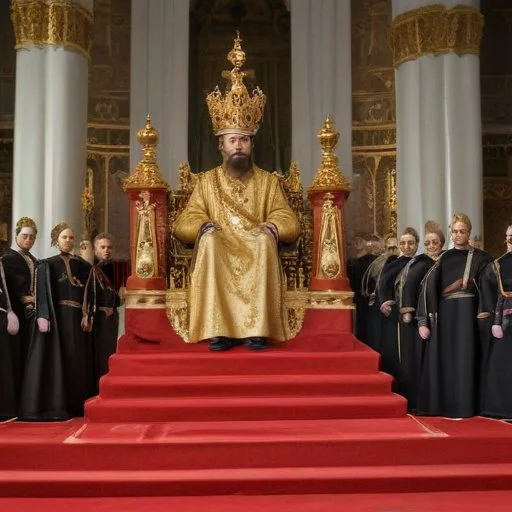
In the late 19th century, Imperial Russia was grappling with the challenges of modernization, industrialization, and political reform. The Romanov dynasty, which had ruled Russia since 1613, was facing growing unrest among its people, who were disillusioned with the autocratic regime and its perceived disconnect from their daily lives.
The coronation of Nicholas II took place in Moscow's Uspensky Cathedral, a grandiose affair that showcased the empire's wealth and extravagance. The ceremony was attended by dignitaries from across Europe, and the proceedings were steeped in tradition and pageantry. Nicholas II, resplendent in his imperial regalia, pledged to uphold the absolute monarchy, a promise that would ultimately prove impossible to keep.
May 26, 1894: Nicholas II is crowned as the last Tsar of Imperial Russia.
1894-1904: Nicholas II's early reign is marked by attempts to reform the Russian economy and military, but these efforts are ultimately unsuccessful.
1905: The Russian Revolution begins, with widespread protests and uprisings against the Romanov regime.
1917: Nicholas II is forced to abdicate, marking the end of the Romanov dynasty.
The coronation of Nicholas II set the stage for the eventual downfall of the Romanov dynasty. The ceremony's extravagance and display of imperial power only served to further alienate the Russian people, who were already disillusioned with the autocratic regime. The seeds of revolution, sown during Nicholas II's reign, would ultimately lead to the rise of communism and the fall of Imperial Russia.
The coronation of Nicholas II reflected the cultural and social norms of Imperial Russia at the time. The ceremony was steeped in tradition and pageantry, highlighting the empire's rich cultural heritage. However, the event also underscored the growing divide between the ruling elite and the common people, who were increasingly disenchanted with the autocratic regime.
The coronation of Nicholas II was met with mixed reactions from the Russian people. While some saw the event as a celebration of Imperial Russia's grandeur, others viewed it as a symbol of the regime's excesses and disconnect from the people's concerns. The ceremony's opulence only served to further fuel the growing discontent among the Russian population.
"I am not a politician, but a monarch, and my duty is to follow the will of my ancestors."
— Nicholas II, on his role as ruler
The coronation of Nicholas II bears similarities to other grandiose events in history, such as the coronation of Napoleon I or the enthronement of Queen Victoria. However, the Russian ceremony was unique in its scale and opulence, reflecting the empire's wealth and extravagance.
According to eyewitness accounts, Nicholas II was visibly nervous during the coronation ceremony, fumbling with his ceremonial robes and struggling to maintain his composure. This anecdote has been cited as a reflection of the emperor's inexperience and uncertainty in the face of his new role.
The coronation of Nicholas II set the stage for the Russian Revolution, which would ultimately lead to the fall of Imperial Russia. The event's extravagance and display of imperial power only served to further fuel the growing discontent among the Russian people, paving the way for the rise of communism.
The coronation of Nicholas II was not only a grandiose affair but also a carefully choreographed event designed to project the power and legitimacy of the Romanov dynasty. The ceremony waspreceded by weeks of pomp and circumstance, including lavish banquets, military parades, and ceremonial processions. On the day of the coronation, Moscow's Uspensky Cathedral was transformed into a sea of gold, crimson, and purple, as dignitaries from across Europe gathered to witness the anointing of the new tsar.
The cathedral's interior was adorned with intricate frescoes and ornate icons, while the air was thick with the scent of incense and the sound of chanting priests. The imperial regalia, worn by Nicholas II, was a symbol of the autocratic power he was about to assume, and the weight of his ancestral legacy.
Alexandra Feodorovna, the wife of Nicholas II, played a crucial role in the coronation ceremony, serving as a symbol of imperial grandeur and femininity. Her presence alongside her husband was a deliberate attempt to project an image of a united and powerful imperial couple, one that would rule Russia with wisdom and benevolence.
However, Alexandra's influence on Nicholas II would ultimately prove disastrous, as her poor judgement and autocratic tendencies contributed to the downfall of the Romanov dynasty.The coronation of Nicholas II reflected the cultural and artistic traditions of Imperial Russia, with its grandiose ceremony showcasing the empire's rich cultural heritage. The event was a celebration of Russian Orthodox Christianity, with its elaborate rituals and ornate regalia, and the imperial couple's presence was seen as a symbol of divine right.
The coronation also highlighted the growing divide between the ruling elite and the common people, who were increasingly disillusioned with the autocratic regime and its excesses.
The coronation of Nicholas II took place at a time of great geopolitical uncertainty, with the European powers engaged in a complex game of alliances and rivalries. The event was attended by dignitaries from across Europe, including the German Kaiser Wilhelm II, who would later become a bitter rival of Nicholas II.
The coronation was seen as an opportunity for Russia to assert its dominance in the region, and to project its military and economic power onto the global stage.
The coronation of Nicholas II was a costly affair, with estimates suggesting that the event cost the Russian treasury upwards of 10 million rubles. The ceremony was accompanied by a series of lavish banquets and receptions, which lasted for several days and were attended by the cream of Russian society.
The economic burden of the coronation was felt across Russia, with many ordinary citizens forced to contribute to the cost of the event through increased taxes and donations.