


The Chagai-I tests had far-reaching consequences:
The Chagai-I tests will be remembered as a defining moment in Pakistan's history, a testament to the country's resilience and determination. As Dr. Abdul Qadeer Khan famously said, "Pakistan's nuclear capability is not for display, but for deterrence."
Pakistan celebrates Youme-Takbir every year on May 28, commemorating the anniversary of the Chagai-I tests. This national day of pride serves as a reminder of the country's strength and unwavering commitment to its sovereignty.
Dr. Abdul Qadeer Khan: The Father of Pakistan's Nuclear Program
Dr. Abdul Qadeer Khan is often referred to as the "father of Pakistan's nuclear bomb." Born in 1936, Khan was a Pakistani nuclear physicist and engineer who played a crucial role in developing Pakistan's nuclear program. He studied metallurgy in Europe and later worked in the Netherlands before returning to Pakistan in the 1970s.
Khan was appointed as the Director-General of the Khan Research Laboratories (KRL) in 1983, where he led the development of Pakistan's nuclear weapons. He was a strong advocate for Pakistan's nuclear program and is credited with developing the country's first nuclear bomb.
Khan's contribution to Pakistan's nuclear program earned him national recognition, and he was awarded the Nishan-e-Imtiaz, Pakistan's highest civilian honor, in 1999.
Economic Sanctions: A Heavy Price to Pay
The international community responded swiftly to Pakistan's nuclear tests, imposing severe economic sanctions on the country. The United States, Japan, and other nations cut off financial aid, suspended trade agreements, and froze Pakistani assets abroad.
The sanctions had a devastating impact on Pakistan's economy, which was already struggling to recover from the aftermath of the Soviet-Afghan War. The country's GDP growth rate slowed, inflation soared, and foreign investment dwindled.
The economic sanctions also had a significant impact on the lives of ordinary Pakistanis, who faced rising poverty, unemployment, and inflation.
The Geopolitical Context of the Indo-Pakistani Nuclear Rivalry
The Indo-Pakistani nuclear rivalry cannot be understood without considering the geopolitical context of the region. The partition of India and Pakistan in 1947 led to a longstanding dispute over the Kashmir region, which has been a flashpoint for tensions between the two nations.
The rivalry is also influenced by the Cold War dynamics of the time, with India aligning itself with the Soviet Union and Pakistan with the United States. The nuclear tests in 1998 marked a significant shift in the balance of power in the region.
The Chagai-I tests sent a clear message to India and the international community that Pakistan would not be intimidated or bullied, and that it would take bold action to protect its sovereignty.
A Comparative Analysis of the Indo-Pakistani Nuclear Rivalry
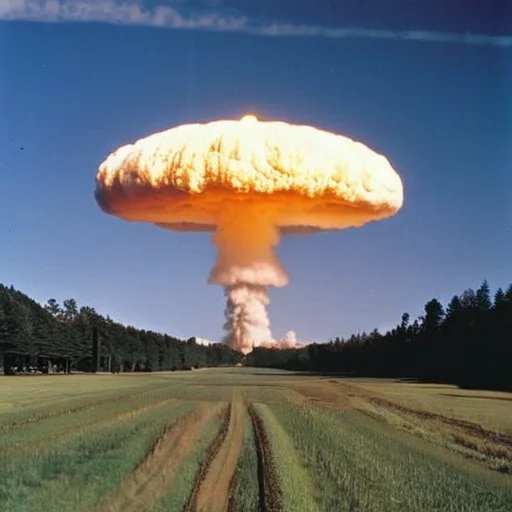
The Indo-Pakistani nuclear rivalry is often compared to the Cold War-era rivalry between the United States and the Soviet Union. Both rivalries are marked by a series of tit-for-tat nuclear tests, a build-up of military capabilities, and a rhetoric of deterrence.
However, there are significant differences between the two rivalries. The Indo-Pakistani rivalry is driven by regional security concerns, whereas the US-Soviet rivalry was driven by global ideological differences.
A comparative analysis of the two rivalries offers valuable insights into the dynamics of nuclear deterrence and the role of regional security concerns in shaping nuclear policy.
Historiographical Perspectives on the Chagai-I Tests
Historians have interpreted the Chagai-I tests in various ways, with some viewing it as a bold move by Pakistan to assert its sovereignty and others seeing it as a reckless act of nuclear brinkmanship.
Some historians argue that the tests were a necessary response to India's nuclear aggression, while others contend that they were driven by domestic political considerations.
Regardless of interpretation, the Chagai-I tests are recognized as a significant turning point in the history of the Indo-Pakistani nuclear rivalry, marking a shift towards a state of mutual deterrence.