


The Castle Bravo nuclear test, codenamed "Bravo," is infamous for being the largest and most catastrophic nuclear explosion in United States history, contaminating a vast area of the Pacific Ocean and sparking widespread outrage. This 15-megaton hydrogen bomb, detonated on March 1, 1954, released an enormous amount of radioactive material into the atmosphere, causing widespread destruction and chaos.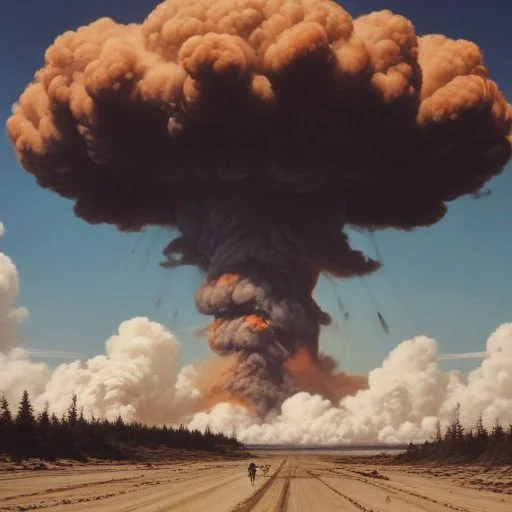
The scientists behind the Castle Bravo test had anticipated a 6-megaton blast, but the actual yield was more than double that. This massive miscalculation was due to the use of a new, more efficient fusion fuel, which ended up releasing 2.5 times more energy than expected. The resulting explosion was so powerful that it vaporized the islands of Bikini, Namu, and Anebuchwurukuru, and sent a plume of radioactive debris soaring into the stratosphere.
The radioactive fallout from Castle Bravo was catastrophic, affecting thousands of people, including the unsuspecting residents of the nearby atolls of Rongelap and Utirik. The fallout also contaminated a Japanese fishing boat, the Lucky Dragon, which was sailing outside the designated danger zone. The 23 crew members on board were exposed to high levels of radiation, leading to widespread media attention and international outcry.
The Castle Bravo test sparked a wave of controversy, with many questioning the safety and morality of nuclear testing. The incident led to a reevaluation of nuclear testing policies, with the United States eventually signing the Partial Nuclear Test Ban Treaty in 1963. The test also highlighted the dangers of nuclear fallout, driving home the importance of taking measures to minimize the risks associated with nuclear testing.
| Date | Event |
|---|---|
| March 1, 1954 | Castle Bravo test detonated on Bikini Atoll |
| March 1954 | Radiation detected on nearby atolls and on the Japanese fishing boat Lucky Dragon |
| 1955 | United States signs the Partial Nuclear Test Ban Treaty |
The Castle Bravo test was a watershed moment in the history of nuclear testing, highlighting the devastating consequences of nuclear fallout and sparking a global conversation about the dangers of nuclear weapons. Today, the test serves as a cautionary tale, reminding us of the importance of responsible stewardship of nuclear technology.
As we reflect on the devastating detonation of Castle Bravo, we are reminded of the wise words of Albert Einstein, "The unleashed power of the atom has changed everything save our modes of thinking and we thus drift toward unparalleled catastrophe."
The Castle Bravo test was not an isolated incident in the history of nuclear testing. In fact, it was part of a larger trend of nuclear testing in the Pacific during the 1950s. The British, French, and Americans all conducted nuclear tests in the region, sparking concerns about the environmental and health impacts of nuclear testing. A comparative analysis of these tests reveals that the Castle Bravo test was the largest and most destructive, but it was not an anomaly. Rather, it was part of a broader pattern of nuclear testing that had devastating consequences for the environment and human health.
One notable comparison can be made with the British nuclear test, Operation Grapple, which was conducted in 1957. Like Castle Bravo, Operation Grapple was a high-yield test that had significant environmental impacts. However, whereas Castle Bravo contaminated a vast area of the Pacific Ocean, Operation Grapple contaminated a smaller area, but still had significant effects on the local ecosystem. This comparison highlights the need for international cooperation and regulations on nuclear testing to prevent further environmental damage.
Comparison of Nuclear Tests in the Pacific:| Test Name | Year | Yield (megatons) | Location |
|---|---|---|---|
| Castle Bravo | 1954 | 15 | Bikini Atoll |
| Operation Grapple | 1957 | 3 | Christmas Island |
Stanislaw Ulam was a Polish-American mathematician and physicist who played a crucial role in the development of the Castle Bravo test. Born in 1909 in Lviv, Poland, Ulam was a child prodigy who showed a keen interest in mathematics from an early age. He went on to study at the University of Lviv and later at the University of Wisconsin-Madison, where he earned his Ph.D. in mathematics.
Ulam's work on the Castle Bravo test was instrumental in the development of the fusion fuel that made the test possible. His calculations and designs helped to increase the yield of the test, making it the largest and most powerful nuclear test in history at the time. Ulam's contribution to the test was significant, and he is widely regarded as one of the key figures in the development of the hydrogen bomb.
Awards and Honors:
The Castle Bravo test was a culmination of years of research and development by the United States government. The test was part of a larger effort to develop a hydrogen bomb, a more powerful and efficient type of nuclear weapon. The project was led by a team of scientists at the Los Alamos National Laboratory, including Edward Teller, Stanislaw Ulam, and others.
The development of the Castle Bravo test was a complex and challenging process. Scientists had to overcome numerous technical hurdles, including the development of a fusion fuel that could sustain a nuclear reaction. The test was also subject to strict security protocols, and the team had to work under intense pressure to meet deadlines and expectations.
Despite the challenges, the team persevered, and their efforts paid off on March 1, 1954, when the test was successfully detonated. The Castle Bravo test was a major milestone in the development of nuclear weapons, and it marked a significant shift in the balance of power during the Cold War.
The Castle Bravo test had a profound impact on popular culture, sparking widespread concern about the dangers of nuclear testing and the impact of nuclear fallout on human health. The test was widely covered in the media, and it led to a surge in anti-nuclear activism and protests around the world.
One notable example of the test's cultural impact is the Japanese film "Godzilla," which was released in 1954, just months after the Castle Bravo test. The film tells the story of a giant monster that emerges from the depths of the ocean, wreaking havoc on Tokyo. The film is often seen as a metaphor for the fears and anxieties of the Japanese people in the aftermath of the Castle Bravo test and the nuclear bombings of Hiroshima and Nagasaki.
The Castle Bravo test also inspired a range of artistic and literary works, including music, poetry, and fiction. The test captured the imagination of artists and writers, who saw it as a symbol of the destructive power of nuclear technology and the need for international cooperation and disarmament.
The Castle Bravo test took place in the midst of the Cold War, a period of intense rivalry and competition between the United States and the Soviet Union. The test was seen as a demonstration of American military power and a warning to the Soviet Union not to engage in nuclear testing.
In the years leading up to the test, the United States and the Soviet Union had been engaged in a series of proxy wars and diplomatic maneuvering, with each side seeking to gain the upper hand. The Castle Bravo test was seen as a way for the United States to demonstrate its military superiority and to flex its muscles in the face of Soviet aggression.
The test also had significant implications for international relations, leading to a surge in diplomatic efforts to ban nuclear testing and to establish international safeguards against nuclear proliferation. The test marked a turning point in the Cold War, as both sides began to recognize the devastating consequences of nuclear war and the need for international cooperation and disarmament.