


On September 21, 1976, a brutal assassination shook the American capital, as Orlando Letelier, a former Chilean defense minister and vocal critic of Augusto Pinochet's regime, was killed in a car bombing on Sheridan Circle in Washington D.C. Alongside him, American colleague Ronni Moffitt also lost her life in the blast.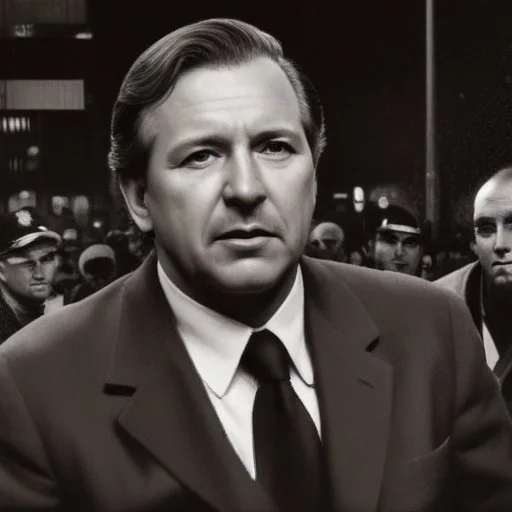
In the aftermath of the 1973 Chilean coup, General Augusto Pinochet's military junta seized power, plunging the country into a dark era of repression and human rights abuses. As a prominent figure in the Allende government, Orlando Letelier found himself at the top of the regime's hit list. Forced into exile, Letelier continued to speak out against Pinochet's brutal methods, becoming a thorn in the dictator's side.
In the summer of 1976, Chile's secret police, the DINA, hatched a plan to eliminate Letelier. Under the direction of Pinochet's right-hand man, Manuel Contreras, the operation involved recruiting a group of anti-Castro Cuban exiles to carry out the assassination. The team, led by Michael Townley, a CIA-trained operative, traveled to Washington D.C. to set their plan in motion.
On that fateful morning, Letelier and Moffitt drove through Sheridan Circle, unaware of the danger lurking nearby. As they stopped at a red light, a parked car exploded, sending debris flying everywhere. The blast killed Letelier instantly, while Moffitt succumbed to her injuries shortly after.
The FBI launched an investigation into the assassination, working closely with Chilean authorities. Although Pinochet's regime initially denied involvement, the evidence eventually pointed to the DINA's role in the murder. In 1978, Michael Townley was arrested and later convicted of the crime, while Manuel Contreras was sentenced to life in prison in 2005.
Orlando Letelier's assassination served as a stark reminder of the brutal nature of Pinochet's regime. The event galvanized international opposition to the dictator, paving the way for his eventual downfall in 1990. Today, Letelier's legacy as a champion of human rights and democracy continues to inspire generations, a testament to the enduring power of resistance in the face of oppression.
"I have faith in the future, but I also have a responsibility to the past." - Orlando Letelier
Manuel Contreras: The Mastermind Behind the Assassination
Manuel Contreras, the head of Chile's secret police, the DINA, was the architect of the plot to eliminate Orlando Letelier. A ruthless and cunning operative, Contreras was Pinochet's right-hand man and was responsible for carrying out the regime's dirty work.
Contreras's role in the assassination was instrumental, and his involvement was eventually exposed through a thorough investigation. His conviction in 2005 brought a measure of justice to the victims and their families, but it also highlighted the extent of the regime's brutality and corruption.

The Geopolitical Context of the Assassination
The assassination of Orlando Letelier took place against the backdrop of a complex and tumultuous geopolitical landscape. The Cold War was at its height, and the United States was increasingly concerned about the spread of communism in the region.
In this context, Pinochet's regime was seen as a bulwark against Marxism, and the CIA had established close ties with the DINA. However, the brutal nature of the regime and its human rights abuses were beginning to attract international condemnation, and the Letelier assassination would prove to be a turning point in the US-Chile relationship.
Historians on the Letelier Assassination
Historians have interpreted the Letelier assassination as a pivotal moment in the struggle against Pinochet's regime. Some have seen it as a galvanizing event that rallied international opposition to the dictator, while others have highlighted the complicity of the CIA and the US government in supporting the regime.
Regardless, the assassination has been recognized as a important chapter in the history of human rights and democracy in Chile, and continues to be studied by historians and scholars today.

The Cultural Impact of the Assassination
The Letelier assassination sent shockwaves through the cultural and artistic community in Chile and beyond. The brutal murder of a prominent dissident and his American colleague provoked widespread outrage and condemnation, and inspired a wave of protests, vigils, and artistic responses.
In the years that followed, the assassination would become a symbol of resistance against oppression, inspiring countless works of art, music, and literature that reflected the pain and outrage of a generation.
Political Fallout and the End of the Pinochet Regime
The Letelier assassination had significant political consequences, both domestically and internationally. The US Congress launched an investigation into the CIA's involvement with the DINA, and the regime's human rights abuses were increasingly condemned by governments and human rights organizations around the world.
In the end, the regime's brutality and corruption would prove to be its undoing, and Pinochet would eventually be forced from power in 1990. The Letelier assassination played a significant role in exposing the regime's true nature, and paved the way for the restoration of democracy in Chile.