


So, who was this enigmatic figure who would go on to leave an indelible mark on German history? Born on April 1, 1815, in Schönhausen, Prussia, Otto von Bismarck was a product of a noble family. His upbringing instilled in him a deep sense of duty, discipline, and a strong Prussian identity. These traits, coupled with his exceptional intelligence and analytical mind, laid the foundation for his future success.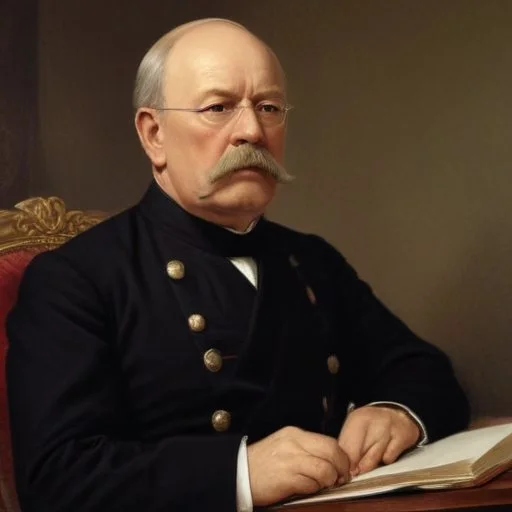
As a young diplomat, Bismarck navigated the complex web of European politics with ease, earning the respect and admiration of his peers. His unwavering commitment to the unification of Germany, combined with his ability to balance competing interests and forge strategic alliances, made him the ideal candidate for the challenging role of Chancellor.
The unification of Germany under Otto von Bismarck's leadership was not an isolated event, but rather a culmination of centuries of European politics and diplomacy. The Congress of Vienna in 1815 had established the German Confederation, a loose alliance of 39 states, which Bismarck saw as an opportunity to create a unified German nation. The Crimean War and the Italian Wars of Independence had also created a power vacuum in Europe, which Bismarck skillfully exploited to further his goals.
The European great powers, including Britain, France, and Austria, were initially skeptical of Bismarck's plans, but they ultimately recognized the reality of a unified Germany. The Franco-Prussian War and the subsequent formation of the German Empire marked a significant shift in the European balance of power, with Germany emerging as a major player.
Bismarck's upbringing in a noble Prussian family instilled in him a strong sense of duty and discipline, which were essential qualities for his future success as a statesman. His education at the University of Göttingen and the University of Berlin exposed him to the ideas of the Enlightenment and the principles of liberalism, which he would later reject in favor of a more authoritarian approach to governance.
Despite his gruff and authoritarian demeanor, Bismarck was a skilled politician who knew how to build alliances and manipulate public opinion. He was a master of realpolitik, using a combination of diplomacy, coercion, and propaganda to achieve his goals.
The unification of Germany under Bismarck's leadership can be compared to other significant events in European history, such as the unification of Italy under Camillo Benso di Cavour and the formation of the United States under Abraham Lincoln. Like these leaders, Bismarck used a combination of diplomacy, coercion, and nationalist sentiment to create a unified nation-state.
However, Bismarck's approach was distinct from his contemporaries, relying more on authoritarianism and militarism than liberal ideals. His legacy would be marked by a mix of authoritarianism and reform, shaping the course of German history for decades to come.

The unification of Germany under Bismarck's leadership had significant economic consequences, including the creation of a single customs union and a uniform system of weights and measures. The German Empire became a major economic power, with a rapidly industrializing economy and a strong infrastructure.
Bismarck's economic policies, including the creation of a central bank and a system of tariffs, helped to stimulate economic growth and development. The empire's strong economy also enabled Bismarck to pursue an ambitious program of social welfare reform, including the introduction of old-age pensions and workers' compensation.
The unification of Germany under Bismarck's leadership had significant social consequences, including the creation of a new German identity and the emergence of a modern, urbanized society. The empire's rapid industrialization and urbanization led to the growth of a new industrial working class, which would become a major force in German politics.
Bismarck's social policies, including the creation of a system of universal education and a program of social welfare reform, helped to address some of the social consequences of industrialization and urbanization. However, his policies also perpetuated social and economic inequalities, particularly between the emerging industrial bourgeoisie and the traditional aristocracy.