Pakistan gains independence from British Empire
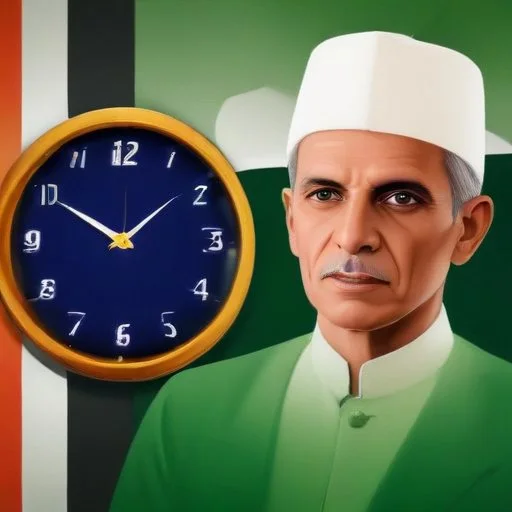
The clock struck midnight on August 14, 1947, and Pakistan was born! The Indian subcontinent was abuzz as Muhammad Ali Jinnah, aka the Quaid-e-Azam (Urdu for "Great Leader"), proudly hoisted the Pakistani flag, marking the end of British colonial rule. After centuries of foreign dominance, the Muslims of the region finally had a homeland to call their own. Jinnah's tireless efforts and charismatic leadership had paid off, as Pakistan emerged as a sovereign nation, carving its own path in the world.
Pakistan's Independence: A Triumph of Resilience and Nation-Building
A Watershed Moment in History
On August 14, 1947, the Indian subcontinent witnessed a monumental event – the birth of Pakistan, a sovereign nation born out of the struggle for independence from British colonial rule. This momentous occasion marked the culmination of decades of tireless efforts by prominent leaders, intellectuals, and freedom fighters, who envisioned a separate homeland for Muslims in the region.
Historical Background: The Road to Independence
The British Empire's expansion into the Indian subcontinent in the 18th century led to the colonisation of the region, with the East India Company gradually extending its control over various princely states and territories. By the mid-20th century, the desire for self-governance and independence had become a palpable sentiment among the Indian masses, including the Muslim population. The Two-Nation Theory, advocated by
Muhammad Ali Jinnah and other Muslim leaders, posited that Hindus and Muslims constituted distinct nations, warranting separate homelands.
The Visionary: Muhammad Ali Jinnah
At the forefront of the independence movement was
Muhammad Ali Jinnah, a charismatic leader, lawyer, and statesman. Nicknamed the Quaid-e-Azam (Urdu for Great Leader), Jinnah's unwavering commitment to the Muslim cause and his diplomatic acumen played a pivotal role in crystallizing the idea of Pakistan. His leadership not only galvanized the Muslim League but also earned him the respect and admiration of his contemporaries.
Timeline of Events
- 1906: The All-India Muslim League is founded to promote Muslim interests in British India.
- 1940: The Lahore Resolution, adopted by the Muslim League, calls for the creation of an independent Muslim state.
- 1946: The Cabinet Mission Plan, proposed by the British government, is rejected by the Muslim League.
- June 3, 1947: The British government announces its intention to partition British India into India and Pakistan.
- August 14, 1947: Pakistan gains independence, with Jinnah hoisting the national flag in Karachi.
Major Outcomes and Impacts
Pakistan's independence had far-reaching consequences, both domestically and internationally.
- The creation of Pakistan consolidated the Muslim identity and provided a sense of belonging to the Muslim population in the region.
- The partition of British India led to one of the largest mass migrations in history, with millions crossing the newly drawn borders.
- Pakistan's emergence as a sovereign nation marked a significant shift in the global balance of power, with the country playing a crucial role in regional and international politics.
Cultural and Social Influences
Pakistan's independence had a profound impact on the cultural and social fabric of the nation.
- The country's cultural identity was shaped by its Islamic heritage, with Urdu emerging as the national language.
- The migration of millions of Muslims from India led to the blending of diverse cultural traditions and the creation of a unique Pakistani identity.
- The education system, modeled on the British system, was adapted to accommodate the needs of the new nation.
Controversies and Public Perception
Pakistan's independence was not without its controversies, with the partition of British India sparking violent communal riots and displacement of millions.
- The bloody legacy of partition continues to influence Indo-Pak relations, with both countries still grappling with the aftermath of the division.
- The question of Kashmir's status, left unresolved during the partition, remains a contentious issue between India and Pakistan.
- The treatment of minorities, including Hindus and Sikhs, during and after the partition remains a sensitive topic.
Inspirational Stories and Motivations
Pakistan's independence is replete with stories of courage, sacrifice, and perseverance.
- The bravery of Muslim women, who played a vital role in the freedom struggle, is often overlooked but remains an integral part of the nation's history.
- The contributions of little-known freedom fighters, who fought against British rule, are only now being recognized and celebrated.
- The resilience of the Pakistani people, who rebuilt their nation from scratch, is a testament to their indomitable spirit.
Legacy and Impact
Pakistan's independence serves as a beacon of hope for nations struggling for self-determination and freedom.
- The creation of Pakistan paved the way for other Muslim-majority countries to gain independence from colonial rule.
- The country's emergence as a major player in regional and international politics underscores the importance of sovereignty and self-determination.
- Pakistan's independence continues to inspire generations of Pakistanis, fuelling their aspirations for a brighter future.
Comparative Study
Comparing the Two-Nation Theory with Other Nationalist Movements
The Two-Nation Theory, which formed the basis of Pakistan's independence movement, can be compared to other nationalist movements that sought to create separate homelands for distinct ethnic or religious groups.
For instance, the Zionist movement, which emerged in the late 19th century, sought to establish a Jewish homeland in Palestine. Similarly, the Irish nationalist movement fought for independence from British rule and the creation of a separate Irish state.
While these movements shared similarities with the Pakistan movement, they also had distinct differences. The Two-Nation Theory, for example, was based on the idea of a separate Muslim identity, whereas the Zionist movement was driven by a desire to create a Jewish state.

Rich Character Description
Muhammad Ali Jinnah: The Early Years
Muhammad Ali Jinnah, the founder of Pakistan, was born on December 25, 1876, in Karachi, British India. His early life was marked by a strong desire to learn and succeed. Jinnah studied law in London and was called to the bar in 1896.
In his early career, Jinnah practiced law in Bombay and became involved in politics, joining the Indian National Congress in 1906. However, he soon became disillusioned with the Congress and its inability to address the concerns of Indian Muslims.
Jinnah's leadership skills and vision eventually led him to become the president of the All-India Muslim League in 1913, a position that would propel him to become the champion of the Pakistan movement.
],
{CIS
Geopolitical Dynamics Review
The Geopolitical Context of Pakistan's Independence
The creation of Pakistan in 1947 took place within a complex geopolitical landscape. The British Empire, weakened by World War II, was gradually withdrawing from its colonial territories in India. The emerging Cold War rivalry between the United States and the Soviet Union created an opportunity for new nations to assert their independence.
The Indian subcontinent, with its strategic location and rich resources, was a critical region in the emerging global power struggle. The partition of British India and the creation of Pakistan were, in part, a response to these geopolitical realities.
Pakistan's independence, therefore, must be understood within the context of these broader global trends and rivalries, which have continued to shape the country's foreign policy and regional relationships.

Full Historiographical Review
Historiographical Debates on Pakistan's Independence
Historians and scholars have engaged in ongoing debates about the significance and meaning of Pakistan's independence. Some have argued that the creation of Pakistan represented a triumph of Muslim nationalism, while others have seen it as a product of British colonialism and the manipulation of communal identities.
Another area of debate concerns the role of Jinnah and the Muslim League in the independence movement. Was Jinnah a visionary leader who united Indian Muslims behind a common goal, or was he a pragmatic politician who exploited communal tensions to achieve power?
These historiographical debates underscore the complexities and nuances of Pakistan's independence, highlighting the need for ongoing research and critical analysis.


