Papua New Guinea gains independence from Australia
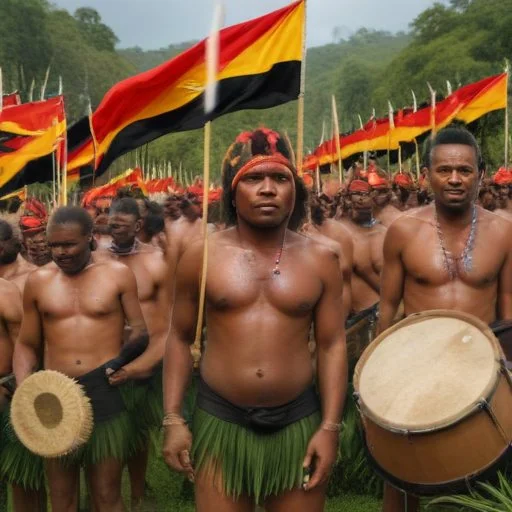
The drums of freedom beat louder in the Pacific as Papua New Guinea, a land of rugged mountains, steamy jungles, and vibrant tribes, finally broke free from Australia's colonial shackles. After decades of foreign rule, the country's diverse people, with their rich cultural heritage, eagerly welcomed the dawn of a new era. With the signing of the Papua New Guinea Independence Agreement in 1975, the nation's first prime minister, Michael Somare, proudly hoisted the new flag, symbolizing the birth of a sovereign state.
Papua New Guinea's Long-Awaited Independence from Australia
A Nation Reborn: September 16, 1975
Papua New Guinea, a land of mesmerizing beauty and rich cultural heritage, finally shook off the shackles of colonial rule on September 16, 1975, as it gained independence from Australia. This momentous occasion marked the culmination of decades-long struggle for self-governance, as the country's diverse people rejoiced at the birth of a sovereign state.
Historical Background: A Complex Dance of Colonization
The story of Papua New Guinea's independence is intertwined with the complex history of colonialism in the Pacific. In the late 19th century, European powers, including Germany and Britain, began to exert control over the region. Following Germany's defeat in World War I, the League of Nations mandated the territory to Australia, which governed it as an external territory. This setup persisted until the mid-20th century, when Papua New Guinea's desire for self-governance began to gain momentum.
Key Figures Involved: The Visionaries Behind the Movement
- Michael Somare: The nation's first prime minister, Somare played a pivotal role in the country's transition to independence. His leadership and vision helped galvanize the movement and pave the way for a smooth transfer of power.
- Julius Chan: A prominent politician and statesman, Chan was instrumental in negotiating the terms of independence with the Australian government. His diplomatic prowess helped facilitate a peaceful transition.
Timeline of Events: The Road to Independence
- 1960s: Papua New Guinea's desire for self-governance gains momentum, with various groups and individuals advocating for independence.
- 1972: The Australian government, under Prime Minister Gough Whitlam, begins to consider granting independence to Papua New Guinea.
- 1975: The Papua New Guinea Independence Agreement is signed, paving the way for the country's transition to independence.
- September 16, 1975: Papua New Guinea officially gains independence, with Michael Somare hoisting the national flag.
Major Outcomes and Impacts: A New Era of Sovereignty
The independence of Papua New Guinea marked a significant shift in the country's trajectory. The newfound sovereignty allowed the nation to chart its own course, making strides in areas such as:
- Economic development: Papua New Guinea began to assert control over its natural resources, investing in infrastructure and promoting economic growth.
- Cultural revitalization: The country's rich cultural heritage was finally given the recognition it deserved, with efforts to preserve and promote traditional practices and customs.
- International relations: Papua New Guinea established diplomatic relations with countries around the world, solidifying its position on the global stage.
Cultural and Social Influences: A Nation's Identity Takes Shape
Papua New Guinea's independence had a profound impact on the country's cultural and social landscape. The nation's diverse people, comprising over 800 languages and more than 1,000 ethnic groups, began to forge a collective identity.
- Symbolism: The national flag, featuring a striking design of red, black, and gold, became a potent symbol of national pride and unity.
- Language: Tok Pisin, a pidgin language, emerged as a unifying force, facilitating communication across linguistic and ethnic boundaries.
- Traditional practices: Efforts to preserve and promote traditional practices, such as the iconic Sing-Sing cultural festivals, helped to strengthen the nation's cultural heritage.
Controversies and Public Perception: A Nation's Growing Pains
Papua New Guinea's independence was not without its challenges and controversies. The country faced numerous growing pains, including:
- Corruption: Allegations of corruption and mismanagement plagued the country's early years of independence.
- Economic uncertainty: Papua New Guinea struggled to balance its economic development with environmental and social concerns.
- Australian legacy: The country's complex relationship with Australia, its former colonial ruler, continued to evolve and mature over time.
Quotes and Memorable Sayings: Voices from the Past
"Today, we celebrate not only our independence, but also the freedom to chart our own destiny." - Michael Somare, Papua New Guinea's first prime minister
Impact on Future Events: A Legacy of Independence
Papua New Guinea's independence has had a profound impact on the country's trajectory, inspiring future generations to continue striving for self-determination and sovereignty. The nation's experiences have also served as a model for other Pacific Island nations seeking independence from colonial powers.
Triva and Fun Facts: A Nation of Diversity
- Papua New Guinea is home to over 800 languages, making it one of the most linguistically diverse countries in the world.
- The country is home to the world's largest butterfly, the Queen Alexandra's Birdwing, which can grow up to 25 centimeters in length.
- Papua New Guinea's unique cultural practices include the infamous "-Sepik River Crocodile Skin" initiation rites, where young men are scarred to mark their transition to adulthood.
Inspirational Stories and Motivations: A Nation's Unwavering Spirit
The story of Papua New Guinea's independence is a testament to the nation's unwavering spirit and determination. Despite the challenges and complexities of colonialism, the country's people persevered, driven by a shared vision of self-governance and sovereignty.
As Papua New Guinea continues to evolve and grow, its inspiring story serves as a beacon of hope for nations and communities around the world, seeking to assert their independence and forge their own path.
Thorough Character Sketch
Michael Somare's leadership during Papua New Guinea's transition to independence was instrumental in shaping the country's future. Born in 1936, Somare hails from the East Sepik Province and was educated at the University of Papua New Guinea. He entered politics in the 1960s, becoming a prominent figure in the country's independence movement. Somare's vision for a unified Papua New Guinea was reflected in his leadership style, which emphasized cooperation and dialogue.
Somare's commitment to Papua New Guinea's development was evident in his efforts to promote economic growth, improve education, and strengthen the country's international relations. His leadership played a crucial role in navigating the country through the challenges of independence, earning him the respect and admiration of the Papua New Guinean people.
Fact: Michael Somare was awarded the Order of the Companion of Honour by Queen Elizabeth II in 1990 for his services to Papua New Guinea.
Detailed Environmental Impact Review
Papua New Guinea's independence had significant environmental implications. The country's newfound sovereignty enabled it to take control of its natural resources, leading to increased exploitation of its rich mineral and timber deposits. While this brought economic benefits, it also resulted in environmental degradation and deforestation.
The country's rainforests, which cover over 70% of the land, were particularly affected. The increase in logging and mining activities led to widespread habitat destruction, threatening the livelihoods of indigenous communities and the country's unique biodiversity.
Did you know? Papua New Guinea is home to some of the world's most biodiverse ecosystems, including the Fly River, which is one of the largest and most pristine rivers in the Asia-Pacific region.
Full Cultural Impact Analysis
Papua New Guinea's independence had a profound impact on the country's cultural landscape. The country's diverse people, comprising over 800 languages and more than 1,000 ethnic groups, began to forge a collective identity.
The national flag, featuring a striking design of red, black, and gold, became a potent symbol of national pride and unity. The country's unique cultural practices, such as the iconic Sing-Sing cultural festivals, were promoted and preserved, strengthening Papua New Guinea's cultural heritage.
The growth of a national identity also led to an increase in cultural exchange programs, promoting cross-cultural understanding and cooperation between Papua New Guinea and other countries.
Traditional Practice: The "Sing-Sing" cultural festivals, held throughout Papua New Guinea, showcase the country's rich cultural diversity, featuring traditional music, dance, and costumes.
Study of Geopolitical Factors
Papua New Guinea's independence was influenced by the complex geopolitics of the Pacific region. The country's strategic location, bordering the Coral Sea and the Pacific Ocean, made it an important player in regional affairs.
Australia's granting of independence to Papua New Guinea was, in part, a response to growing regional pressure and the desire to maintain good relations with its Pacific Island neighbors. The country's independence also marked a significant shift in the balance of power in the region, with Papua New Guinea emerging as a key player in regional organizations such as the Pacific Islands Forum.
Geopolitical Insight: Papua New Guinea's independence was a turning point in the country's relationships with its Pacific Island neighbors, paving the way for greater regional cooperation and collaboration.
Comprehensive Political Review
Papua New Guinea's independence was the culmination of decades of political struggle, marked by a complex dance of negotiations and power struggles between the country's leaders and the Australian government.
The country's transition to independence was facilitated by a series of agreements, including the Papua New Guinea Independence Agreement, which outlined the terms of independence and the role of Australia in the country's development.
Political Milestone: The independence of Papua New Guinea marked a significant milestone in the country's political development, paving the way for the growth of a robust and vibrant democracy.


