


In a groundbreaking move, the British and Irish governments embarked on a crucial diplomatic endeavor in Northern Ireland, marking a significant milestone in the region's tumultuous history. These landmark peace talks, however, took place without the participation of Sinn Féin, the political arm of the Irish Republican Army (IRA), sparking both optimism and uncertainty about the future of peace in the province.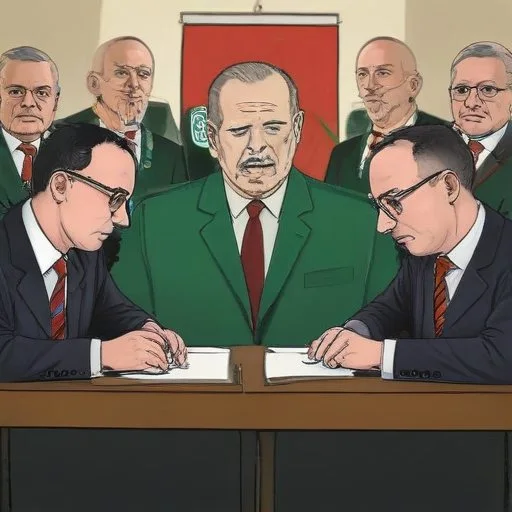
The sectarian strife in Northern Ireland dates back to the early 20th century, with decades of violence and political unrest characterizing the relationship between the province's Protestant and Catholic communities. The Irish Republican Army (IRA), seeking to unify Ireland, and the British government, determined to maintain control over the region, have been engaged in a protracted and often bloody struggle.
In a bold attempt to break the cycle of violence, the British and Irish governments took the unprecedented step of launching peace talks without the involvement of Sinn Féin. This exclusion was seen as a calculated risk, as Sinn Féin's influence and political clout were deemed essential to any lasting peace agreement.
Several key figures played pivotal roles in the peace talks, including:
The peace talks took place over several months, with the following milestones:
The peace talks, despite the absence of Sinn Féin, achieved significant milestones, including:
The peace talks and their outcomes had far-reaching cultural and social implications, including:
The exclusion of Sinn Féin from the peace talks sparked controversy and debate, with many questioning the legitimacy of the process without the IRA's political arm. Critics argued that the talks were incomplete and that any agreement reached would lack credibility without Sinn Féin's endorsement.
Recalling the tense atmosphere during the talks, John Hume, leader of the SDLP, noted, "The stakes were incredibly high, but we knew that the alternative to negotiations was a return to violence and bloodshed."
The peace talks and their outcomes set a precedent for future diplomatic efforts, demonstrating that:
The groundbreaking peace talks in Northern Ireland, though imperfect, marked a crucial step towards lasting peace and stability in the region, underscoring the power of diplomacy and cooperation in the face of seemingly intractable conflict.
The path to peace talks in Northern Ireland was paved by decades of turmoil and violence. One of the most significant events that laid the groundwork for the talks was the 1981 Hunger Strike, led by Bobby Sands, an IRA prisoner who died after 66 days of fasting. This event galvanized international attention and public opinion, creating a sense of urgency for a peaceful resolution.
In the years that followed, secret talks between the British and Irish governments, facilitated by John Hume and other key players, slowly built momentum. The 1994 IRA ceasefire, though fragile, provided a critical window of opportunity for the talks to take place.
Amidst the complex web of allegiances and rivalries, the exclusion of Sinn Féin from the talks was a calculated risk. However, the participation of other nationalist parties, such as the SDLP, ensured that Catholic and Republican voices were represented, even if not directly by Sinn Féin.

One of the unsung heroes of the peace talks was Albert Reynolds, the Irish Taoiseach who played a crucial role in convincing the British government to participate. His behind-the-scenes diplomacy and personal relationships with key players helped to build trust and create an environment conducive to negotiations.
Reynolds' leadership was instrumental in navigating the complexities of Irish politics, particularly in relation to the IRA and Sinn Féin. His ability to find common ground with British Prime Minister John Major and other stakeholders helped to facilitate the talks and paved the way for future agreements.
The peace talks and their outcomes had a profound impact on Northern Irish culture, as communities began to rebuild and reconcile. The normalization of security arrangements and demilitarization led to a decrease in violence and intimidation, allowing people to live their lives without fear of bombings or shootings.
The establishment of a new assembly and power-sharing executive also created opportunities for cross-community collaboration and cooperation. This, in turn, fostered a sense of shared identity and citizenship, as Protestants and Catholics worked together to build a more peaceful and stable society.

The peace talks demonstrated the power of cooperative diplomacy, as the British and Irish governments put aside their historical differences to work towards a common goal. This approach was mirrored by the involvement of multiple stakeholders, including unionist and nationalist parties, which helped to build trust and credibility.
The talks also showcased the importance of sequencing and incremental progress in conflict resolution. By focusing on Confidence-Building Measures (CBMs) and incremental agreements, the parties were able to build momentum and create an environment conducive to more comprehensive deals.
The peace talks in Northern Ireland took place against a backdrop of shifting global politics and Geopolitical Context. The end of the Cold War and the decline of ideological divisions created an opportunity for nations to re-evaluate their priorities and engage in cooperative diplomacy.
The involvement of the European Union, the United States, and other international players also helped to facilitate the talks, providing a framework for cooperation and supporting the parties in their negotiations.