


On September 23, 1972, Philippine President Ferdinand Marcos declared martial law, thrusting the country into a dark era of authoritarian rule that would last for over a decade. With this swift and decisive move, Marcos consolidated his power, silencing critics, jailing opponents, and effectively becoming a dictator.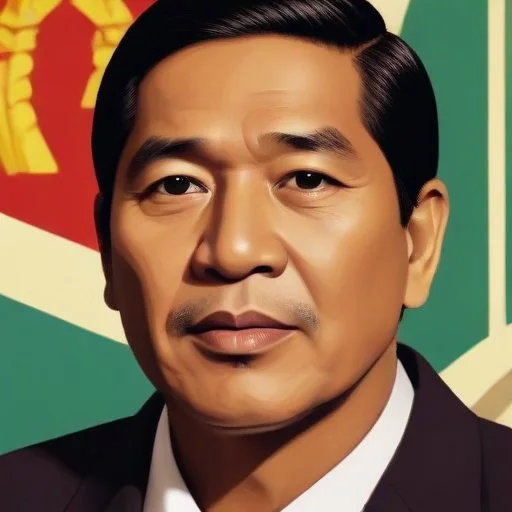
The seeds of Marcos' authoritarian regime were sown in the early 1960s, when he first entered Philippine politics as a charismatic young congressman. Marcos' meteoric rise to power was fueled by his ruthless ambition, cunning, and an uncanny ability to manipulate the political landscape to his advantage.

The catalyst for Marcos' declaration of martial law was the Plaza Miranda bombing, which occurred on August 21, 1971. The bombing, which targeted a political rally of the opposition Liberal Party, left several dead and scores injured. Marcos capitalized on the chaos, blaming the communist insurgency for the attack and proclaiming a state of national emergency.
Under Marcos' rule, the Philippines became a police state, with the military and paramilitary forces enforcing the president's will. Dissent was crushed, freedom of speech was curtailed, and human rights abuses became rampant. The regime was marked by corruption, nepotism, and cronyism, with Marcos and his family amassing vast wealth at the expense of the nation.

Marcos' authoritarian regime had far-reaching consequences, including economic stagnation, political instability, and widespread human rights abuses. The regime's excesses ultimately led to Marcos' downfall in 1986, when a popular uprising, fueled by protests and defiance, forced him into exile.
The Marcos era serves as a cautionary tale about the dangers of unchecked power and the importance of protecting democratic institutions. It also underscores the resilience of the human spirit, as Filipinos fought against tyranny and ultimately reclaimed their democracy.
"I have no plans to become a dictator. I have no ambitions to stay in power. I only want to do what is best for the country." – Ferdinand Marcos, 1972
This infamous quote, uttered in the aftermath of his declaration of martial law, belied Marcos' true intentions and foreshadowed the dark era that would unfold.
The Marcos regime bears similarities to other authoritarian regimes in Asia, such as Indonesia under Suharto and South Korea under Park Chung-hee. These regimes shared common characteristics, including the use of martial law, suppression of dissent, and corruption. However, Marcos' regime stands out for its sheer scale of abuses and excesses, which continue to haunt the Philippines to this day.
Ferdinand Marcos' declaration of martial law marked the beginning of a tumultuous period in Philippine history. The regime's legacy serves as a reminder of the importance of democratic vigilance and the need to protect human rights and civil liberties. As the Philippines continues to grapple with its past, it is essential to learn from the mistakes of the Marcos era and strive towards a brighter future.
Ultimately, Marcos' authoritarian rule remains a cautionary tale about the dangers of unchecked power and the importance of holding leaders accountable for their actions.
Marcos' rise to power was fueled by his charismatic personality, which helped him win over supporters and silence critics. A skilled orator, Marcos was known for his ability to connect with the masses, making him a formidable force in Philippine politics.
Behind the scenes, however, Marcos was a shrewd politician who used his intelligence and cunning to outmaneuver his opponents. He was a master of manipulation, often using his charm and good looks to get what he wanted.

The Marcos regime's authoritarian rule had devastating economic consequences for the Philippines. The regime's crony capitalism and corruption led to widespread poverty, inequality, and unemployment.
The economy stagnated, and the country's infrastructure fell into disrepair. The regime's mismanagement of the economy led to a decline in living standards, and the Philippines fell behind its Southeast Asian neighbors.
The regime's excesses also led to a massive brain drain, as many talented Filipinos fled the country in search of better opportunities abroad.
Marcos' authoritarian rule had a profound impact on Philippine culture. The regime's suppression of dissent and free speech led to a stifling of artistic expression and creativity.
Many artists and writers were forced into exile or went underground, and those who remained in the country were forced to conform to the regime's ideology.
Despite this, the Marcos era also saw the rise of a vibrant protest movement, with artists and musicians using their work to critique the regime and call for change.

Marcos' declaration of martial law was a masterstroke of political Machiavellianism. By capitalizing on the Plaza Miranda bombing, Marcos was able to create a sense of crisis and justify his authoritarian takeover.
The regime's manipulation of the media and the judiciary further cemented Marcos' grip on power, allowing him to crush his opponents and silence dissent.
Marcos' ability to navigate the complexities of Philippine politics and outmaneuver his opponents was a key factor in his ability to maintain his rule for over a decade.
The Marcos regime rose to power during a period of great geopolitical uncertainty. The Cold War was in full swing, and the Philippines was caught in the midst of a global struggle between the United States and the Soviet Union.
In this context, Marcos' authoritarian rule was seen as a bulwark against communism, and the regime received significant support from the United States and other Western powers.
The regime's anti-communist stance also led to increased cooperation with other anti-communist regimes in Southeast Asia, further solidifying Marcos' position as a key regional leader.