


In a move that would send shockwaves throughout Eastern Europe, Polish President Wojciech Jaruzelski took a bold step towards democratization by nominating Tadeusz Mazowiecki, a prominent Solidarity activist, as the first non-communist prime minister in 42 years.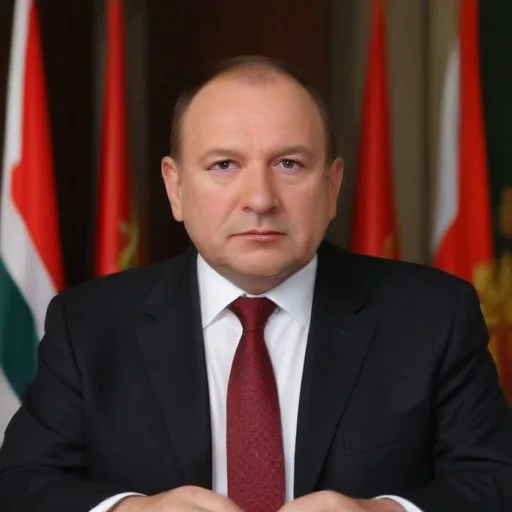
This historic nomination marked a significant shift in the Polish political landscape, signaling the beginning of the end of communist rule and paving the way for a new era of political change.
In the early 1980s, Poland was experiencing economic stagnation, food shortages, and labor unrest. Amidst this turmoil, the Solidarity movement emerged, led by Lech Walesa, as a powerful force for change. The movement's demands for workers' rights and reform resonated with the Polish people, and by 1989, it had become a formidable opposition to the communist government.
A seasoned journalist and Solidarity activist, Tadeusz Mazowiecki was a natural choice for the prime ministerial position. His commitment to democratic values and human rights made him an ideal candidate to lead Poland towards a new era of reform.
Mazowiecki's nomination and subsequent appointment as prime minister had far-reaching consequences, not only for Poland but for the entire Eastern European region:
The nomination of Mazowiecki had a profound impact on Polish society, marking a significant shift in the country's cultural and social landscape:
The nomination of Mazowiecki was not without controversy, as many Poles were divided over the implications of having a non-communist prime minister:
"We, the people, have the right to decide our own fate... We will not be intimidated, we will not be silenced." - Tadeusz Mazowiecki, in his maiden speech as prime minister
"The nomination of Tadeusz Mazowiecki is a victory for democracy, a victory for the people of Poland, and a victory for the principles of freedom and justice." - Lech Walesa, Solidarity leader
The nomination of Mazowiecki can be compared to other significant events in Eastern European history, including:
The nomination of Mazowiecki serves as a testament to the power of collective action and the importance of standing up for democratic values and human rights:
The nomination of Tadeusz Mazowiecki as the first non-communist prime minister in 42 years marked a significant turning point in Polish history, paving the way for a new era of democratic reform and inspireing a wave of change that would sweep across Eastern Europe.
The path to Mazowiecki's nomination was paved by a series of clandestine meetings between Solidarity leaders and high-ranking government officials. In the summer of 1989, Walesa and other Solidarity leaders had been secretly meeting with Jaruzelski's advisors to discuss potential reforms. These meetings, known as the "Magdalenka Talks," laid the groundwork for the eventual nomination of Mazowiecki as prime minister.
During these meetings, Solidarity leaders presented their vision for a post-communist Poland, emphasizing the need for democratic reforms and economic liberalization. The government, in turn, was forced to confront the reality of its own failures and the growing pressure from the international community to reform.
The Magdalenka Talks were a turning point in Polish history, as they marked the first time that the communist government had engaged in open dialogue with the opposition. They set the stage for the eventual Round Table Talks, which would formalize the transition to democracy and pave the way for Mazowiecki's nomination.

Tadeusz Mazowiecki's rise to prominence was a testament to his unwavering commitment to democratic values and human rights. Born in 1927, Mazowiecki grew up in a family deeply rooted in Catholicism and social justice. These values would shape his worldview and inform his activism throughout his life.
As a journalist, Mazowiecki was known for his courage and integrity. He was one of the few Polish journalists who dared to criticize the communist government, earning him the respect and admiration of his colleagues. His writing also caught the attention of Walesa, who would later invite him to join Solidarity.
Mazowiecki's leadership style was characterized by his humility and willingness to listen. He was a unifying figure who brought together disparate groups and factions, and his commitment to democratic principles earned him the respect of his political opponents.
The nomination of Mazowiecki as prime minister can be compared to the appointment of Alexander Dubcek as General Secretary of the Communist Party of Czechoslovakia in 1968. Both events marked significant turning points in the struggle for democratic reform in Eastern Europe.
Like Mazowiecki, Dubcek was a reform-minded communist who sought to liberalize the Czechoslovak economy and introduce democratic reforms. His appointment sparked a wave of protests and reforms, known as the Prague Spring, which was eventually crushed by Soviet forces.
However, the parallels between the two events go beyond mere coincidence. Both Mazowiecki and Dubcek represented a new generation of communist leaders who were willing to challenge the status quo and introduce reforms. Their nominations marked a significant shift in the political landscape of Eastern Europe, paving the way for future democratic movements.

The nomination of Mazowiecki had a profound impact on Polish culture, marking a significant shift in the country's cultural and social landscape. The appointment of a non-communist prime minister sent a powerful signal that the era of communist dominance was coming to an end.
The cultural impact of Mazowiecki's nomination was felt in many areas, from literature to music to art. Polish artists, writers, and musicians, who had long been stifled by communist censorship, were now free to express themselves without fear of reprisal.
The nomination also marked a turning point in the struggle for women's rights in Poland. Mazowiecki's government introduced policies aimed at promoting gender equality, including increased access to education and healthcare for women.
The nomination of Mazowiecki as prime minister had significant economic implications, both domestically and internationally. The appointment of a non-communist prime minister sent a powerful signal to foreign investors and the international community that Poland was committed to economic reform.
Mazowiecki's government introduced a range of economic reforms, including privatization, market liberalization, and monetary policy reforms. These reforms helped to stabilize the Polish economy, attract foreign investment, and pave the way for Poland's eventual accession to the European Union.
The economic impact of Mazowiecki's nomination was felt beyond Poland's borders, as it marked a significant turning point in the transition from a command to a market economy in Eastern Europe.