Pope and Patriarch Reconcile after 900+ Years
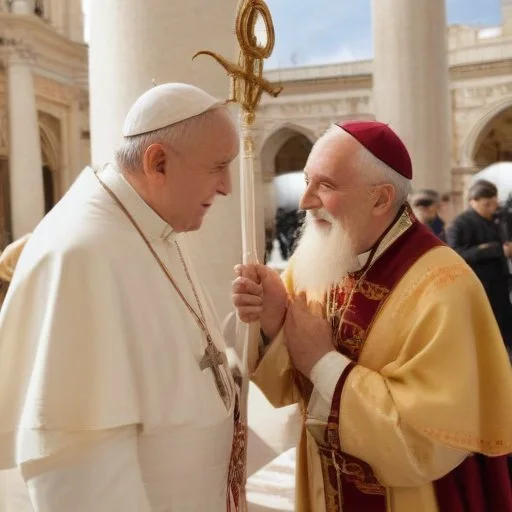
In the heart of the Vatican, a historic moment unfolded as Pope Paul VI and Patriarch Athenagoras I simultaneously lifted the mutual excommunications that had divided the Eastern Orthodox and Catholic Churches for over nine centuries. This groundbreaking gesture marked a crucial step towards healing the Great Schism of 1054. The two leaders, beacons of their respective faiths, came together to erase the bitter past and forge a path towards unity and understanding. As they revoked the centuries-old condemnations, the air was filled with a sense of hope and renewal, kindling a newfound spirit of ecumenism that continues to inspire interfaith dialogue to this day.
The Unshackling of Faith: A Momentous Reconciliation
A New Era of Ecumenism Dawns
On December 7, 1965, a monumental event shook the foundations of Christianity as
Pope Paul VI and Patriarch Athenagoras I simultaneously revoked the mutual excommunications that had plagued the Eastern Orthodox and Catholic Churches for over nine centuries. This historic gesture marked a crucial step towards healing the Great Schism of 1054, paving the way for a new era of ecumenism and interfaith dialogue.
A Brief Background to the Great Schism
To understand the significance of this event, it's essential to delve into the tumultuous past that led to the separation of the Eastern Orthodox and Catholic Churches. The Great Schism of 1054 was a consequence of centuries-long theological and political conflicts between the Eastern and Western Christian traditions. The Filioque clause, papal authority, and liturgical practices were among the contentious issues that ultimately led to the excommunication of the Patriarch of Constantinople, Michael Cerularius, by
Pope Leo IX.
The Key Players in the Reconciliation
- Pope Paul VI: The 262nd Pope of the Catholic Church, Paul VI was a champion of ecumenism and interfaith dialogue. His papacy was marked by a series of historic reforms and a desire for Christian unity.
- Patriarch Athenagoras I: The 268th Patriarch of Constantinople, Athenagoras I was a prominent figure in the Eastern Orthodox Church, known for his efforts to promote Christian unity and reconciliation.
A Timeline of Events Leading to the Reconciliation
- 1955: The Ecumenical Patriarch Athenagoras I extends an olive branch to the Catholic Church, initiating a series of diplomatic efforts.
- 1962: Pope John XXIII and Patriarch Athenagoras I exchange letters, paving the way for a potential reconciliation.
- 1964: Pope Paul VI and Patriarch Athenagoras I meet in Jerusalem, marking the first face-to-face encounter between the leaders of the two Churches in over 500 years.
- December 7, 1965: The mutual excommunications are officially revoked in Rome and Constantinople.
The Impact of the Reconciliation
The revocation of the mutual excommunications had far-reaching consequences, including:
- The establishment of a Joint International Commission for Theological Dialogue between the Catholic and Eastern Orthodox Churches.
- The promotion of interfaith dialogue and cooperation between the two Churches.
- The creation of a new climate of ecumenism, inspiring other Christian denominations to pursue unity and reconciliation.
A New Chapter in Christian History
The simultaneous revocation of mutual excommunications by Pope Paul VI and Patriarch Athenagoras I marked a decisive moment in Christian history, ushering in a new era of cooperation and understanding between the Eastern Orthodox and Catholic Churches. As we reflect on this pivotal event, we are reminded of the power of forgiveness and the importance of striving for unity in the face of adversity.
Character Overview
The Unwavering Commitment of Pope Paul VI
Pope Paul VI's dedication to ecumenism was unwavering, driven by his conviction that Christian unity was essential for the Church's mission. Throughout his papacy, he worked tirelessly to bridge the divide between the Eastern Orthodox and Catholic Churches.
His commitment to this cause was evident in his numerous gestures of goodwill, including the return of the relics of St. John Chrysostom and St. Gregory Nazianzen to the Eastern Orthodox Church in 1969.
Study of Geopolitical Factors
The Geopolitical Landscape of the 1960s
The revocation of mutual excommunications took place against the backdrop of a tumultuous geopolitical landscape. The Cold War was at its height, with the Soviet Union and the United States locked in a struggle for global influence.
In this context, the reconciliatory efforts of Pope Paul VI and Patriarch Athenagoras I sent a powerful message about the importance of unity and cooperation in the face of adversity.
Contrastive Analysis
A Tale of Two Traditions
The Eastern Orthodox and Catholic Churches have distinct theological and liturgical traditions. The Eastern Orthodox Church emphasizes the importance of the Holy Spirit, while the Catholic Church places greater emphasis on the authority of the Pope.
Despite these differences, the two Churches share a common heritage, with both tracing their roots back to the early Christian Church. The reconciliation of 1965 marked an important step towards recognizing and respecting these shared roots.
Cultural Significance Study
A Cultural Renaissance
The revocation of mutual excommunications had a profound impact on the cultural landscape of the time. It paved the way for a renewed interest in Christian art, music, and literature, as well as greater collaboration between Eastern Orthodox and Catholic scholars.
This cultural renaissance was marked by a series of high-profile events, including the 1966 International Eucharistic Congress, which brought together representatives from both Churches to celebrate their shared faith.
Thorough Historiographical Examination
Reevaluating the Great Schism
The revocation of mutual excommunications forced historians to reexamine the events leading up to the Great Schism of 1054. This reevaluation led to a greater understanding of the complex theological and political factors that contributed to the divide.
Historians began to see the Schism not as a singular event, but rather as a culmination of centuries-long tensions between the Eastern and Western Christian traditions.


