


In the early hours of April 27, 1978, the fate of Afghanistan was forever altered as President Mohammed Daoud Khan, the country's leader since 1973, was overthrown and brutally assassinated in a coup led by pro-communist rebels. This shocking turn of events brought an abrupt end to Daoud Khan's five-year reign, plunging Afghanistan into a period of turmoil and uncertainty.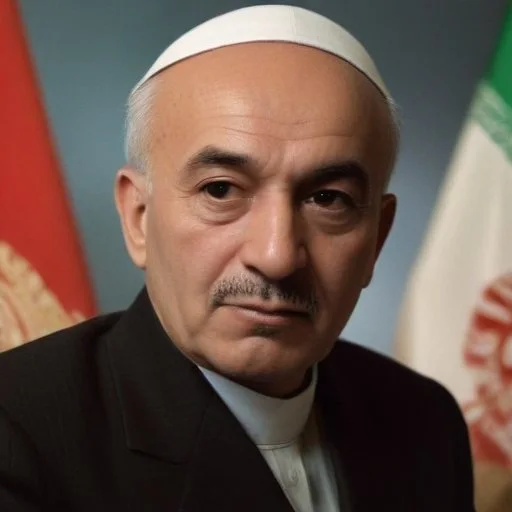
Daoud Khan's rise to power was marked by a series of purges and power struggles, which ultimately led to his coup against King Zahir Shah in 1973. The new president's agenda was rooted in modernization and secularization, aiming to transform Afghanistan into a more progressive state. However, his authoritarian style and increasingly repressive policies soon alienated many Afghans, creating an environment ripe for rebellion.
The roots of the coup can be traced back to the Soviet Union's growing influence in Afghanistan during the 1970s. The Soviet-backed People's Democratic Party of Afghanistan (PDPA) had been quietly gathering strength, awaiting the opportune moment to strike. As Daoud Khan's policies became increasingly anti-Soviet, the PDPA saw an opportunity to install a communist government, paving the way for a Soviet-backed takeover.
On April 27, 1978, PDPA forces, backed by Soviet advisors, stormed the presidential palace in Kabul. The ensuing battle was intense, with Daoud Khan and his loyalists putting up fierce resistance. However, they were vastly outnumbered and outgunned, and the president, along with his family and several key government officials, was brutally assassinated in the chaos that ensued.
The coup marked the beginning of a new era of communist rule in Afghanistan, with the PDPA, led by Nur Muhammad Taraki, taking the reins of power. The country soon became a Soviet satellite state, with the communist regime imposing drastic social and economic reforms. The implications of this event would be far-reaching, plunging Afghanistan into a period of turmoil and conflict that would last for decades to come.
Daoud Khan's downfall was met with widespread international condemnation, with many viewing the coup as a Soviet-backed power grab. The event marked a significant shift in the global balance of power, as Afghanistan became a key battleground in the Cold War. Today, the legacy of the coup continues to shape Afghanistan's complex and often tumultuous relationships with its neighbors and the international community.
Daoud Khan's presidency was marked by a complex web of alliances and rivalries with neighboring countries and global powers. His attempts to balance Afghan independence with Soviet influence ultimately proved untenable, as his increasingly anti-Soviet stance provoked a strong response from the Kremlin. The 1978 coup was, in part, a consequence of Daoud Khan's failure to navigate these treacherous waters.
A key aspect of Afghan politics during this period was the role of the country's powerful neighbors. Pakistan, in particular, played a significant role in supporting Islamist groups opposed to the communist government, while Iran, still reeling from its own revolution, remained wary of Soviet influence in the region. The complex interplay of regional rivalries and global power struggles contributed to the volatile atmosphere that ultimately led to Daoud Khan's downfall.

Nur Muhammad Taraki, the leader of the PDPA, was a complex figure with a deep commitment to communist ideology. Born in 1917, Taraki was a product of the Soviet-backed Afghan intelligentsia, and his rise to power was facilitated by the Soviet Union's growing influence in the region. Despite his brutal approach to politics, Taraki was also known for his charisma and persuasive abilities, which helped him to build a significant following among Afghanistan's urban elite.
Taraki's leadership style was marked by a ruthless pragmatism, as he sought to eliminate any perceived threats to his rule. His regime was characterized by widespread repression, including the torture and execution of political opponents. Despite this, Taraki remained a vocal advocate for social and economic reform, seeing communism as a means to modernize and secularize Afghan society.
The 1978 coup marked a significant shift in the global balance of power, as Afghanistan became a key battleground in the Cold War. The Soviet Union's backing of the PDPA government was seen as a direct challenge to American influence in the region, and the event helped to escalate tensions between the two superpowers.
In the years following the coup, Afghanistan became a hotspot for proxy wars and covert operations, as the United States and other Western powers sought to counter Soviet influence in the region. This led to a surge in funding and support for anti-communist Islamist groups, which would ultimately contribute to the rise of extremist movements in the region.
The 1978 coup had a profound impact on Afghanistan's economy, as the new communist government sought to implement drastic reforms. The regime's nationalization of key industries, including agriculture and mining, led to a significant increase in state control over the economy.
However, the regime's centralized approach to economic planning ultimately proved disastrous, leading to widespread shortages, mismanagement, and corruption. The economy further deteriorated as the country descended into conflict and instability, leaving Afghanistan one of the poorest countries in the region.
The events leading up to the 1978 coup were marked by a series of purges and power struggles within the Afghan government. Daoud Khan's increasingly authoritarian style and repressive policies had created an environment of fear and mistrust, in which rival factions and opposition groups began to coalesce around the PDPA.
One key factor in the PDPA's rise to power was the support of Soviet advisors, who provided training, funding, and military aid to the communist rebels. This support enabled the PDPA to build a formidable force, which ultimately proved decisive in the battle for control of the presidential palace.