


In a decisive move to combat international terrorism and human rights violations, U.S. President Bill Clinton imposed severe trade and economic sanctions on the Taliban regime in Afghanistan in 1999. This bold measure was prompted by the regime's egregious human rights abuses, support for global terrorism, and brutal oppression of women and children.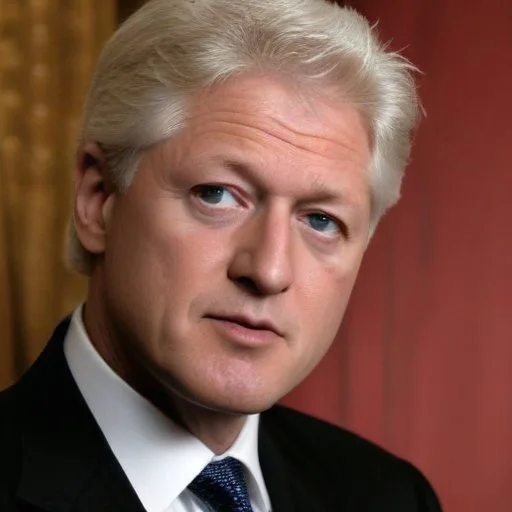
The Taliban, a Sunni Islamic fundamentalist political movement, emerged in the mid-1990s as a dominant force in Afghanistan. Following the withdrawal of Soviet forces in 1989, the country plunged into civil war, creating a power vacuum that the Taliban exploited. By 1996, they had established control over most of Afghanistan, imposing a harsh, repressive regime that systematically violated human rights and supported terrorist activities.
President Bill Clinton, determined to take a stand against the Taliban's authoritarian rule, played a crucial role in shaping the U.S. response. Other key figures involved in this decision included Madeleine Albright, the Secretary of State, and Sandy Berger, the National Security Adviser. The Taliban regime was led by Mullah Mohammad Omar, a reclusive and enigmatic figure who refused to comply with international demands to hand over Osama bin Laden.
The sanctions imposed by the Clinton administration had significant consequences for the Taliban regime. The economic isolation and trade restrictions severely crippled the regime's ability to function, leading to widespread poverty, hunger, and displacement. The move also sent a strong message to the international community, emphasizing the U.S. commitment to combating terrorism and human rights abuses.
The Taliban regime's oppressive rule had far-reaching cultural and social implications. The regime's suppression of women's rights, education, and artistic expression led to a brain drain and a loss of cultural heritage. The sanctions imposed by the Clinton administration aimed to reverse this trend, promoting a culture of human rights, tolerance, and democracy.
The Clinton administration's decision to impose sanctions on the Taliban regime sparked intense debate and criticism. Some argued that the move was too harsh, while others contended that it was necessary to prevent further human rights abuses and terrorist activities. The sanctions were widely seen as a crucial step in combating global terrorism and promoting regional stability.
"The United States will not tolerate the Taliban's support for terrorism and its brutal oppression of the Afghan people." – President Bill Clinton, 1999
The Clinton administration's sanctions on the Taliban regime can be compared to similar measures taken against other authoritarian regimes, such as Saddam Hussein's Iraq and Muammar Gaddafi's Libya. In each case, the international community responded to egregious human rights abuses and support for terrorism with economic isolation and diplomatic pressure.
The Clinton administration's bold stance against the Taliban regime set a crucial precedent for future U.S. foreign policy. The sanctions marked a shift towards a more proactive approach to combating global terrorism and human rights abuses, influencing subsequent policy decisions, including the War on Terror launched by the Bush administration in 2001.
The sanctions imposed on the Taliban regime paved the way for international humanitarian efforts to assist the Afghan people. Organizations such as the UN High Commissioner for Refugees (UNHCR) and non-governmental organizations (NGOs) like Doctors Without Borders provided crucial aid to displaced Afghans and supported efforts to rebuild the country's infrastructure and institutions.

This event marks a significant milestone in the global effort to combat terrorism and promote human rights, demonstrating the power of diplomatic pressure and economic sanctions in shaping international relations.
The courage and resilience of the Afghan people, particularly women and children, in the face of the Taliban's brutal oppression, serve as a powerful inspiration. The Clinton administration's bold stance against the regime highlights the importance of international cooperation and collective action in promoting human rights and combating terrorism.
As the global community continues to grapple with the challenges of terrorism and human rights abuses, the Clinton administration's sanctions on the Taliban regime serve as a crucial reminder of the importance of decisive action and collective responsibility. Future policy decisions will likely build upon this precedent, shaping the course of international relations and global security.
The Clinton administration's decision to impose sanctions on the Taliban regime shares similarities with other international interventions aimed at curtailing humanitarian crises and terrorist activities. One notable parallel is the 1992 international embargo on Serbia and Montenegro in response to their role in the Bosnian War.
Both instances involved the use of economic pressure to compel a rogue state or regime to comply with international norms and respect human rights. The parallels between the two cases are striking, with both involving a multilateral effort to address a pressing humanitarian crisis and prevent further human suffering.
In both instances, the international community relied on economic sanctions as a key tool for achieving their objectives, demonstrating the effectiveness of this approach in shaping the behavior of errant states and regimes.

Mullah Mohammad Omar, the reclusive and elusive leader of the Taliban, remains a shrouded figure, with little known about his personal life and motivations. Despite his prominent role in shaping the Taliban's ideology and policies, Omar's personal biography is sparse, with few verifiable details emerging about his early life and education.
What is clear, however, is Omar's unwavering commitment to the Taliban's fundamentalist ideology, which emphasizes the implementation of strict Sharia law and the suppression of women's rights and minority groups. His refusal to hand over Osama bin Laden, despite international pressure, underscores his unyielding allegiance to the terrorist network.
The Taliban's brutal regime inflicted irreparable harm on Afghanistan's cultural heritage, systematically eradicating centuries-old traditions, art forms, and educational institutions. The regime's draconian policies banned music, dance, and other forms of creative expression, deeming them un-Islamic.
The Taliban's destruction of the ancient Buddha statues in Bamiyan, a UNESCO World Heritage site, stands as a poignant symbol of their contempt for Afghanistan's rich cultural legacy. This wanton destruction of historical artifacts and cultural treasures has left an indelible mark on the country's psyche, underscoring the importance of preserving cultural diversity and promoting tolerance.

The Clinton administration's sanctions on the Taliban regime had far-reaching economic consequences, exacerbating an already dire humanitarian crisis. The embargo crippled Afghanistan's economy, which was heavily reliant on international trade and aid.
The sanctions led to widespread poverty, with the country's Gross Domestic Product (GDP) shrinking by over 30% in the immediate aftermath. The resulting humanitarian crisis displaced millions of Afghans, who were forced to flee their homes in search of food, shelter, and medical care.
The Clinton administration's decision to impose sanctions on the Taliban regime occurred against a backdrop of shifting global politics and security concerns. The post-Cold War era saw a significant reshuffling of international relations, with the United States emerging as the sole superpower.
The rise of global terrorism, exemplified by the 1998 United States embassy bombings in Kenya and Tanzania, had heightened concerns about the Taliban's support for terrorist networks. The Clinton administration's sanctions marked a critical juncture in the evolving global response to terrorism, underscoring the need for collective action to combat this growing threat.