


In a sweltering Houston summer, on September 12, 1962, President John F. Kennedy stood before a sea of expectant faces at Rice University, and with unwavering conviction, declared, "We choose to go to the Moon in this decade and do the other things, not because they are easy, but because they are hard." These now-iconic words ignited a nation's imagination, galvanizing the United States to embark on a historic journey to the lunar surface.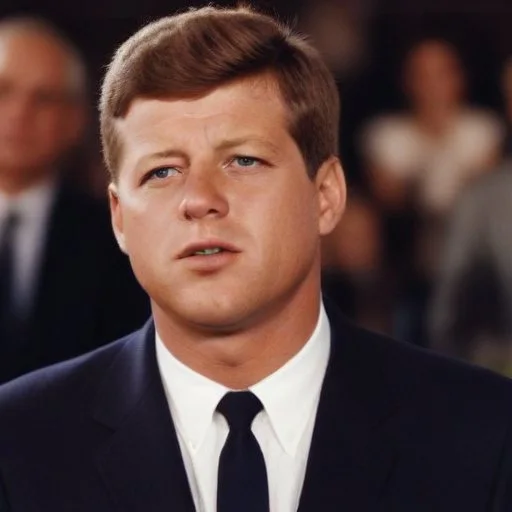
Kennedy's audacious pronouncement was more than just a rhetorical flourish; it represented a deliberate shift in American priorities. The Cold War was raging, and the Soviet Union's recent successes in space exploration had left the United States playing catch-up. Kennedy's administration recognized that the conquest of space had become a symbol of national prestige, innovation, and technological supremacy.
The majestic Hermann Park, with its lush greenery and stately oak trees, provided a picturesque backdrop for this pivotal speech. Rice University's stadium was packed to capacity, with over 40,000 people, including students, faculty, and esteemed guests, gathered to witness history. The setting was electric, with an air of anticipation hanging heavy over the crowd.
Kennedy's speech was a clarion call to the scientific community, urging them to push the boundaries of innovation and discovery. He emphasized the importance of space exploration, not just as a means of expanding human knowledge but as a cornerstone of American progress and security. The President's words resonated deeply, inspiring a generation of scientists, engineers, and mathematicians to dedicate themselves to the pursuit of space travel.
Kennedy's Moonshot challenge was not just about planting the American flag on the lunar surface; it was about harnessing the collective genius of the nation to achieve the impossible. He advocated for a collaborative effort, bringing together the government, academia, and private industry to tackle the complex technical and logistical hurdles that stood between the United States and the Moon.
Kennedy's speech at Rice University has become an emblem of American ingenuity, a testament to the power of bold vision and collective determination. The Moonshot moment continues to inspire generations of scientists, engineers, and explorers, reminding us that even the most seemingly insurmountable challenges can be overcome through collaboration, creativity, and an unwavering commitment to progress.
In the end, Kennedy's We Choose to Go to the Moon speech was more than just a call to action; it was a declaration of the human spirit's limitless potential, a beacon of hope that continues to illuminate the path to the stars.
The Cold War provided the geopolitical backdrop for Kennedy's Moonshot challenge. The Soviet Union's successful launch of Sputnik in 1957 and Yuri Gagarin's orbit of the Earth in 1961 had left the United States playing catch-up in the space race.
The Kennedy administration recognized that the conquest of space had become a symbol of national prestige, innovation, and technological supremacy. By committing to land a man on the Moon, Kennedy aimed to demonstrate American technological prowess and show that the Soviet Union was not the only superpower capable of achieving remarkable feats in space exploration.

The technological innovations spawned by the Apollo Program had far-reaching impacts on various fields of engineering and science. The development of lightweight materials, advanced propulsion systems, and sophisticated life support technology paved the way for future space exploration.
The Apollo Program also drove significant advancements in computer science and engineering. The massive computational requirements for mission planning, navigation, and data analysis led to the development of advanced computing systems and data analysis techniques.
John F. Kennedy's leadership style and vision were instrumental in mobilizing the nation behind the Moonshot challenge. His charisma, eloquence, and unwavering conviction inspired a generation of Americans to work towards a common goal.
Kennedy's commitment to space exploration was not just about winning the Cold War; it was about pushing the boundaries of human knowledge and achievement. He believed that the conquest of space would bring about a new era of American progress and innovation.

Kennedy's Moonshot speech had a profound impact on American culture, inspiring a new generation of scientists, engineers, and explorers. The speech tapped into the sense of adventure and optimism that characterized the American spirit, reminding the nation that even the most seemingly insurmountable challenges could be overcome through collective determination and hard work.
The Moonshot challenge also inspired a wave of popular culture, from films like "2001: A Space Odyssey" to music like David Bowie's "Space Oddity". The Apollo Program's successes and setbacks captivated the American public, making space exploration a mainstream fascination.
The Apollo Program's economic impact was significant, with NASA's budget increasing from $1 billion in 1960 to over $5 billion by 1965. The program created thousands of jobs, from engineers and technicians to administrators and support staff.
The Apollo Program's investment in research and development also had long-term economic benefits, driving innovation in fields like materials science, computer engineering, and telecommunications. The program's technological spin-offs have continued to generate economic returns, from satellite communications to medical imaging technology.