


The event that shook the foundations of Pakistani politics, General Pervez Musharraf's resignation from the presidency, marked a dramatic turn in the country's tumultuous political landscape. It was a moment of reckoning, as the once-untouchable leader, who had ruled Pakistan for nine years, was forced to step down amidst allegations of misconduct and abuse of power.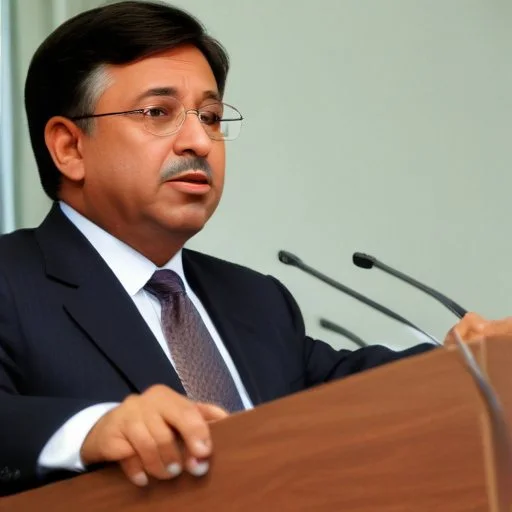
In the years leading up to his resignation, Musharraf had consolidated his power, amending the constitution to grant himself sweeping powers and declaring a state of emergency in 2007. However, his grip on power began to slip with the assassination of Benazir Bhutto in 2007, which sparked widespread protests and outrage.
The ruling coalition government, led by the Pakistan Peoples Party (PPP) and the Pakistan Muslim League (N), began to close in on Musharraf, accusing him of violating the constitution and engaging in corrupt practices. The impeachment proceedings were the culmination of weeks of intense political pressure, with the opposition parties and civil society groups demanding Musharraf's ouster.
Musharraf's resignation marked a significant shift in Pakistan's political landscape, paving the way for democratic elections and the restoration of civilian rule. The event also had far-reaching implications for the country's fragile democracy, as it showcased the power of the parliament and the judiciary in holding the executive accountable.
The resignation of Musharraf was met with widespread jubilation, as people from all walks of life took to the streets to celebrate the end of an era marked by authoritarianism and militarism. The event also sparked a renewed sense of hope and optimism, as Pakistanis looked forward to a brighter, more democratic future.
In his autobiography, In the Line of Fire, Musharraf reflected on his resignation, stating that it was a "bitter pill to swallow" but necessary to prevent further instability in the country. The event was also marked by poignant moments, as Musharraf bid farewell to his loyalists and supporters, acknowledging the end of an era.
Musharraf's resignation set a precedent for accountability in Pakistani politics, paving the way for future leaders to be held accountable for their actions. The event also marked a significant shift in the country's political narrative, as the focus turned to strengthening democratic institutions and promoting civilian rule.
Musharraf's resignation raises important questions about his legacy, as his critics view him as a power-hungry autocrat who undermined democracy, while his supporters see him as a leader who brought stability and economic growth to the country. Ultimately, the debate surrounding his legacy serves as a poignant reminder of the complexities and contradictions of Pakistani politics.
Pervez Musharraf's journey to the presidency was marked by a series of unexpected events and strategic calculations. A seasoned military officer, Musharraf rose through the ranks to become the Chief of Army Staff in 1998. His popularity soared when he orchestrated a bloodless coup in 1999, ousting the then-prime minister Nawaz Sharif.
Musharraf's early years in power were marked by a mix of authoritarianism and populism. He implemented a series of economic reforms, which led to a period of rapid growth and stability. However, his regime was also characterized by a crackdown on civil liberties and a consolidation of power.
Education and Early LifeMusharraf was born on August 11, 1943, in Delhi, British India. He graduated from the Pakistan Military Academy in 1961 and went on to attend the Royal College of Defence Studies in the UK. His early military career was marked by a series of postings in various parts of Pakistan.

Musharraf's resignation was more than just a political event; it was a cultural phenomenon that captured the imagination of the Pakistani people. The event marked a turning point in the country's cultural narrative, as people from all walks of life celebrated the end of an era marked by authoritarianism and militarism.
In the months leading up to his resignation, Musharraf's image had begun to fade from the public consciousness. The once-ubiquitous portraits of the general were slowly being replaced by images of democratic leaders and symbols of civilian rule.
A New Era of Cultural ExpressionThe post-Musharraf era saw a resurgence of cultural expression and creativity in Pakistan. Artists, writers, and musicians began to explore new themes and ideas, freed from the constraints of military rule. The country's vibrant cultural scene was once again allowed to flourish.
Musharraf's resignation marked a significant shift in Pakistan's political landscape, as the country transitioned from a military-dominated regime to a civilian-led government. The event had far-reaching implications for the country's political parties, institutions, and leaders.
The Pakistan Peoples Party (PPP), led by Asif Ali Zardari, emerged as a key beneficiary of Musharraf's resignation. The PPP-led coalition government sought to consolidate its power and implement a series of reforms aimed at strengthening democratic institutions.
A New Era of Political CompetitionThe post-Musharraf era saw a resurgence of political competition in Pakistan, as parties and leaders jostled for power and influence. The country's political landscape was reconfigured, with new alliances and rivalries emerging in the aftermath of Musharraf's resignation.

Musharraf's resignation was influenced by a complex set of geopolitical factors, including the War on Terror and the global economic crisis. The event had significant implications for Pakistan's relationships with key international partners, including the United States and China.
The United States, which had long been a key supporter of Musharraf's regime, began to distance itself from the general in the months leading up to his resignation. The US Administration, led by President George W. Bush, sought to promote democracy and stability in Pakistan, and Musharraf's departure was seen as a key step towards achieving these goals.
A New Era of Geopolitical RealignmentThe post-Musharraf era saw a significant shift in Pakistan's geopolitical alignments, as the country sought to redefine its relationships with key international partners. The country's new civilian-led government pursued a more nuanced and independent foreign policy, seeking to balance its relationships with the United States, China, and other major powers.
Historians and scholars have offered a range of perspectives on Musharraf's resignation, interpreting the event through the lenses of democratization, authoritarianism, and geostrategy. Some have seen the event as a triumph of democratic forces, while others have viewed it as a product of geopolitical maneuvering.
Musharraf's Legacy Reevaluated
Many historians have reevaluated Musharraf's legacy in the aftermath of his resignation, seeking to move beyond the simplistic narratives of heroism and villainy. Instead, they have sought to contextualize the general's actions within the broader sweep of Pakistani history, highlighting the complexities and contradictions of his rule.
Rethinking the Role of the MilitaryMusharraf's resignation has also prompted historians to rethink the role of the military in Pakistani politics. Some have argued that the event marked a significant shift towards civilian supremacy, while others have seen it as a temporary aberration in the country's long history of military domination.