


The Purges of intellectuals and imperialists, a radical policy implemented by Mao Zedong, the Chairman of the Communist Party of China, at the beginning of the Cultural Revolution, marked the beginning of a dark era in Chinese history. Overnight, the country's intellectuals, teachers, and anyone deemed bourgeois became targets of brutal persecution, forced labor, and public humiliation, as the Red Guard, a zealous youth militia, took to the streets, unleashing chaos and destruction that would haunt China for decades to come.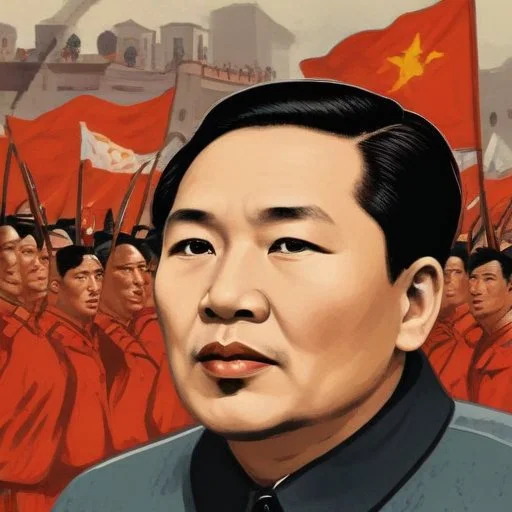
In the early 1960s, China was in a state of flux. The Communist Party, led by Mao, had been in power since 1949, but the country was still reeling from the effects of the Great Leap Forward, a series of economic and social reforms that had resulted in widespread famine and economic instability. Mao, determined to revolutionize Chinese society and eradicate all remnants of the old, prerevolutionary China, saw the intellectuals and imperialists as obstacles to his vision of a communist utopia.
The Red Guard, a militia composed of Mao's loyal supporters, primarily consisting of high school and college students, was instrumental in carrying out the purges. Armed with Mao's Little Red Book, a collection of the Chairman's quotes and writings, the Red Guard roamed the streets, searching for anyone who did not conform to Mao's ideology. They were encouraged to criticize and denounce anyone suspected of being a "class enemy," a term that encompassed anyone deemed to be counter-revolutionary, including intellectuals, capitalists, and even former landowners.
The purges claimed millions of lives, with estimates ranging from 500,000 to 2 million. The victims included:
The purges of intellectuals and imperialists had a profound impact on Chinese society, leading to:
The purges of intellectuals and imperialists during the Cultural Revolution serve as a stark reminder of the dangers of unchecked ideology and the importance of protecting human rights and individual freedoms. As we reflect on this dark chapter in Chinese history, we are reminded of the power of human resilience and the importance of learning from the past to build a better future.
The historical narrative of the Great Purge is complex and multifaceted, with different scholars offering varying interpretations of the event. While some historians view the purge as a necessary step towards achieving Mao's vision of a communist utopia, others see it as a brutal and misguided attempt to eradicate China's cultural and intellectual heritage.
Recent studies have highlighted the importance of understanding the purge within the context of China's broader social and economic transformation during the 1960s. By examining the intersections between politics, economy, and culture, historians can gain a deeper understanding of the motivations and consequences of the purge.
Furthermore, the study of the Great Purge has also led to a reevaluation of the role of intellectuals in Chinese society. While the purge resulted in the persecution and marginalization of many intellectuals, it also led to a renewed emphasis on the importance of education and critical thinking in Chinese society.
Jiang Qing, also known as Madame Mao, was a powerful and influential figure during the Cultural Revolution. As Mao's wife and a prominent leader of the Gang of Four, Jiang Qing played a key role in promoting the purge of intellectuals and imperialists.
Born in 1914, Jiang Qing was an aspiring actress who rose to prominence through her marriage to Mao in 1938. During the 1960s, she became increasingly involved in politics, using her charm and charisma to manipulate others and advance her own career.
Jiang Qing's role in the Great Purge was instrumental, as she helped to orchestrate the persecution of intellectuals and imperialists. Her extreme ideological views and ruthless tactics earned her the nickname "The White-Boned Demon."
The Great Purge had a devastating impact on China's cultural heritage, as the Red Guard and other revolutionary forces sought to eradicate all remnants of the old, prerevolutionary China.
Historic sites, artifacts, and cultural institutions were systematically destroyed or desecrated, including the ancient Forbidden City, the Temple of Heaven, and the Ming Tombs. The destruction of these cultural icons was meant to symbolize the rejection of China's traditional values and the embracing of a new, communist ideology.
The purge also had a profound impact on China's literary and artistic communities, as many writers, artists, and intellectuals were persecuted or forced into exile. The suppression of creative expression and the promotion of revolutionary propaganda had a lasting impact on Chinese culture, as the country struggled to rebuild and redefine its cultural identity.

The Great Purge took place during the height of the Cold War, and its impact was felt far beyond China's borders. The international community was shocked and horrified by the brutality and scale of the purge, with many countries condemning China's actions and imposing economic sanctions.
The Soviet Union, in particular, was critical of China's radical policies, and the two countries engaged in a bitter ideological dispute that would last for decades. The purge also had significant implications for China's relations with the United States, as the two countries began to view each other with increasing suspicion and hostility.
The Great Purge serves as a stark warning about the dangers of radical ideology and the unchecked power of a charismatic leader.
Mao's brand of communism, which emphasized class struggle and the elimination of perceived enemies, led to a culture of fear, mistrust, and violence. The purge demonstrated the devastating consequences of elevating ideology above human life and dignity.
The event also highlights the importance of protecting individual freedoms, promoting critical thinking, and fostering a culture of tolerance and diversity. By examining the philosophical and ideological underpinnings of the Great Purge, we can gain a deeper understanding of the importance of promoting democratic values and human rights.