


The Watts Riots, a devastating race-fueled uprising, shook the city of Los Angeles in 1965, leaving a lasting impact on the nation's consciousness. This tumultuous event, which began on August 11, 1965, exposed the deep-seated racial tensions and police brutality that had been simmering beneath the surface of American society.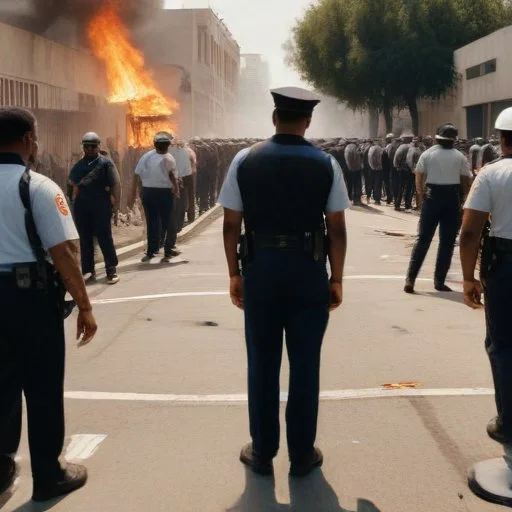
In the years leading up to the riots, the Watts neighborhood in South Los Angeles had become a hotbed of racial and socioeconomic unrest. African Americans faced rampant discrimination, poverty, and limited job opportunities, while the mostly white Los Angeles Police Department (LAPD) was seen as an occupying force, perpetuating the systemic racism that plagued the community.
On August 11, 1965, a routine traffic stop by California Highway Patrol officer Lee Minikus escalated into a violent confrontation. Marquette Frye, a 21-year-old African American, was driving with his brother when Minikus pulled them over. A scuffle ensued, and Frye was arrested, sparking outrage among the gathered crowd. The situation rapidly deteriorated, with rocks and bottles being hurled at police officers, who responded with batons and tear gas.
The Watts Riots led to a profound shift in the national conversation about race and police brutality. The event:
The Watts Riots have had a lasting impact on American culture and society, influencing:
Stories of courage and resilience emerged from the chaos, such as:
The Watts Riots served as a precursor to subsequent race riots and protests, including:
The Watts Riots remain a powerful reminder of the need for continued dialogue, social reform, and collective action to address the systemic issues that have plagued American society for centuries.
The Watts Riots had a significant economic impact on the city of Los Angeles and its residents. The total damage to property was estimated to be around $40 million, which is equivalent to over $300 million in today's dollars. Additionally, many businesses were forced to close, leading to high levels of unemployment and economic instability in the affected areas. The riots also led to a decline in property values, making it difficult for residents to sell their homes and relocate.
The economic impact of the riots was not limited to the immediate area. The event also had a ripple effect on the entire city's economy, leading to a decline in tourism and a loss of investor confidence. The city's economy took years to recover from the devastating effects of the riots.

Marquette Frye: The Spark that Ignited the Flames
Marquette Frye, a 21-year-old African American, was driving with his brother on August 11, 1965, when he was stopped by California Highway Patrol officer Lee Minikus. The routine traffic stop escalated into a violent confrontation, leading to Frye's arrest and sparking the Watts Riots. Frye's actions that day were not those of a radical or an activist, but rather those of a frustrated and exhausted young man who had had enough of the systemic racism and police brutality that plagued his community.
Frye's arrest and the subsequent riots thrust him into the national spotlight, making him an unlikely symbol of resistance against racial oppression. Despite his newfound notoriety, Frye remained humble and continued to live in the Watts neighborhood, working to rebuild and restore his community in the aftermath of the riots.
The Watts Riots were not an isolated incident, but rather part of a larger pattern of racial unrest and police brutality that plagued American cities in the 1960s. The riots shared similarities with other notable events, such as the Harlem Riots of 1964 and the Detroit Riot of 1967, which also erupted in response to police violence and systemic racism.
One key difference between the Watts Riots and other riots of the era was the significant role played by the California National Guard. Unlike in other cities, where local police forces were often able to quell the unrest, the Watts Riots required the deployment of troops to restore order. This response highlighted the severity of the situation and the government's inability to address the underlying causes of the unrest.
The Watts Riots had a profound impact on American culture, inspiring a wave of artistic and literary works that addressed the experiences of African Americans during the riots. One notable example is James Baldwin's If Beale Street Could Talk, which explores the themes of racial injustice and police brutality through the story of a young black couple living in Harlem.
The riots also influenced the work of musicians such as Nina Simone, who wrote and performed songs that addressed the struggles and frustrations of African Americans. Her iconic song "To Be Young, Gifted and Black" became an anthem for the Civil Rights Movement, capturing the hopes and aspirations of a generation.
The Watts Riots marked a turning point in the national conversation about race and police brutality, galvanizing lawmakers to take action to address the underlying causes of the unrest. The McCone Commission, established in the aftermath of the riots, investigated the causes of the unrest and recommended reforms to address police brutality and improve relationships between law enforcement and minority communities.
The riots also led to increased support for the Civil Rights Movement, with many Americans becoming aware of the systemic racism and injustice that plagued African American communities. The event played a significant role in shaping the political landscape of the 1960s, influencing the passage of landmark legislation such as the Civil Rights Act of 1968 and the Fair Housing Act of 1968.