


Dachau, the infamous concentration camp, was established on the orders of ReichsführerSS Heinrich Himmler, the Chief of Police of Munich, in 1933. This notorious camp would go on to become a symbol of Nazi terror and oppression, earning its reputation as a place of brutal suppression and human suffering.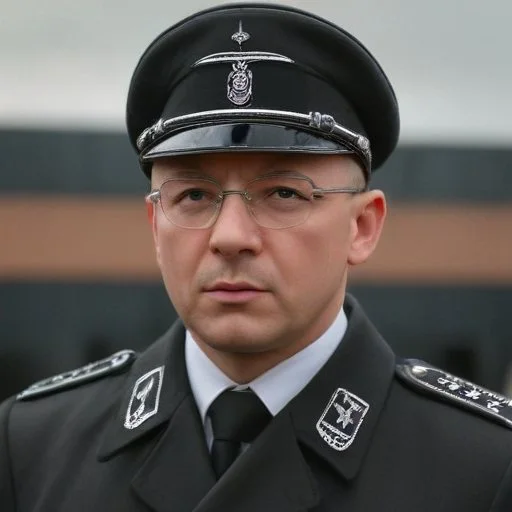
In the early 1930s, Nazi Germany was on the rise, and Heinrich Himmler was determined to create a model concentration camp that would set the standard for all others. Himmler's vision was to establish a camp that would not only imprison and punish political opponents, but also serve as a tool for intimidation and control.
Theodor Eicke, a seasoned Nazi officer, was handpicked by Himmler to oversee the creation and operation of Dachau. Eicke's experience in the military and his ruthless reputation made him the ideal candidate for the job. As the camp commandant, Eicke would be responsible for implementing Himmler's vision and ensuring that Dachau became a symbol of Nazi terror.
Dachau concentration camp would go on to become one of the most notorious camps in Nazi Germany, with an estimated 200,000 prisoners passing through its gates. The camp was known for its brutal conditions, with prisoners facing starvation, disease, and brutal treatment at the hands of the SS guards.
The establishment of Dachau concentration camp marked a significant shift in Nazi Germany's approach to dealing with political opponents and minorities. The camp's notorious reputation would serve as a warning to those who dared to oppose the Nazi regime, and its existence would have a profound impact on the cultural and social fabric of Germany.
One of the most chilling aspects of Dachau was the use of the "death triangle," a system of three watchtowers that surrounded the camp. Prisoners who attempted to escape were shot on sight, and their bodies were left hanging from the watchtowers as a warning to others.
The establishment of Dachau concentration camp marked the beginning of a dark period in human history, paving the way for the construction of other concentration camps and the implementation of the Holocaust. The atrocities committed at Dachau would serve as a warning to future generations, highlighting the dangers of unchecked power and the importance of protecting human rights.
In the face of unimaginable brutality, many prisoners at Dachau found ways to resist and maintain their dignity. From secretly creating art and writing to forming close bonds with fellow prisoners, these small acts of defiance served as a testament to the human spirit's ability to persevere in the darkest of times.
In conclusion, the establishment of Dachau concentration camp marks a dark chapter in human history, serving as a reminder of the dangers of unchecked power and the importance of protecting human rights. As we remember the atrocities committed at Dachau, we must also honor the resilience and bravery of those who suffered and fought against oppression.
The establishment of Dachau concentration camp was a culmination of the Nazi party's growing power and influence in Germany. Following the Reichstag fire in 1933, Hitler declared a state of emergency, suspending civil liberties and giving him the authority to arrest and detain anyone deemed a threat to national security. This provided the perfect opportunity for Himmler to establish a network of concentration camps, with Dachau being the first and most notorious.
Initially, Dachau was intended to house political prisoners, including communists, socialists, and trade unionists. However, as the Nazi regime consolidated its power, the camp's population expanded to include Jews, Romani people, homosexuals, and others deemed "undesirable" by the Nazi regime.
Conditions at Dachau were intentionally brutal, with prisoners facing overcrowding, starvation, and physical exhaustion. The camp's notorious reputation was amplified by the presence of the "death triangle," a system of three watchtowers that surrounded the camp, from which SS guards would shoot anyone attempting to escape.

Theodor Eicke, the commandant of Dachau, was a ruthless and cunning individual who implemented Himmler's vision with unflinching dedication. Eicke's military background and experience in the SS made him the ideal candidate to oversee the camp's creation and operation.
Under Eicke's leadership, Dachau became a model for other concentration camps, with its brutal rules and punishments serving as a template for the Nazi regime's broader campaign of terror and oppression. Eicke's reputation as a merciless commander earned him the respect and fear of his SS guards, who nicknamed him "Papa Eicke."
Eicke's influence extended beyond Dachau, as he played a key role in the development of the Nazi concentration camp system as a whole. His implementation of the "death triangle" and other brutal measures became standard practice in other camps, solidifying his legacy as one of the architects of the Holocaust.
The establishment of Dachau concentration camp marked a significant shift in Nazi Germany's cultural and social dynamics. As the first and most notorious concentration camp, Dachau served as a symbol of the Nazi regime's brutal suppression of political opposition and minority groups.
Dachau's notorious reputation had a profound impact on the cultural and social fabric of Germany, serving as a warning to those who dared to oppose the Nazi regime. The camp's existence also had a profound impact on the Jewish community, as it marked the beginning of a dark period of persecution and terror that would eventually lead to the Holocaust.
In the aftermath of World War II, Dachau became a powerful symbol of the atrocities committed by the Nazi regime, serving as a reminder of the dangers of unchecked power and the importance of protecting human rights.

Historians have long debated the significance of Dachau concentration camp, with some viewing it as a symbol of the Nazi regime's brutal suppression of political opposition, while others see it as a precursor to the Holocaust.
Recent scholarship has highlighted the importance of Dachau in the broader context of the Nazi concentration camp system, with many historians arguing that it served as a model for other camps and played a key role in the development of the Holocaust.
Despite these debates, there is consensus among historians that Dachau was a crucial component of the Nazi regime's machinery of terror and oppression, and its legacy continues to serve as a powerful reminder of the dangers of unchecked power.
The establishment of Dachau concentration camp marked a significant turning point in the struggle for human rights and social justice. As the first and most notorious concentration camp, Dachau served as a symbol of the Nazi regime's brutal suppression of political opposition and minority groups.
The camp's existence galvanized the anti-Nazi movement, with many individuals and organizations risking their lives to resist the regime and expose the atrocities committed at Dachau. In the aftermath of World War II, the camp's legacy played a key role in shaping the modern human rights movement, with many activists and scholars drawing inspiration from the bravery and resilience of those who suffered and fought against oppression.