


The Geneva Peace Conference, convened on January 9, 1991, is famously known for being the final attempt at a peaceful resolution to the Iraqi invasion of Kuwait, before the outbreak of the Gulf War. This high-stakes diplomatic meeting brought together representatives from the United States and Iraq, in a last-ditch effort to find a solution that would spare the region from devastating conflict.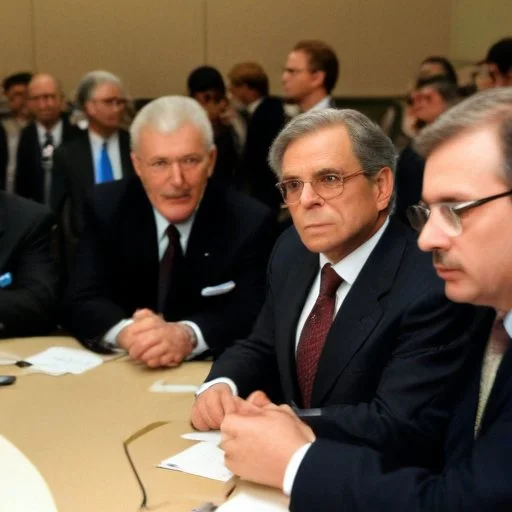
The seeds of the Geneva Peace Conference were sown on August 2, 1990, when Iraqi forces, led by Saddam Hussein, invaded Kuwait, sparking an international crisis. The United Nations Security Council promptly condemned the invasion, demanding Iraq's immediate withdrawal. As the situation escalated, the United States, led by President George H.W. Bush, began to build a coalition of nations to liberate Kuwait.
The Geneva Peace Conference was attended by US Secretary of State James Baker and Iraqi Foreign Minister Tariq Aziz, who led their respective delegations. The meeting was scheduled to last for several days, with the aim of negotiating a peaceful resolution to the crisis. The atmosphere was tense, with the world watching anxiously, as the delegates delved into complex discussions.
The conference began on January 9, 1991, with Baker and Aziz engaging in intense negotiations. However, the talks soon reached an impasse, as Iraq refused to withdraw from Kuwait. Over the next few days, the situation remained deadlocked, with the United States and its allies threatening military action if Iraq did not comply with the UN resolutions.
The Geneva Peace Conference ultimately ended in stalemate, as Iraq refused to budge. The failure of the talks paved the way for the Gulf War, which began on January 17, 1991. The war lasted six weeks, resulting in the liberation of Kuwait, but at a significant cost in human life and regional stability.
The Geneva Peace Conference had a profound impact on the global community, highlighting the importance of diplomacy in resolving international conflicts. The event also underscored the need for collective action in responding to aggression, as demonstrated by the unified stance of the United Nations.
"This is not a time for diplomacy; it is a time for action." - James Baker, US Secretary of State, on the eve of the Gulf War.
The Geneva Peace Conference draws parallels with other diplomatic efforts, such as the Munich Agreement of 1938, which attempted to appease Nazi Germany. Both events highlight the challenges of negotiating with authoritarian regimes and the importance of collective action in maintaining international security.
The Geneva Peace Conference serves as a poignant reminder of the importance of diplomacy in international relations. Though the conference ultimately failed to prevent the Gulf War, it demonstrates the enduring relevance of peaceful negotiation in resolving conflicts, and serves as a testament to the power of diplomacy in shaping global events.
JAMES BAKER, the US Secretary of State during the Geneva Peace Conference, was a seasoned diplomat with extensive experience in international relations. Born on April 28, 1930, in Houston, Texas, Baker graduated from Princeton University and later served in the US Marine Corps. He began his political career as a Houston lawyer and later worked in various roles, including as Undersecretary of State and Chief of Staff to President Ronald Reagan.
Baker's diplomatic prowess was evident in his handling of several high-stakes negotiations, including the Camp David Accords and the Intermediate-Range Nuclear Forces Treaty. His experience and reputation as a skilled negotiator made him an ideal candidate to lead the US delegation at the Geneva Peace Conference.

The Geneva Peace Conference shares similarities with other notable diplomatic efforts, including the Munich Agreement of 1938 and the Camp David Accords of 1978. While each event has its unique context, they all demonstrate the importance of diplomacy in preventing or resolving conflicts.
In contrast to the Geneva Peace Conference, the Munich Agreement is often viewed as a failed attempt to appease Nazi Germany, highlighting the dangers of appeasement. Conversely, the Camp David Accords, which brokered a peace treaty between Israel and Egypt, demonstrate the effectiveness of sustained diplomatic efforts in resolving long-standing conflicts.
The Geneva Peace Conference had a profound impact on the global community, underscoring the importance of collective action in responding to aggression. The event highlighted the need for international cooperation in maintaining regional stability and preventing the proliferation of conflicts.
The conference also served as a platform for showcasing the importance of diplomacy in international relations, emphasizing the need for sustained dialogue and negotiation in resolving conflicts peacefully.

The Geneva Peace Conference took place against the backdrop of a rapidly changing geopolitical landscape. The end of the Cold War had created a power vacuum, which allowed regional players like Iraq to fill the void. The dissolution of the Soviet Union had also led to a shift in the global balance of power, with the United States emerging as the sole superpower.
This new geopolitical context created an opportunity for the United States to assert its leadership role in international affairs, and the Geneva Peace Conference was seen as a critical test of its ability to shape global events.
Historians have long debated the significance of the Geneva Peace Conference, with some arguing that it was a genuine attempt at diplomacy, while others view it as a mere formality preceding the inevitable outbreak of war.
Recent scholarship has shed new light on the conference, highlighting the complexities of the diplomatic efforts and the various factors that contributed to its failure. By examining the conference through a historiographical lens, we can gain a deeper understanding of the event's significance in the broader context of international relations.