


The acquittal of four white police officers charged with excessive force in the beating of African American motorist Rodney King sparked a wave of violence and civil unrest in Los Angeles, leaving 63 people dead and hundreds of buildings destroyed in its wake. This pivotal event, which took place on April 29, 1992, would go on to shape the national conversation on race, police brutality, and social justice.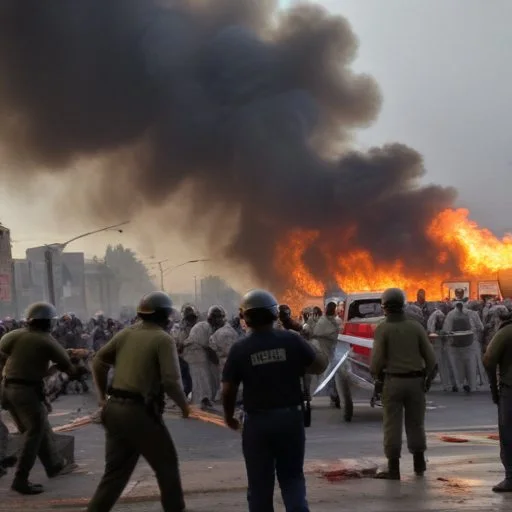
In the years leading up to the Rodney King beating, tensions between the Los Angeles Police Department (LAPD) and the African American community had been simmering. The LAPD's reputation for racial profiling, excessive force, and police brutality had created an atmosphere of mistrust and resentment. The Rodney King incident, captured on video by a bystander, brought these long-simmering tensions to a boiling point.
On April 29, 1992, a jury acquitted the four police officers involved in the beating of Rodney King, sparking widespread outrage and disbelief. The verdict was seen as a miscarriage of justice, and many felt that it was a clear example of racial bias and systemic racism. The news of the acquittal spread quickly, and protests erupted across the city, with demonstrations, looting, and arson attacks on businesses and buildings.
The National Guard was deployed to quell the violence, but not before the city was left scarred by the worst civil unrest in recent American history. The three-day period of rioting and violence resulted in:
Rodney King, the victim of the brutal beating, became an unlikely symbol of the struggle for racial justice and police accountability. His iconic phrase, "Can we all get along?" became a rallying cry for those seeking reconciliation and reform. Other key figures involved in the events surrounding the riots include:
The Rodney King beating and the subsequent riots led to a number of significant outcomes and reforms, including:
The Rodney King beating and the Los Angeles riots had a profound impact on popular culture, influencing music, film, and literature. The events of 1992 paved the way for a new generation of artists, activists, and writers to address issues of social justice and racial inequality.
In conclusion, the Riots in Los Angeles following the acquittal of the police officers involved in the beating of Rodney King were a pivotal moment in American history, marking a turning point in the national conversation on race, police brutality, and social justice. The events of 1992 continue to resonate today, serving as a powerful reminder of the need for continued activism, reform, and collective action towards a more just and equitable society.
The 1992 Los Angeles riots marked a significant turning point in the historiography of racial violence and police brutality in the United States. Historians have framed the event as a catalyst for the modern civil rights movement, drawing parallels with the 1965 Watts riots and the 1963 March on Washington. The riots have also been contextualized within the broader narrative of urban decline and suburbanization in post-war America.
Moreover, the riots have been seen as a pivotal moment in the development of modern policing strategies, with many scholars arguing that the event marked a shift towards community-oriented policing and greater accountability.
Recent historical analyses have also highlighted the role of media and technology in shaping public perceptions of the riots, with the Rodney King video serving as a powerful symbol of police brutality.
Stacey Koon: A Polarizing Figure
Stacey Koon, one of the four police officers involved in the beating of Rodney King, remains a controversial figure in the history of the Los Angeles riots. As the officer who delivered the most blows to King, Koon was seen by many as the embodiment of police brutality and racism.
Despite being convicted of violating King's civil rights in 1993, Koon has maintained that he acted in self-defense and has never apologized for his actions.
Koon's persona has been the subject of much scrutiny, with some portrayals depicting him as a rogue cop, while others have highlighted his years of service and commitment to law enforcement.
The 1992 Los Angeles riots had a profound impact on popular culture, inspiring a new wave of artists, musicians, and writers to address issues of social justice and racial inequality.
In music, the riots influenced the development of West Coast hip-hop, with artists like Dr. Dre and Snoop Dogg referencing the events in their lyrics.
In film, the riots were depicted in movies like Forrest Gump and Crash, which explored themes of racial tension and social unrest.
The riots also inspired a new generation of writers, including authors like Walter Mosley and Celeste Ng, who have explored the complexities of racial identity and community in their work.
The 1992 Los Angeles riots resulted in significant economic costs, with estimates suggesting that the riots caused over $1 billion in property damage and lost economic activity.
The riots also had a profound impact on the local business community, with many small businesses and minority-owned enterprises struggling to recover from the devastation.
In the aftermath of the riots, the city of Los Angeles implemented a range of economic initiatives, including the creation of the Rebuild LA program, which aimed to stimulate economic growth and community development in affected areas.
Long-term economic analyses have suggested that the riots led to a decline in economic investment and growth in South Los Angeles, exacerbating existing social and economic inequalities.
The 1992 Los Angeles riots have been compared to other instances of civil unrest and police brutality, including the 1965 Watts riots and the 2014 Ferguson protests.
While the riots shared some similarities with these events, they were distinct in their scale and intensity, with the 1992 riots resulting in the highest number of fatalities and property damage of any civil disturbance in modern American history.
A comparative analysis of these events has highlighted the ongoing challenges of racial tension, police accountability, and social inequality in the United States.
Moreover, these comparisons have underscored the need for sustained community engagement, policy reform, and collective action to address the underlying causes of civil unrest.