


The Romanian Revolution of 1989 will forever be etched in history as the dramatic overthrow of one of Eastern Europe's most brutal dictators, Nicolae Ceaușescu, and his wife Elena. On Christmas Day, 1989, the once-feared leaders were swiftly tried, condemned to death, and executed by firing squad, marking the end of a dark era and the dawn of a new chapter for Romania.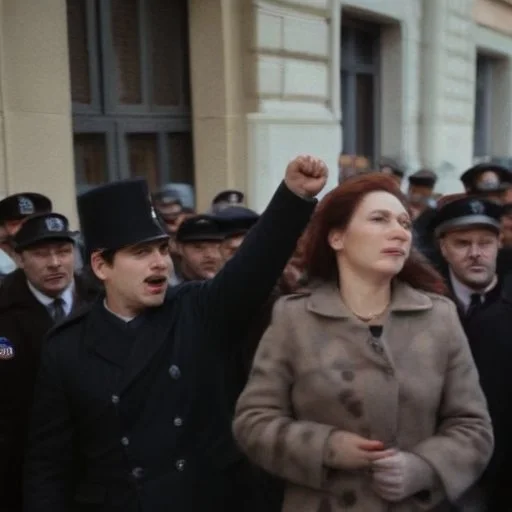
Nicolae Ceaușescu's rise to power in the 1960s was marked by a series of strategic political maneuvers, including the execution of his predecessor, Gheorghe Gheorghiu-Dej. Over the years, Ceaușescu's regime became notorious for its human rights abuses, economic mismanagement, and rampant corruption. The Romanian people suffered under his iron-fisted rule, characterized by widespread poverty, inequality, and oppression.
The sparks of revolution were ignited on December 15, 1989, when a small group of brave protesters gathered in the city of Timișoara to support a local pastor, László Tőkés, who was facing eviction by the regime. The protests quickly gained momentum, spreading to Bucharest and other major cities, as the Romanian people demanded an end to Ceaușescu's tyranny.
The execution of Nicolae and Elena Ceaușescu marked the end of a brutal era and paved the way for Romania's transition to democracy. The event sent shockwaves throughout Eastern Europe, inspiring similar uprisings in other Soviet-bloc countries. Romania began to rebuild, with the establishment of a new government and the introduction of free market reforms.
The Romanian Revolution of 1989 not only brought an end to Ceaușescu's regime but also had a profound impact on the country's cultural and social landscape. The event inspired a new generation of Romanians to demand freedom, justice, and human rights, shaping the nation's identity and values for years to come.
The swift trial and execution of the Ceaușescus remain controversial to this day, with some arguing that the process was unjust and others seeing it as a necessary step towards justice and accountability. The event has sparked ongoing debates about the nature of revolution, justice, and the rule of law.
"We must not forget the sacrifices of those who fought for our freedom and democracy." - Ion Iliescu, Romanian politician and leader of the National Salvation Front
The fall of Nicolae and Elena Ceaușescu marked the beginning of a new era for Romania. As the country continues to evolve and grow, the memory of the 1989 revolution serves as a powerful reminder of the importance of democracy, human rights, and the unwavering spirit of its people.
Nicolae Ceaușescu was a complex and multifaceted individual, whose rise to power was marked by a mix of charm, cunning, and ruthlessness. Born in 1918 in Scornicești, Romania, Ceaușescu was the son of a poor peasant family and was largely self-educated.
Despite his humble beginnings, Ceaușescu quickly rose through the ranks of the Romanian Communist Party, becoming General Secretary in 1965. He cultivated a image of a strong and benevolent leader, but behind the scenes, he was ruthless in his suppression of dissent and opposition.
Ceaușescu's personal life was also marked by contradictions. He was known for his simplicity and modesty, yet he and his wife Elena lived a life of opulence and extravagance, fueled by the country's dwindling resources.

The Romanian Revolution of 1989 did not occur in a vacuum. The event was part of a broader wave of democratic uprisings sweeping across Eastern Europe, fueled by the weakening of the Soviet Union and the decline of communist ideology.
In the years leading up to the revolution, Romania had become increasingly isolated from the rest of the Eastern Bloc, with Ceaușescu's regime pursuing a more nationalist and independent course. This had led to tensions with neighboring countries and the Soviet Union, creating an atmosphere of instability and uncertainty.
The collapse of communism in Poland and Hungary in the summer of 1989 created a domino effect, inspiring protests and uprisings in other Soviet-bloc countries, including Romania.
The Romanian Revolution of 1989 was not just a political event, but also a cultural and social watershed moment. The revolution marked a rejection of the tired and repressive cultural norms of the Ceaușescu era, and a desire for freedom, creativity, and self-expression.
The event inspired a new generation of Romanian artists, writers, and musicians, who saw in the revolution a opportunity to express themselves freely and challenge the status quo.
The Romanian Revolution also had a profound impact on the country's national identity, shaping a new sense of pride and self-awareness, and a renewed commitment to democracy and human rights.

The swift execution of Nicolae and Elena Ceaușescu sent shockwaves throughout Romania's political establishment, creating a power vacuum that needed to be filled quickly.
The National Salvation Front, a coalition of former communists and democrats, stepped into the breach, promising to bring stability and reform to the country.
The new government, led by Ion Iliescu, faced the daunting task of rebuilding the country's shattered economy and infrastructure, while also confronting the legacy of Ceaușescu's regime.
The Romanian Revolution of 1989 had a profound impact on the country's economy, which was in shambles after decades of communist mismanagement and corruption.
The new government faced the daunting task of rebuilding the economy, introducing market reforms, and attracting foreign investment.
The revolution also led to a significant increase in foreign aid and assistance, as the international community sought to support Romania's transition to democracy.