


The Second Chechen War, a devastating conflict that ravaged the North Caucasus region, is inextricably linked to the brazen invasion of Dagestan by the Islamic International Peacekeeping Brigade in August 1999. This pivotal event precipitated a Russian military intervention, aimed at thwarting the spread of Islamist ideology and reasserting control over its territorial sovereignty.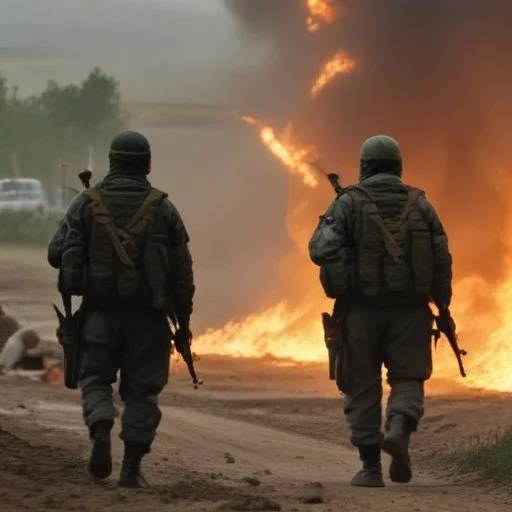
The North Caucasus region, comprised of autonomous republics and territories, had long been a hotbed of ethnic and religious tensions. The dissolution of the Soviet Union in 1991 led to the emergence of nationalist movements, seeking independence from Russia. The First Chechen War (1994-1996), sparked by Chechnya's declaration of independence, resulted in a fragile peace agreement, which ultimately failed to address the underlying grievances.
Under the guise of promoting regional stability, the Islamic International Peacekeeping Brigade, comprising foreign jihadists and local militants, began infiltrating Dagestan in the late 1990s. This covert operation was orchestrated by veteran militants, including Shamil Basayev and Ibn al-Khattab, who would later become key figures in the Second Chechen War.
The Second Chechen War would last for over a decade, claiming an estimated 50,000 to 100,000 lives and displacing hundreds of thousands of civilians. The conflict led to a significant increase in Russian military presence in the region, as well as the implementation of stringent counter-terrorism measures. The war also had far-reaching consequences for human rights, with allegations of widespread abuses perpetrated by both sides.
The Second Chechen War was, in part, fueled by the growing influence of Islamist ideology in the North Caucasus region. This phenomenon was driven by a complex array of factors, including socio-economic grievances, religious radicalization, and external sponsorship. The conflict highlighted the need for Russia to address the root causes of radicalization, rather than solely relying on military might.
The Second Chechen War was marked by intense controversy, with many Russians questioning the legitimacy of the military campaign. Human rights groups and opposition politicians criticized the government's handling of the conflict, citing allegations of civilian casualties, torture, and forced disappearances. The war also sparked a national debate on the role of the military in Russian society, with some advocating for a more assertive foreign policy.
The Second Chechen War was marked by countless personal tragedies, as families were torn apart and communities were ravaged by violence. One notable example is the story of Zura Alieva, a Chechen mother who lost her son to the conflict and later became an advocate for peace and reconciliation. Her story, though just one among many, serves as a poignant reminder of the human cost of war.
The Second Chechen War served as a template for Russia's counter-terrorism strategy, influencing its approach to subsequent conflicts, including the 2002 Moscow theater hostage crisis and the 2004 Beslan school siege. The war also had far-reaching implications for international relations, as Russia sought to assert its influence in the region and counter the perceived threat of Islamist militancy.
The Second Chechen War remains a deeply contested and complex chapter in Russia's recent history, marked by both humanitarian tragedy and geopolitical significance. As the region continues to navigate the challenges of radicalization and instability, it is essential to engage in a nuanced and multifaceted examination of this pivotal conflict, recognizing both the human cost and the strategic implications.
Historians and scholars have engaged in intense debates regarding the interpretation of the Second Chechen War. Some have argued that the conflict was a necessary response to the threat of Islamist militancy, while others have seen it as a brutal campaign of repression aimed at maintaining Russian dominance over the region.
One of the key debates revolves around the role of radical Islam in the conflict. Some historians have emphasized the importance of understanding the religious and ideological motivations of the Islamic International Peacekeeping Brigade, while others have downplayed their significance in favor of a more nuanced analysis of the region's complex ethnic and political dynamics.
A Lack of ConsensusThe absence of a clear consensus on the causes and consequences of the Second Chechen War has led to a proliferation of competing narratives and interpretations. This has made it challenging for scholars to establish a coherent and authoritative account of the conflict.

Shamil Basayev, a veteran militant and one of the key architects of the Islamic International Peacekeeping Brigade, remains an enigmatic figure in the history of the Second Chechen War. Born in 1965 in the Chechen village of Dyshne-Vedeno, Basayev was radicalized during the First Chechen War and quickly rose through the ranks of the separatist movement.
Basayev's leadership was marked by a combination of military cunning and ideological zeal. He was known for his ability to inspire loyalty among his followers and his willingness to engage in brutal tactics to achieve his goals.
A Controversial LegacyBasayev's legacy is deeply contested. While some have hailed him as a hero and a champion of Chechen independence, others have condemned him as a terrorist and a war criminal.
The Second Chechen War unfolded against the backdrop of a rapidly changing geopolitical landscape. The collapse of the Soviet Union had created a power vacuum in the region, which was exploited by various external actors seeking to expand their influence.
Russia's concerns about Islamist militancy were exacerbated by the perceived threat of Western expansion in the region, particularly through the North Atlantic Treaty Organization (NATO). The conflict was, in part, driven by Russia's desire to reassert its dominance over the North Caucasus and to counter the perceived threat of American and European influence.

The Second Chechen War shares parallels with other conflicts in the post-Cold War era, including the Balkan Wars and the Syrian Civil War.
In each of these conflicts, the interplay between ethnic, religious, and political tensions has created a complex and volatile situation. The role of external actors, including great powers and international organizations, has also been a key factor in shaping the trajectory of these conflicts.
A Common ThreadOne common thread running through these conflicts is the challenge of state-building and nation-building in the face of deep-seated divisions and competing interests.
The Second Chechen War had a devastating impact on the economy of the North Caucasus region, as well as on the wider Russian economy.
The conflict led to a significant decline in investment, a loss of infrastructure, and a disruption to trade and commerce. The war also placed a heavy burden on the Russian state, which was forced to divert significant resources to fund the military campaign.
A Lasting LegacyThe economic costs of the conflict continue to be felt today, with the region still struggling to recover from the devastation wrought by the war.