Phalangist militiamen slaughter Palestinian refugees
After three days of horrors, the massacre at the Sabra and Shatila refugee camps in Beirut finally ended, leaving behind a trail of brutalized bodies and shattered lives. In the aftermath of Israel's invasion of Lebanon, Phalangist militiamen, allied with Israel, stormed the camps, slaughtering countless Palestinians, mostly women, children, and the elderly, in a grotesque display of violence and hatred. The international community, particularly the US, stood by, helpless or unwilling to intervene, as the carnage unfolded. The gruesome episode would forever be etched in the collective memory of the Palestinian people, a grim reminder of their vulnerability and the world's indifference.
The Infamous Sabra and Shatila Massacre: A Dark Chapter in Lebanon's History
The Sabra and Shatila massacre is widely regarded as one of the most brutal and devastating atrocities of the 20th century, leaving an indelible mark on the psyche of the Palestinian people and the world at large. This horrific event, which took place in September 1982, resulted in the senseless killing of thousands of innocent civilians, mostly women, children, and the elderly, in the Sabra and Shatila refugee camps in Beirut, Lebanon.
Historical Background
The seeds of the massacre were sown in the midst of the Lebanese Civil War, a complex and multifaceted conflict that had been ravaging the country since 1975. The Palestine Liberation Organization (PLO), led by Yasser Arafat, had established a stronghold in Lebanon, which drew the ire of Israel. In June 1982, Israel launched Operation Peace for Galilee, a full-scale invasion of Lebanon aimed at driving the PLO out of the country.
The key players involved in the massacre were the Phalangist militiamen, a Christian Lebanese faction allied with Israel, and the Israeli military, which had occupied Beirut following the invasion. Ariel Sharon, the Israeli Defense Minister at the time, was a prominent figure accused of masterminding the massacre.
- September 14, 1982: The Phalangist militiamen, with the tacit approval of the Israeli military, stormed the Sabra and Shatila refugee camps.
- September 16, 1982: The massacre continued unchecked, with the Phalangists slaughtering innocent civilians, mostly women, children, and the elderly.
- September 18, 1982: The massacre finally came to an end, leaving behind a trail of devastation and death.
The Sabra and Shatila massacre had far-reaching consequences, both locally and globally.
- The massacre resulted in the deaths of an estimated 3,000 to 3,500 civilians, mostly Palestinians.
- The event sparked widespread international outrage, with many countries condemning the massacre.
- The massacre led to the eventual withdrawal of Israeli forces from Lebanon in 1985.
- The event had a profound impact on the Palestinian national consciousness, serving as a symbol of their vulnerability and the world's indifference.
The Sabra and Shatila massacre has had a lasting impact on Palestinian culture and society.
- The event has been immortalized in Palestinian art, literature, and music, serving as a powerful symbol of resistance and resilience.
- The massacre has led to numerous commemorative events and ceremonies, honoring the victims and their families.
- The event has also had a profound impact on Palestinian identity, fostering a sense of collective trauma and shared experience.
The Sabra and Shatila massacre remains a highly controversial and contested issue, with many questions surrounding the role of Israel and the international community.
- Ariel Sharon was eventually forced to resign as Defense Minister following the massacre, and was later barred from holding public office.
- The international community was criticized for its inaction, with many accusing the United States of complicity in the massacre.
- The event has been the subject of numerous investigations, including the Kahan Commission, which found Israel indirectly responsible for the massacre.
The Sabra and Shatila massacre has left an indelible mark on the lives of countless Palestinians, many of whom have shared their personal stories and experiences.
- "I remember the sound of gunfire and screams, and the smell of smoke and blood. It was a nightmare that I will never forget." - Amal, a survivor of the massacre.
- "I lost my entire family in the massacre. I was left alone, with nothing but the clothes on my back." - Jamal, a survivor of the massacre.
The Sabra and Shatila massacre has had a profound impact on future events in the region.
- The event has been cited as a catalyst for the Intifada, a wave of Palestinian protests and uprisings that began in the late 1980s.
- The massacre has served as a rallying cry for Palestinian nationalism, fueling demands for independence and self-determination.
- The event has also led to increased scrutiny of Israel's human rights record, with many accusing the country of repeated human rights abuses.
The Sabra and Shatila massacre remains a dark stain on the conscience of humanity, a grim reminder of the horrors that can result from conflict and indifference. As we remember the victims of this tragedy, we are reminded of the importance of peace, justice, and accountability in the pursuit of a more equitable and compassionate world.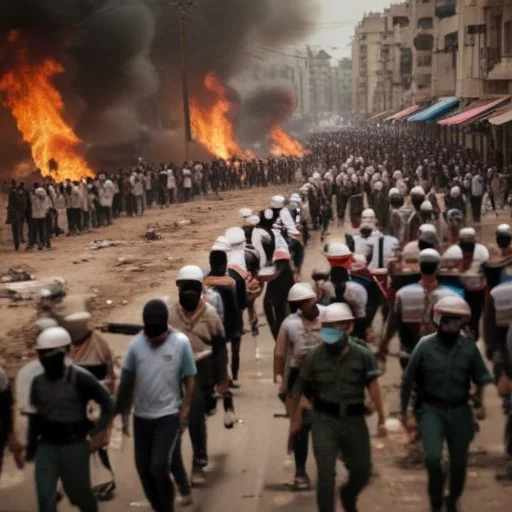
Rich Historical Review
The roots of the Sabra and Shatila massacre can be traced back to the 1948 Arab-Israeli War, which led to the displacement of hundreds of thousands of Palestinians. The Refugee Convention of 1951, established by the United Nations, recognized the rights of Palestinian refugees to return to their homeland or receive compensation for lost properties. However, the Israeli government has consistently refused to acknowledge this right, leading to decades of tension and conflict. In the 1970s and 1980s, Palestinian militants, including the Palestine Liberation Organization (PLO), launched guerrilla attacks against Israeli military targets from bases in Lebanon. Israel responded with reprisal attacks, which often targeted civilian populations.
The 1982 Israeli invasion of Lebanon, codenamed Operation Peace for Galilee, was touted as a response to PLO aggression. However, the invasion's true goal was to drive the PLO out of Lebanon and establish a pro-Israeli government in Beirut. The Phalangist militia, a Christian Lebanese faction, was recruited by Israel to help achieve this goal. The stage was set for the Sabra and Shatila massacre, which would ultimately claim thousands of lives and leave an indelible mark on the Palestinian national consciousness.

Full Character Review
Ariel Sharon, the Israeli Defense Minister at the time of the Sabra and Shatila massacre, is a controversial figure whose legacy is deeply entwined with the event. A decorated war hero and prominent politician, Sharon was known for his hawkish views on Palestinian nationalism and his support for Jewish settlements in the occupied territories. Critics accuse him of masterminding the massacre,while supporters see him as a strong leader who took bold action to protect Israeli interests.
Sharon's role in the massacre has been the subject of much debate and investigation. The Kahan Commission, an Israeli inquiry into the massacre, found Sharon indirectly responsible for the atrocities committed at Sabra and Shatila. Despite this, Sharon's political career continued to thrive, and he eventually became Prime Minister of Israel in 2001.
Cultural Significance Study
The Sabra and Shatila massacre has had a profound impact on Palestinian art, literature, and music. The event has inspired works by renowned artists, writers, and musicians, who have sought to convey the trauma, loss, and resilience of the Palestinian people. Plays, poetry, and novels have been written about the massacre, while musicians have composed songs that evoke the emotions and memories of that fateful day.
The massacre has also been commemorated through public art installations, monuments, and museums. In Beirut, a memorial garden honors the victims of the massacre, while in Ramallah, a museum dedicated to the Palestinian struggle for independence features exhibits on Sabra and Shatila. These cultural tributes serve as a testament to the power of art to preserve collective memory and promote social justice.

Full Political Examination
The Sabra and Shatila massacre marked a turning point in the Israeli-Palestinian conflict, exposing the vulnerabilities of the Palestinian refugee population and the failures of the international community. The event heightened international criticism of Israel's occupation policies, leading to increased diplomatic pressure and eventual withdrawal of Israeli forces from Lebanon in 1985.
The massacre also galvanized Palestinian nationalism, as the event became a rallying cry for demands for independence and self-determination. The Intifada, a wave of Palestinian protests and uprisings that began in the late 1980s, was partly fueled by the outrage and sense of injustice that followed the massacre. The legacy of Sabra and Shatila continues to shape Palestinian political discourse and resistance to this day.
Detailed Geopolitical Context
The Sabra and Shatila massacre was not an isolated event, but rather a consequence of the complex geopolitical landscape of the Middle East. The Cold War rivalry between the United States and the Soviet Union had created a climate of tension and competition in the region, with both superpowers backing opposing sides in the Arab-Israeli conflict.
The 1982 Israeli invasion of Lebanon, which preceded the massacre, was seen by many as a proxy war between the United States and the Soviet Union. The invasion was condemned by the Soviet Union, which supported the PLO and Syria, while the United States provided tacit support to Israel. The massacre itself was a grim reminder of the devastating human cost of great power rivalries and the vulnerability of civilian populations caught in the crossfire.


