


In the annals of American military history, few events have sparked as much controversy and debate as the Second Gulf of Tonkin Incident. On a sweltering August night in 1964, two U.S. destroyers, the USS Maddox and USS Turner Joy, frantically reported coming under attack by North Vietnamese torpedo boats in the Gulf of Tonkin. However, as the dust settled, it became alarmingly clear that the entire episode was a product of mistaken identity, radar glitches, and overactive imaginations.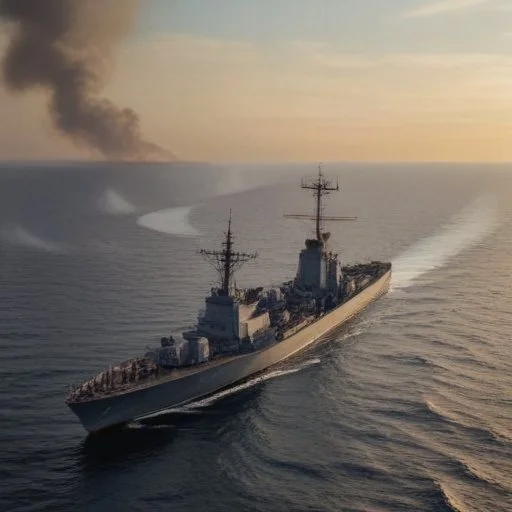
As the United States deepened its involvement in the escalating conflict in Southeast Asia, the Gulf of Tonkin had become a hotbed of military activity. On August 2, 1964, the USS Maddox, operating in international waters, was conducting electronic surveillance of North Vietnamese radar stations. The following day, the USS Turner Joy, joined the Maddox, and together they sailed into the treacherous waters of the Gulf.
On the evening of August 4, 1964, the Maddox's radar operators mistakenly detected what they believed to be North Vietnamese torpedo boats approaching. In the ensuing chaos, the Maddox's commander, Captain Herbert Ogier, ordered the ship to take evasive action, firing warning shots and dropping depth charges. The Turner Joy, following suit, also opened fire, allegedly targeting enemy vessels.
In the aftermath of the alleged attack, the U.S. Congress hastily passed the Gulf of Tonkin Resolution, authorizing President Lyndon B. Johnson to take military action in Southeast Asia without a formal declaration of war. This pivotal moment marked the beginning of America's direct involvement in the Vietnam War, a conflict that would claim the lives of over 58,000 U.S. servicemen and civilians.
In the years following the incident, numerous investigations and declassified documents have shed light on the true nature of that fateful night. A 2005 National Security Agency (NSA) declassified report revealed that there was no second attack on August 4, 1964, and that the Maddox had likely mistaken its own sonar signals for enemy fire.
The Second Gulf of Tonkin Incident serves as a poignant reminder of the dangers of hasty decision-making, misinformation, and the devastating consequences of military action based on false pretenses. As we reflect on this pivotal moment in American history, we are reminded of the importance of critical thinking, rigorous investigation, and diplomatic prudence in the face of uncertainty.
The Gulf of Tonkin Incident was not an isolated event, but rather part of a larger pattern of military escalation in the region. In the early 1960s, the United States had already begun to deploy military advisers to South Vietnam, and the USS Maddox was part of a larger naval presence in the Gulf. The North Vietnamese, in turn, had been increasing their own military activities in the area, including the construction of naval bases and the deployment of torpedo boats.
In the months leading up to the incident, tensions had been rising between the United States and North Vietnam, with both sides engaging in a series of provocations and retaliations. The USS Maddox, in particular, had been involved in a series of confrontations with North Vietnamese naval vessels, and its presence in the Gulf was seen as a provocative act by the North Vietnamese government.
Against this backdrop of rising tensions, the false alarm on August 4, 1964, was the spark that set off a chain reaction of events that would ultimately lead to the escalation of U.S. involvement in the Vietnam War. The incident highlighted the dangers of military escalation and the risks of misunderstandings and miscommunications in the fog of war.
Captain Herbert Ogier, the commander of the USS Maddox, was at the center of the storm on the night of August 4, 1964. A seasoned naval officer with over 20 years of experience, Ogier had been tasked with conducting electronic surveillance of North Vietnamese radar stations in the Gulf of Tonkin.
As the radar operators on the Maddox began to detect what they believed to be North Vietnamese torpedo boats, Ogier made the fateful decision to take evasive action, ordering his ship to fire warning shots and drop depth charges. This decision would have far-reaching consequences, as it sparked a chain reaction of events that would ultimately lead to the escalation of U.S. involvement in the Vietnam War.
In the aftermath of the incident, Ogier would come under scrutiny for his role in the false alarm, with some critics arguing that he had acted recklessly and without sufficient evidence. However, defenders of Ogier would argue that he had made the best decision he could with the information available to him at the time.
The Gulf of Tonkin Incident took place in the context of the Cold War, a global struggle between the United States and the Soviet Union for ideological and geopolitical dominance. The incident highlighted the complexities of the Cold War, as the United States and North Vietnam were drawn into a conflict that would have far-reaching consequences for the entire region.
The incident also marked a shift in the balance of power in Southeast Asia, as the United States began to take a more direct role in the conflict. The Gulf of Tonkin Resolution, passed in the aftermath of the incident, marked a turning point in U.S. foreign policy, as the country began to take a more assertive stance in the region.
The incident also had implications for the global economy, as the escalation of the war in Vietnam would have far-reaching consequences for international trade and investment.
The declassified documents released by the National Security Agency (NSA) in 2005 shed new light on the Gulf of Tonkin Incident, revealing that there was no second attack on August 4, 1964, and that the Maddox had likely mistaken its own sonar signals for enemy fire.
The documents, which include intercepted communications between North Vietnamese naval vessels, demonstrate that the North Vietnamese had been unaware of the presence of the USS Maddox and USS Turner Joy in the Gulf of Tonkin, and had not launched an attack on the two ships.
The release of these documents has sparked a re-evaluation of the incident, with many historians and scholars arguing that the incident was a false alarm, and that the United States had been mistaken in its claims of an attack.
The Gulf of Tonkin Incident marked a turning point in U.S. foreign policy, as the country began to take a more assertive stance in Southeast Asia. The Gulf of Tonkin Resolution, passed in the aftermath of the incident, authorized President Lyndon B. Johnson to take military action in the region without a formal declaration of war.
The incident also highlighted the complexities of the relationship between the executive and legislative branches of government, as President Johnson sought to rally support for his policies in Vietnam.
The incident also had implications for the domestic political landscape, as the escalation of the war in Vietnam would spark widespread protests and opposition, and would ultimately contribute to a decline in public trust in government.