


The Second Italo-Abyssinian War, a brazen display of militaristic aggression, ignited on October 3, 1935, as Italy's modern war machine, armed with tanks and airpower, breached the Ethiopian border. This brutal invasion, condemned by the League of Nations, would shake the foundations of international relations and foreshadow the devastating conflicts of World War II.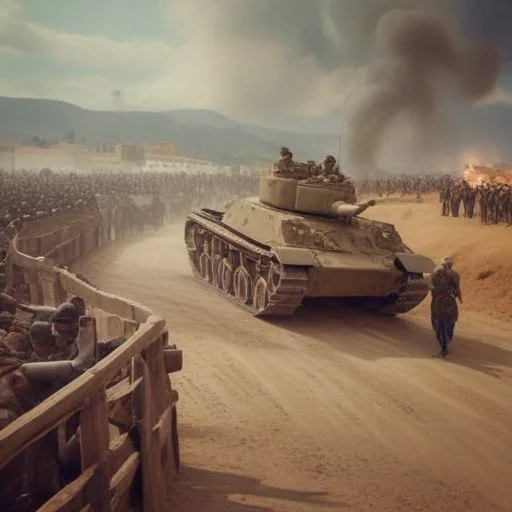
In the years leading up to the invasion, Italian dictator Benito Mussolini, driven by an insatiable hunger for expansion and nationalist fervor, began to covet Ethiopia's rich resources and strategic location. The signing of the Treaty of Friendship and Arbitration in 1928, meant to solidify peaceful relations between the two nations, only served to fan the flames of Mussolini's ambition.
The war would ultimately result in the Italian occupation of Ethiopia, lasting from 1936 to 1941. The international community's inaction in the face of Italian aggression would embolden other aggressive powers, setting the stage for World War II.
The Second Italo-Abyssinian War would have far-reaching cultural and social implications, inspiring anti-colonial and nationalist movements across Africa and beyond. The war would also fuel anti-war sentiments in Europe, as the continent teetered on the brink of another devastating conflict.
The war would spark intense debate and outrage across the globe, with many condemning Italy's blatant disregard for national sovereignty and the League of Nations' authority. The war would also highlight the inadequacies of the League's response, exposing its inability to prevent aggressive militarism.
"It is us today... It will be you tomorrow." - Emperor Haile Selassie, addressing the League of Nations in 1936, in a poignant warning to the international community.
The Second Italo-Abyssinian War would serve as a stark reminder of the dangers of unchecked militarism and the need for collective security. In many ways, it would foreshadow the conflicts of World War II, underscoring the importance of international cooperation in preventing aggressive wars.
Benito Mussolini's rise to power in Italy was marked by a series of cunning political maneuvers and strategic alliances. After serving in World War I, Mussolini became disillusioned with the Italian government and began to build a fascist movement. In 1922, he seized power and declared himself dictator, promising to restore Italian greatness.
Mussolini's aggressive expansionist policies were fueled by a desire to prove Italy's military prowess and secure valuable resources. His eyes were set on Ethiopia, which he saw as a key to dominating the Horn of Africa and accessing the rich natural resources of the region.

The bravery and resilience of Ethiopian resistance fighters during the Second Italo-Abyssinian War inspired a wave of anti-colonial and nationalist movements across Africa. The war became a symbol of African resistance against European colonialism, and Emperor Haile Selassie's defiance in the face of Italian aggression cemented his status as a hero of African independence.
The war also had a profound impact on African American communities in the United States, who saw the struggle for Ethiopian independence as a reflection of their own fight for civil rights. The war sparked a surge in pan-Africanist sentiment, with many African American leaders and intellectuals speaking out against Italian aggression and in support of Ethiopian independence.
The Second Italo-Abyssinian War bears striking similarities to Nazi Germany's remilitarization of the Rhineland in 1936. Both actions were brazen acts of aggression that violated international law and were met with inadequate responses from the League of Nations. Both Italy and Germany used the pretext of national security to justify their actions, and both were driven by a desire to expand their territories and secure resources.
The war also highlights the similarities between Mussolini and Hitler's aggressive expansionist policies, as well as their shared ideology of fascist nationalism. The two leaders would go on to form the Axis alliance, which would embark on a devastating campaign of conquest and genocide during World War II.

The Italian occupation of Ethiopia had devastating economic consequences for the region. Ethiopia's rich natural resources, including gold, copper, and coffee, were plundered by the Italian regime, and the country's infrastructure was severely damaged. The war also disrupted international trade and led to a decline in global economic stability.
The League of Nations' ineffective response to the crisis also had far-reaching economic implications. The failure to impose meaningful sanctions on Italy emboldened other aggressive powers, leading to a decline in global confidence in the League's ability to maintain international security.
The Second Italo-Abyssinian War took place in a tumultuous geopolitical landscape. The global economy was still reeling from the Great Depression, and the rise of fascist and nationalist movements in Europe created an atmosphere of uncertainty and fear.
The war also highlighted the weaknesses of the League of Nations, which was struggling to maintain international order in the face of aggressive powers. The League's failure to respond effectively to the crisis would have far-reaching implications, emboldening other aggressive powers and paving the way for the outbreak of World War II.