


In the midst of rising tensions that threatened to tear the United States apart, Senator Daniel Webster stood tall on the Senate floor to deliver a passionate plea for unity and compromise. On March 7, 1850, his iconic Seventh of March speech echoed through the chamber, championing the Compromise of 1850 as a last-ditch effort to preserve the Union and prevent a devastating civil war.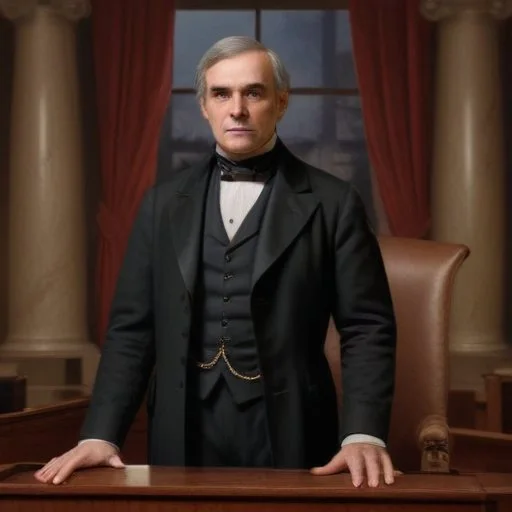
The year 1850 was a precarious time in American history. The Mexican-American War had recently ended, leaving the country with a significant amount of new land that sparked heated debates over slavery and states' rights. The North and South were at odds, and the very fabric of the Union was under strain.
In a bold attempt to reconcile the warring factions, Senator Henry Clay proposed the Compromise of 1850, a series of five bills designed to address the grievances of both the North and South. The package included:
Daniel Webster, a renowned orator and statesman from Massachusetts, was instrumental in rallying support for the Compromise of 1850. His Seventh of March speech was a masterclass in persuasive rhetoric, as he appealed to his fellow lawmakers' sense of duty, patriotism, and compromise.
Webster's impassioned words resonated deeply with his audience, and his speech is still studied today as a masterpiece of American oratory. In it, he famously declared, "I wish to speak today, not as a Massachusetts man, nor as a Northern man, but as an American..."
The Seventh of March speech played a significant role in swaying public opinion and galvanizing support for the Compromise of 1850. Although the package of bills was eventually passed, it only temporarily delayed the onset of the Civil War. Nevertheless, Webster's eloquence and commitment to the Union left an indelible mark on American history.
In the words of Webster himself, "Liberty and Union, now and forever, one and inseparable!" His Seventh of March speech remains an enduring testament to the power of persuasion, compromise, and American patriotism.
Historians have long debated the significance of Daniel Webster's Seventh of March speech, with some viewing it as a pivotal moment in the struggle to preserve the Union, while others see it as a failed attempt to delay the inevitable. Recent studies have emphasized the speech's role in revealing the deepening ideological divisions within the Whig Party.
Scholars such as Michael F. Holt have argued that Webster's speech marked a turning point in the party's fortunes, as it exposed the irreconcilable differences between its Northern and Southern wings. Other historians, like Robert V. Remini, have seen the speech as a testament to Webster's unwavering commitment to the Union, even in the face of overwhelming opposition.

While Daniel Webster's Seventh of March speech takes center stage in the story of the Compromise of 1850, Senator Henry Clay played a crucial behind-the-scenes role in shaping the legislation. A veteran statesman from Kentucky, Clay was the driving force behind the compromise, using his vast experience and negotiating skills to broker a deal.
The year 1850 was a time of great upheaval in the United States, with the country still reeling from the Mexican-American War and the subsequent acquisition of vast new territories. The tension between slave and free states was palpable, as the economy and politics of the nation were increasingly tied to the institution of slavery.
The balance of power in the Senate was also shifting, as the admission of new states threatened to upset the delicate balance between pro-slavery and anti-slavery factions. It was against this backdrop of uncertainty that Daniel Webster delivered his Seventh of March speech.

The Fugitive Slave Act, a key component of the Compromise of 1850, has been the subject of intense historical debate and controversy. The law required Northerners to assist in the capture and return of escaped slaves, sparking widespread outrage and resistance.
Primary documents from the time, such as newspaper editorials and personal correspondence, reveal the deep divisions within the American public over the Act's provisions and implications.
The passage of the Compromise of 1850 had far-reaching Political Consequences, as it splintered the Whig Party and paved the way for the rise of the Republican Party. The internal divisions within the Whig Party were exposed, as Northern and Southern factions clashed over the compromise.