


On January 10, 1972, Sheikh Mujibur Rahman, the architect of Bangladesh's independence, stepped onto the soil of his beloved country, bringing an end to his nine-month ordeal in Pakistani prisons. This momentous occasion marked the beginning of a new chapter in Bangladesh's struggle for self-determination, with Rahman at the helm, guiding his nation towards a brighter future.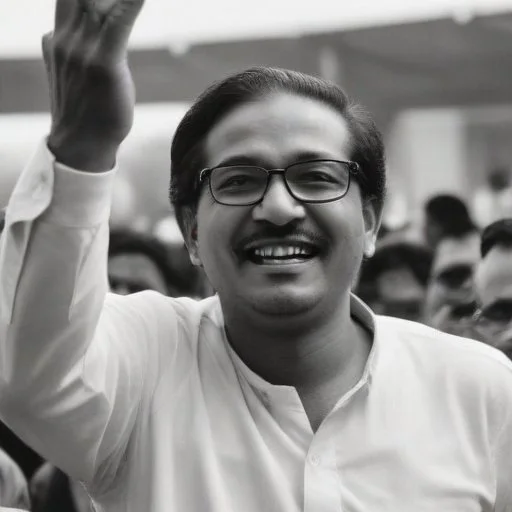
The roots of Bangladesh's independence movement can be traced back to the 1940s, when the country was still a part of British India. The Bengali language movement of 1952 and the subsequent struggle against West Pakistani domination had laid the groundwork for Rahman's leadership and the eventual formation of Bangladesh.
Sheikh Mujibur Rahman, affectionately known as the "Father of the Nation," was a man of unshakeable conviction and unwavering dedication. His leadership and vision had galvanized the Bengali people, inspiring them to fight for their rights and demand independence from Pakistani rule.
As Rahman emerged from the shadows of captivity, the crowds erupted in jubilation, their faces radiant with hope and adoration. The people of Bangladesh had finally found their leader, their guiding force, and their symbol of national pride.
Sheikh Mujibur Rahman's return marked the beginning of a new era in Bangladesh's history. Under his leadership, the country embarked on a journey of growth and development, with a focus on rebuilding and reconstructing the nation.
Rahman's return had a profound impact on Bangladeshi culture and society. The country's rich cultural heritage, once suppressed by Pakistani rule, began to flourish, and the people of Bangladesh rediscovered their national identity.
"The Bengali nation is now free, and its people are now the masters of their own destiny." - Sheikh Mujibur Rahman
Sheikh Mujibur Rahman's return to Bangladesh bears striking resemblance to Nelson Mandela's release from prison in South Africa. Both leaders, having endured years of captivity, emerged as beacons of hope, guiding their nations towards freedom and self-determination.
Sheikh Mujibur Rahman's triumphant return to Bangladesh will forever be etched in the annals of history, a testament to the power of human resilience and the unwavering pursuit of freedom. His leadership and vision continue to inspire generations, and his legacy remains an enduring symbol of national pride.
Sheikh Mujibur Rahman was born on March 17, 1920, in the village of Tungipara, in the Gopalganj district of Bangladesh. His early life was marked by a strong sense of social justice, which would later shape his vision for an independent Bangladesh.
Rahman's family was known for their involvement in the Bengali language movement, and his father, Sheikh Lutfar Rahman, was a strong advocate for Bengali rights. This upbringing instilled in Mujibur a deep understanding of the struggles faced by the Bengali people.

The return of Sheikh Mujibur Rahman marked a significant turning point in Bengali cultural history. For decades, Pakistani rule had suppressed Bengali language, literature, and art. With Rahman's leadership, the country witnessed a resurgence of Bengali culture, as artists, writers, and musicians began to flourish once more.
The Bengali language, which had been marginalized during Pakistani rule, was rediscovered as a symbol of national identity. Bengali literature, music, and art began to reflect the nation's struggle for independence, and Rahman's government actively promoted the development of these cultural industries.
Sheikh Mujibur Rahman's leadership during Bangladesh's struggle for independence is reminiscent of other great leaders who have fought against oppression. His unwavering commitment to the Bengali people and his refusal to compromise on their rights are traits shared by leaders such as Nelson Mandela and Mahatma Gandhi.
Like these leaders, Rahman faced immense personal challenges, including imprisonment and exile. Yet, he emerged from these experiences even more determined to lead his people to freedom.

Historians have long debated the significance of the Bangladesh Liberation War and Sheikh Mujibur Rahman's role in it. Some have argued that the war was a nationalist movement, driven by the Bengali people's desire for self-determination.
Others have seen it as a struggle for social justice, highlighting the economic and cultural disparities between East and West Pakistan. Regardless of interpretation, it is clear that the war marked a turning point in Bangladesh's history, and Rahman's leadership played a crucial role in shaping the country's future.
The independence of Bangladesh in 1971 had far-reaching implications for global politics and international relations. The war marked a significant shift in the balance of power in South Asia, as India emerged as a key player in regional politics.
The independence of Bangladesh also underscored the importance of self-determination and human rights in international relations. The international community's response to the Bangladesh crisis set an important precedent for humanitarian intervention in subsequent conflicts.