


The siege of Granada, a brutal and decisive conflict that lasted for eight long months, marked the end of Islamic rule in Spain. On January 2, 1492, Muhammad XII, also known as Boabdil, the ruler of Granada, surrendered the city to the Catholic forces of King Ferdinand and Queen Isabella, bringing an end to the Moorish stronghold that had existed in the Iberian Peninsula for nearly eight centuries.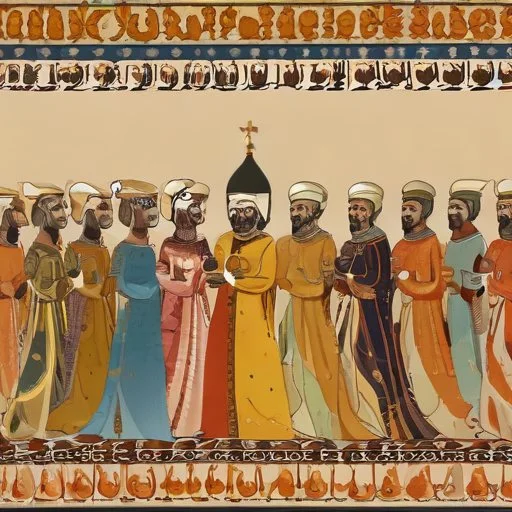
The Reconquista, a centuries-long struggle to reclaim the Iberian Peninsula from Muslim rule, had been gaining momentum since the 11th century. By the 15th century, the Catholic kingdoms of Castile and Aragon, under the leadership of King Ferdinand and Queen Isabella, had set their sights on the last remaining Moorish stronghold, the kingdom of Granada.
The fall of Granada marked the end of Islamic rule in Spain and the culmination of the Reconquista. The Treaty of Granada, while promising tolerance and protection to the Muslim population, would soon be broken, leading to the expulsion of Muslims and Jews from the Iberian Peninsula.
The siege and subsequent conquest of Granada also had significant cultural and social impacts. The Moors, known for their architectural, artistic, and intellectual achievements, would go on to influence the development of Western culture. The Alhambra, a palace complex in Granada, remains one of the most stunning examples of Islamic architecture in the world.
The fall of Granada marked the beginning of a new era of cultural and intellectual exchange between Islamic and Christian societies. Scholars and thinkers from both traditions would go on to influence each other's work, leading to significant advances in fields such as philosophy, mathematics, and astronomy.
The Moors' legacy can also be seen in the architecture, art, and literature of the Iberian Peninsula. The Mudéjar style, which emerged in the 12th century, combines Islamic and Christian elements to create a unique and striking aesthetic.
Despite the bloody conflict that led to its fall, Granada remains a testament to the power of tolerance and coexistence. The city's rich cultural heritage, a blend of Islamic, Christian, and Jewish influences, serves as a reminder of the beauty that can emerge from the intersection of different cultures and traditions.
In a world still grappling with the challenges of religious and cultural difference, the story of Granada offers a powerful lesson in the importance of understanding, respect, and peaceful coexistence.
The siege of Granada, though marked by conflict and bloodshed, also holds many stories of courage, loyalty, and compassion. From the bravery of the defenders of Granada to the mercy shown by the Catholic monarchs to the defeated Moors, the events surrounding the fall of Granada offer a rich tapestry of inspirational stories and motivations.
As we reflect on this pivotal moment in history, we are reminded of the importance of empathy, understanding, and the pursuit of peace. May the story of Granada inspire us to strive for a world where different cultures and traditions can coexist in harmony and mutual respect.
The fall of Granada had a profound impact on the cultural landscape of Spain. The Moorish influence, which had been present for nearly eight centuries, began to fade, and a new era of Christian dominance emerged.
One of the most significant cultural impacts was the decline of Arabic as the language of literature and science. As the Catholic monarchs imposed their own language and culture, many Arabic texts were lost or destroyed, including valuable works on mathematics, astronomy, and medicine.
However, the Moorish legacy continued to influence Spanish art and architecture. The Mudéjar style, which emerged in the 12th century, combined Islamic and Christian elements to create a unique and striking aesthetic. This style can be seen in many buildings throughout Spain, including the Alcázar of Seville and the Alhambra.

Abu Abdullah Muhammad XII, also known as Boabdil, was the last ruler of the Nasrid dynasty and the kingdom of Granada. He was a complex figure, both brave and indecisive, who struggled to maintain the independence of his kingdom.
Boabdil's father, Abu Abdullah Muhammad XI, had previously sought an alliance with the Catholic monarchs, but Boabdil took a more confrontational approach. He led the defense of Granada against the Catholic forces, but ultimately surrendered the city in 1492.
Despite his defeat, Boabdil is remembered as a hero in Granada, and his legacy continues to inspire pride and nostalgia among the people of the city.
The Reconquista, and the fall of Granada in particular, was driven by a complex set of ideological and philosophical beliefs. The Catholic monarchs saw themselves as crusaders, driven by a desire to reclaim the Iberian Peninsula for Christianity.
This ideology was rooted in a belief in the superiority of Christianity and the need to purge Spain of Islamic "infidels." The Reconquista was seen as a holy war, and the Catholic monarchs were motivated by a desire to spread Christianity and eliminate Islam from the region.
However, this ideology had devastating consequences for the Muslim and Jewish populations of Spain, who were forced to convert, flee, or face persecution.

The history of the fall of Granada has been shaped by a variety of historiographical perspectives. For centuries, the event was seen as a triumph of Christianity over Islam, and the Catholic monarchs were hailed as heroes.
However, in recent years, historians have taken a more nuanced approach, recognizing the complexity and diversity of the Moorish culture and the brutal treatment of the Muslim and Jewish populations by the Catholic forces.
This shift in perspective has led to a more balanced understanding of the event, one that acknowledges the achievements of the Moorish civilization and the tragedy of its downfall.
The fall of Granada was not an isolated event, but rather part of a broader geopolitical context. The Reconquista was driven by a desire to reclaim the Iberian Peninsula for Christianity, but it was also motivated by a need to secure strategic trade routes and resources.
The Catholic monarchs were aware of the importance of Granada's location, controlling as it did the trade routes between the Mediterranean and the Atlantic. The conquest of Granada was seen as a key step in securing Spain's position as a major power in Europe.
The fall of Granada also had significant implications for the balance of power in Europe, as it marked the beginning of Spanish dominance in the region.