


On a fateful summer day in 2019, Moscow's streets erupted into chaos as thousands of protesters, including prominent opposition leader Lyubov Sobol, took to the streets demanding free and fair elections. The event would become known as one of the largest and most vocal displays of dissent against President Vladimir Putin's government, resulting in the detention of over 600 protesters.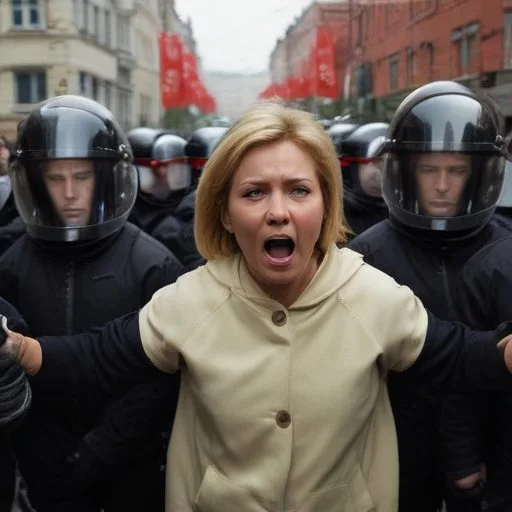
The protests were sparked by the exclusion of opposition candidates from local elections, a move seen by many as a brazen attempt to stifle political opposition. As the Russian authorities continued to tighten their grip on power, the sense of frustration and disillusionment among the populace reached a boiling point. The election protest became a lightning rod for this discontent, drawing in people from all walks of life.
The protests, which began peacefully, saw riot police deployed to disperse the crowds. Batons and pepper spray were used, sparking violent clashes between authorities and protesters. While the authorities claimed that protesters were provoking the police, human rights groups condemned the disproportionate use of force.
At the forefront of the protests was Lyubov Sobol, a vocal critic of Putin's regime and a leading figure in the Russian opposition. Her detention, along with hundreds of others, sent a powerful message: the Russian government would stop at nothing to silence dissent.
The election protest and subsequent crackdown sparked a wave of international condemnation. Human rights groups and governments around the world denounced the Russian authorities' heavy-handed response, calling for the release of detained protesters and an end to the repression of political opposition.
The Moscow election protest marked a turning point in the Russian political landscape. It galvanized the opposition, inspiring a new generation of activists and cementing Lyubov Sobol's status as a leading figure in the fight against authoritarianism. As Russia continues to grapple with its political identity, the legacy of the Moscow election protest will serve as a potent reminder of the power of dissent.
"We will not be silenced. We will not be intimidated. We will continue to fight for our rights, for our freedom, and for a better future for Russia."
| July 2019 | Opposition candidates barred from local elections |
| July 27, 2019 | Thousands protest in Moscow, demanding fair elections |
| August 3, 2019 | Over 600 protesters, including Lyubov Sobol, detained |
| August 10, 2019 | Protests continue, with thousands more taking to the streets |
The Moscow election protest took place against the backdrop of a tumultuous geopolitical landscape. The event was part of a larger trend of democratic movements and protests sweeping across the world, from the Arab Spring to the Hong Kong protests. Russia's actions in Ukraine, particularly the annexation of Crimea in 2014, had already strained relations with the West, and the Moscow election protest was seen as a key test of Russia's commitment to democratic norms.
In this context, the Russian government's response to the protests was closely watched by the international community. The crackdown on protesters was viewed as a clear sign of Russia's authoritarian tendencies, and the event further deteriorated relations between Russia and the West.

Born in 1987, Lyubov Sobol is a Russian lawyer and politician who has become a leading figure in the Russian opposition movement. Her activism began in the early 2010s, when she started working with opposition leader Alexei Navalny's Anti-Corruption Foundation.
Sobol's tireless work ethic and willingness to confront authority have made her a thorn in the side of the Russian government. Her detention during the Moscow election protest was a clear attempt to silence her, but it only added to her stature as a champion of democracy and human rights.
The Moscow election protest was not just a response to the exclusion of opposition candidates; it was also a rejection of the Putin regime's ideology. The protest was driven by a desire for genuine democracy and a rejection of the authoritarianism that has characterized Putin's rule.
The event was also influenced by liberal and democratic ideals, which emphasize the importance of free and fair elections, human rights, and the rule of law. The protesters saw themselves as guardians of these values, and their defiance was a testament to the power of ideology in shaping human action.
The Moscow election protest was characterized by a remarkable diversity of participants, including students, workers, and professionals. The event brought together people from all walks of life, united in their desire for democratic change.
The protest was also marked by a sense of community and solidarity, as protesters looked out for one another and provided support in the face of police brutality. This sense of community was a key factor in sustaining the protests over several weeks, and it helped to create a sense of momentum that continues to shape Russian politics today.
The Moscow election protest had significant economic implications, both for Russia and for the global community. The event led to a decline in investor confidence, as the crackdown on protesters raised concerns about the stability of the Russian economy.
The protest also highlighted the importance of democratic governance in attracting foreign investment and promoting economic growth. As Russia's economy continues to stagnate, the event serves as a reminder of the need for political reform to drive economic progress.