


The South Asian Association for Regional Cooperation (SAARC), a beacon of hope for regional unity and collective progress, marks a significant milestone in the annals of South Asian history. Founded on December 8, 1985, by the visionary leaders of seven nations – Bangladesh, Bhutan, India, Maldives, Nepal, Pakistan, and Sri Lanka – SAARC embodies the spirit of collaboration and cooperation, striving to bridge the gaps between its member states.
The concept of regional cooperation in South Asia dates back to the 1950s, when the idea of a regional organization began taking shape. The 1980s saw a renewed push for unity, driven by the realization that individual nations could no longer address the complexities of the region in isolation. SAARC's inception was the culmination of this effort, with its founding charter signed in Dhaka, Bangladesh, in 1985.
The founding fathers of SAARC, including heads of state and government from the seven member nations, played a pivotal role in shaping the organization's vision and objectives. Notable among them were Prime Minister Rajiv Gandhi of India, President Hussain Muhammad Ershad of Bangladesh, and King Jigme Singye Wangchuck of Bhutan, who worked tirelessly to bring the region together under a single umbrella.
SAARC's establishment has led to significant outcomes, including:
SAARC has not only brought nations together but has also fostered a sense of regional identity, celebrating the diversity of cultures, languages, and traditions. The SAARC Cultural Centre in Sri Lanka and the SAARC Literature Festival in India are just a few examples of the organization's efforts to promote cultural exchange and understanding.
SAARC's existence has paved the way for future regional collaborations, inspiring similar initiatives like the Bay of Bengal Initiative for Multi-Sectoral Technical and Economic Cooperation (BIMSTEC) and the Indian Ocean Rim Association (IORA). As the region continues to evolve, SAARC remains a shining example of the power of unity and cooperation in addressing common challenges.
Rajiv Gandhi: The Visionary Leader
Rajiv Gandhi, the Prime Minister of India from 1984 to 1989, played a pivotal role in the formation of SAARC. His vision for a united and prosperous South Asia was instrumental in bringing the region's nations together under a single umbrella.
Gandhi's leadership was marked by a strong commitment to regional cooperation, and his efforts helped to lay the groundwork for SAARC's inception. His legacy continues to inspire cooperation and collaboration among the member states.
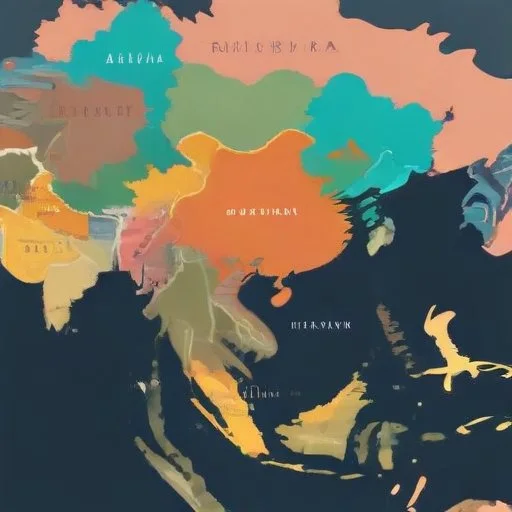
The Cold War Era: A Geopolitical Context
The formation of SAARC in 1985 took place against the backdrop of the Cold War, with the United States and the Soviet Union vying for influence in the region. This geopolitical context had a significant impact on the organization's early years, with member states navigating complex relationships with the two superpowers.
Despite these challenges, SAARC managed to maintain its independence and remain committed to its core principles of regional cooperation and mutual understanding.
Economic Cooperation: A Path to Prosperity
One of the most significant outcomes of SAARC's formation has been the promotion of economic cooperation among its member states. The organization has implemented various initiatives aimed at increasing trade, investment, and economic integration in the region.
These efforts have led to a significant increase in intra-regional trade, with member states benefiting from increased economic cooperation. The SAARC region has emerged as one of the fastest-growing economic regions in the world, with a combined GDP of over $2.5 trillion.

Celebrating Diversity: SAARC's Cultural Impact
SAARC's cultural initiatives have played a vital role in promoting cultural understanding and exchange among its member states. The organization has launched several programs aimed at preserving and promoting the region's rich cultural heritage.
The SAARC Cultural Centre in Sri Lanka and the SAARC Literature Festival in India are just a few examples of the organization's efforts to celebrate the diversity of cultures, languages, and traditions in the region.
Challenges and Opportunities: SAARC's Political Landscape
SAARC has faced several challenges in its pursuit of regional cooperation, including political differences and conflicts among its member states. Despite these challenges, the organization has continued to play a vital role in promoting peace, security, and stability in the region.
The organization's commitment to democratic values and principles has helped to promote political stability and cooperation among its member states. SAARC's leadership has played a crucial role in resolving regional conflicts and promoting a culture of peace and understanding.