


South Sudan's declaration of independence on July 9, 2011, marked a triumphant end to Africa's longest-running civil war, a bloody conflict that had ravaged the region for over five decades. As the world watched, the people of South Sudan celebrated their hard-won freedom, birthing a new nation born out of resistance and struggle.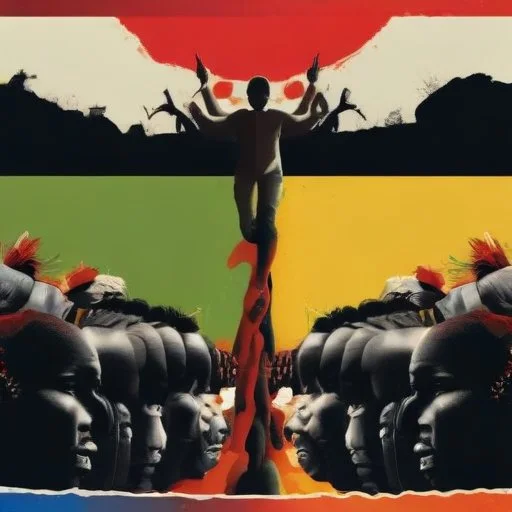
The roots of South Sudan's desire for independence can be traced back to the colonial era, when the British Empire drew arbitrary borders that merged the largely Christian and animist south with the Arab and Muslim north. The 1955-1972 civil war and the subsequent 1983-2005 conflict only fueled the south's desire for self-determination, culminating in the Comprehensive Peace Agreement (CPA) signed in 2005.
South Sudan's independence has significant implications for the region and the world at large. The creation of a new nation has:
South Sudan's independence has had a profound impact on the country's cultural and social landscape. The new nation has:
For many South Sudanese, independence is a deeply personal and emotional experience. As one resident of Juba, the capital city, recalled:
"I remember the day of the referendum, people crying tears of joy, hugging each other in the streets. It was a moment of pure freedom."
South Sudan's independence serves as a beacon of hope for marginalized communities worldwide. As Salva Kiir Mayardit declared in his inaugural address:
"Today, we mark not only our independence, but also our commitment to building a nation founded on justice, equality, and freedom."
This historic moment will continue to inspire generations to come, a testament to the power of resistance and the human spirit's unrelenting quest for freedom and self-determination.
Historians have long debated the role of colonialism in shaping the trajectory of South Sudan's independence movement. Some argue that the arbitrary borders drawn by the British Empire created an unnatural union between the north and south, sowing the seeds of future conflict. Others contend that the introduction of Christianity and Western education laid the groundwork for a more modern, democratic state.
However, recent scholarship has highlighted the agency of South Sudanese actors in shaping their own destiny. From the early rebellions against British rule to the guerrilla warfare of the Sudan People's Liberation Army, South Sudanese leaders played a crucial role in forging their own path to independence.
Revisiting the Histories of South Sudan's IndependenceIn re-examining the historical record, we find that the standard narrative of South Sudan's independence – one of successive rebellions and wars – obscures the complexity and diversity of experiences within the region. By centering the voices and perspectives of South Sudanese actors, we can gain a more nuanced understanding of the social, cultural, and political forces that shaped the country's journey to independence.
Dr. John Garang: The Visionary Behind South Sudan's Independence
Dr. John Garang, the founder of the Sudan People's Liberation Army (SPLA), is often characterized as a charismatic leader who single-handedly spearheaded South Sudan's independence movement. While this portrayal is not entirely inaccurate, it oversimplifies the complexity of Garang's vision and leadership.
In reality, Garang's leadership was marked by a deep commitment to democracy and social justice. He envisioned a united Sudan, where all citizens – regardless of ethnicity, religion, or region – could participate equally in the country's governance. Only later, in the face of entrenched opposition from the Sudanese government, did he come to support the idea of an independent South Sudan.
A Leader's LegacyGarang's untimely death in 2005, just months after the signing of the Comprehensive Peace Agreement, has left a lasting impact on South Sudan's politics and society. His legacy continues to inspire generations of South Sudanese, who see him as a symbol of resistance and self-determination.
The Cultural Renaissance of South Sudan
Independence has brought about a cultural renaissance in South Sudan, as the country seeks to reclaim and celebrate its diverse cultural heritage. From the vibrant traditional music and dance of the Dinka and Nuer tribes to the rich oral traditions of the Shilluk people, South Sudan's cultural landscape is a testament to its remarkable diversity.
The establishment of a national museum in Juba, the capital city, has provided a focal point for the preservation and promotion of South Sudanese culture. The museum's collection includes rare artifacts, artworks, and historical objects that showcase the country's rich cultural history.
Furthermore, the South Sudanese government has launched initiatives to promote cultural exchange and collaboration with other African nations, recognizing the importance of cultural diplomacy in fostering regional cooperation and solidarity.
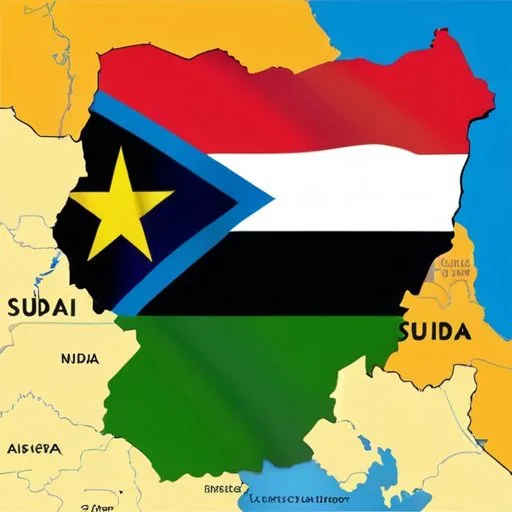
South Sudan's Economic Potential: Opportunities and Challenges
South Sudan's independence has opened up new economic opportunities for the country, with its vast oil reserves and untapped natural resources providing a potential engine for growth. The government has implemented policies aimed at diversifying the economy, investing in infrastructure, and promoting private sector development.
However, the country still faces significant economic challenges, including a heavy dependence on oil exports, limited institutional capacity, and a lack of basic infrastructure. Furthermore, the ongoing conflict in neighboring Sudan has disrupted trade and investment flows, making it critical for South Sudan to strengthen its economic relationships with other regional partners.
Despite these challenges, South Sudan's economic potential remains vast, with the country poised to become a key player in regional economic integration and cooperation.
South Sudan's Independence in a Global Context
South Sudan's independence must be understood within the broader context of global geopolitics. The country's emergence as a sovereign state has implications for regional and international relations, particularly in the areas of security, trade, and development.
The international community has played a significant role in shaping South Sudan's independence, with the United States, China, and regional organizations like the African Union providing crucial diplomatic and financial support. In return, South Sudan has become an important partner in regional security initiatives and international efforts to combat terrorism and transnational organized crime.
Looking ahead, South Sudan's independence will be shaped by its relationships with neighboring countries, regional blocs, and global powers, as it navigates the complex web of international relations and seeks to assert its sovereignty and influence on the world stage.