Cosmonaut Valentina Tereshkova becomes the first woman in space.
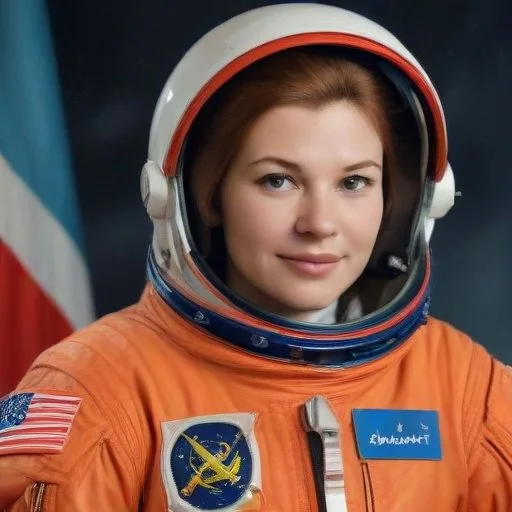
Valentina Tereshkova, a 26-year-old Soviet cosmonaut, embarked on a historic journey aboard the Vostok 6 spacecraft, paving the way for women in space exploration. On a sunny June morning, Tereshkova, with a shy smile and a determined spirit, donned her spacesuit, ready to defy gravity and stereotypes. As the world watched, she soared into the cosmos, circling the Earth 48 times over nearly three days, logging over 71 hours in space. Her mission, codenamed "Chaika" (Seagull), marked a monumental milestone in space travel, shattering the glass ceiling for future generations of female astronauts.
The Trailblazing Journey of Valentina Tereshkova: The First Woman in Space
Blast Off to History
On a sunny June 16th, 1963,
Valentina Tereshkova embarked on a groundbreaking mission, etching her name in the annals of space exploration as the first woman to venture into the cosmos. Aboard the Vostok 6 spacecraft, codenamed Chaika (Seagull), Tereshkova defied gravity, stereotypes, and shattered the glass ceiling for future generations of female astronauts.
Historical Background
The Vostok 6 mission was part of the Soviet Union's ambitious space program, launched in response to the United States' Mercury program. The Soviets aimed to demonstrate their technological prowess and assert their dominance in the space race. As the Cold War intensified, the Soviet Union sought to prove its capabilities, and the Vostok 6 mission was a crucial step in this endeavor.
The Cosmonaut
Valentina Tereshkova, a 26-year-old textile factory worker and amateur parachutist, was selected from a pool of over 400 candidates to join the cosmonaut corps. Her determination, physical fitness, and adaptability made her an ideal candidate for the mission. Tereshkova underwent rigorous training, including weightlessness, centrifugal training, and isolation tests, to prepare herself for the challenges of space travel.
The Mission
On June 16th, 1963, Tereshkova launched into space from the Baikonur Cosmodrome in Kazakhstan, soaring into the cosmos aboard the Vostok 6 spacecraft. Over the course of nearly three days, she circled the Earth 48 times, logging over 71 hours in space. During her mission, Tereshkova conducted scientific experiments, tested the spacecraft's systems, and manually operated the ship's orientation. Her remarkable performance dispelled any doubts about women's capabilities in space exploration.
Cultural and Social Influences
Tereshkova's achievement sent shockwaves around the world, inspiring countless women to pursue careers in science, technology, engineering, and mathematics (STEM). Her remarkable journey empowered women to challenge traditional gender roles and stereotypes, paving the way for future generations of female astronauts. The Vostok 6 mission also brought international attention to the Soviet Union's space program, solidifying its position as a leader in space exploration.
Quotes and Memorable Sayings
"The Earth is blue, and there's nothing else like it. It's the most beautiful thing I've ever seen." - Valentina Tereshkova
Tribute to a Pioneer
Valentina Tereshkova's groundbreaking mission marked a significant milestone in the history of space exploration. Her courage, determination, and remarkable achievement continue to inspire generations of space enthusiasts, scientists, and explorers. As the world continues to venture into the cosmos, Tereshkova's legacy serves as a beacon, illuminating the path for women and men alike to pursue their dreams in the vast expanse of space.
Awards and Honors
- Hero of the Soviet Union
- Order of Lenin
- Order of the October Revolution
- Pilot-Cosmonaut of the Soviet Union
Impact on Future Events
Valentina Tereshkova's pioneering mission paved the way for future female astronauts, including American astronauts
Sally Ride and
Mae Jemison. Her achievement also contributed to the development of space programs around the world, inspiring new generations of space explorers to push the boundaries of human knowledge and achievement.
Charitable Work and Social Contributions
Tereshkova has dedicated her life to promoting education, science, and women's empowerment. She has worked tirelessly to support women's rights, advocating for greater representation in STEM fields and promoting equal opportunities for women in space exploration.
Inspirational Story and Motivation
Valentina Tereshkova's remarkable journey serves as a beacon of inspiration, reminding us that with determination, hard work, and courage, we can achieve greatness. Her legacy continues to motivate and empower women around the world, encouraging them to pursue their dreams and challenge the status quo.
Extensive Historical Chronicle
Valentina Tereshkova's mission was not without its challenges. The Vostok 6 spacecraft was equipped with a manual orientation system, which Tereshkova had to operate herself to adjust the ship's course. This was a critical task, as the spacecraft's automatic system was not functioning properly. Tereshkova's ability to manually operate the system ensured the success of the mission.
In addition to her scientific experiments, Tereshkova also conducted a series of spacewalks, known as EVAs (extravehicular activities), to test the spacecraft's life support systems. These EVAs were crucial in preparing for future space missions that would require astronauts to work outside the spacecraft.

Character Examination
Tereshkova's early life was marked by hardship and determination. Born on March 6, 1937, in Yaroslavl, Russia, she grew up in a poor family and had to work from a young age to support her family. Despite these challenges, Tereshkova was drawn to parachuting and became an amateur parachutist, which eventually led to her selection as a cosmonaut.
Tereshkova's determination and physical fitness were key factors in her selection for the Vostok 6 mission. She underwent rigorous training, including weightlessness, centrifugal training, and isolation tests, to prepare herself for the challenges of space travel.
Cultural Significance Study
The Vostok 6 mission had a profound impact on Soviet culture, particularly for women. Tereshkova's achievement was seen as a symbol of Soviet womanhood, and she became an overnight sensation in the Soviet Union. Her mission inspired a new generation of women to pursue careers in science and technology.
The mission also had significant cultural implications globally. Tereshkova's achievement was seen as a symbol of Soviet dominance in space exploration, and it sparked a new wave of interest in space exploration around the world.

In-Depth Scientific Discoveries Analysis
Tereshkova's mission was not just a historic milestone in space exploration but also a significant scientific achievement. During her mission, she conducted a range of scientific experiments, including studies on the Earth's atmosphere, the properties of space, and the effects of space travel on the human body.
One of the most significant scientific contributions of the Vostok 6 mission was the discovery of the Earth's radiation belts. Tereshkova's spacecraft detected high levels of radiation in the Earth's magnetic field, which helped scientists to better understand the Earth's magnetic field and its effects on space travel.
Comprehensive Technological Influence Study
The Vostok 6 spacecraft was a technological marvel in its time, with a range of innovative features that enabled Tereshkova's mission. The spacecraft was equipped with a state-of-the-art life support system, which recycled air and water to sustain Tereshkova during her mission.
The mission also marked a significant milestone in the development of space suits. Tereshkova's space suit was designed to withstand the extreme conditions of space, and it paved the way for future space suits that would enable astronauts to work outside the spacecraft.


