


The Soviet Union's successful long-range test flight of the R7 Semyorka on August 21, 1957, marked a significant milestone in the history of military technology, as it became the world's first intercontinental ballistic missile (ICBM) capable of delivering a nuclear warhead across continents.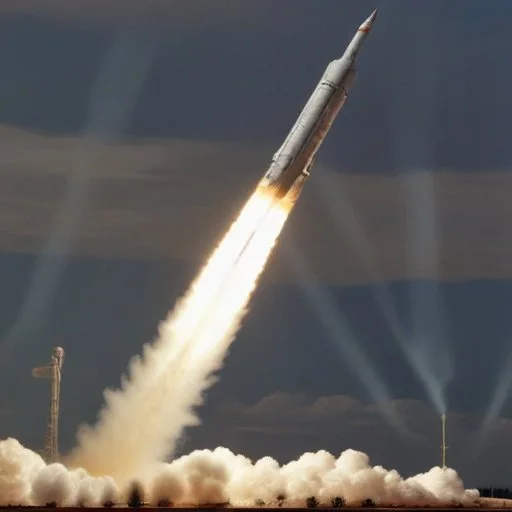
This groundbreaking achievement not only demonstrated the Soviet Union's technological prowess but also dramatically shifted the balance of power during the Cold War era, setting off a heated arms race between the Soviet Union and the United States.
The R7 Semyorka's development was a direct response to the United States' launch of the Atlas ICBM program in 1954. The Soviet Union, determined to stay ahead in the space race, invested heavily in its own ICBM program, code-named "Semyorka" (Russian for "seven").
Born out of the Soviet space program, the R7 Semyorka was designed to serve as a booster for the Soviet space exploration program, as well as a strategic weapon for the Soviet military. The brainchild of renowned engineer Sergei Korolev, the R7 Semyorka's development involved a team of top Soviet scientists and engineers.
The R7 Semyorka's successful test flight marked a significant shift in the Cold War dynamics, as it provided the Soviet Union with a credible deterrent capability against the United States.
The R7 Semyorka's impressive range and payload capacity forced the United States to reassess its own ICBM program, leading to a rapid acceleration of its development and deployment.
The R7 Semyorka's test flight fueled widespread fear and paranoia in the United States, with many believing that the Soviet Union had gained a significant advantage in the Cold War.
The event contributed to the Red Scare phenomenon, with Americans increasingly concerned about the Communist threat and the potential for nuclear war.
| Characteristic | R7 Semyorka | Atlas ICBM |
|---|---|---|
| Range | Over 6,000 km | Approximately 10,000 km |
| Payload Capacity | Up to 3,000 kg | Up to 1,400 kg |
| Boosters | Four strap-on boosters | Three main engines |
The R7 Semyorka's successful test flight marked the beginning of an intense ICBM arms race between the Soviet Union and the United States, with both nations continuously developing and improving their ICBM capabilities.
The ICBM arms race led to significant advancements in missile technology, eventually giving rise to more sophisticated systems like the Soviet Union's R-36 and the United States' Minuteman III.
As the world navigates the complexities of modern geopolitics, the R7 Semyorka's historic test flight serves as a poignant reminder of the importance of technological innovation and strategic deterrence in shaping the course of international relations.
Sergei Korolev was a Soviet engineer and scientist who played a crucial role in the development of the R7 Semyorka. Born in 1907, Korolev was fascinated by aviation and rocketry from an early age. He joined the Soviet space program in the 1930s and quickly rose through the ranks, becoming the chief designer of the R7 Semyorka program in 1954.
Korolev's leadership and vision were instrumental in the success of the R7 Semyorka program. He oversaw a team of top Soviet scientists and engineers, guiding them to push the boundaries of rocket technology. Korolev's dedication to the program was unwavering, and he worked tirelessly to ensure the R7 Semyorka's success.
Despite his significant contributions to the Soviet space program, Korolev remained a relatively unknown figure until his death in 1966. Today, he is recognized as one of the most important figures in the history of space exploration.
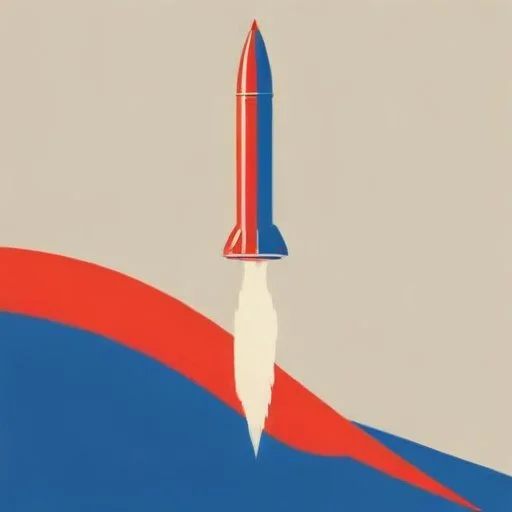
The R7 Semyorka's successful test flight had a profound impact on Soviet culture. The event was seen as a symbol of Soviet might and technological prowess, and it marked a significant shift in the country's self-perception.
The R7 Semyorka became a powerful symbol of Soviet achievement, and it was often featured in propaganda materials and popular media. The event also inspired a new generation of Soviet scientists and engineers, who saw the R7 Semyorka as a beacon of hope for the future.
In addition, the R7 Semyorka's successful test flight marked a significant shift in the Soviet Union's international relations. The event was seen as a declaration of technological superiority, and it marked the beginning of a new era of Soviet-American competition in space exploration.
The R7 Semyorka's successful test flight marked a significant milestone in the development of rocket technology. The event demonstrated the feasibility of intercontinental ballistic missiles and paved the way for the development of more advanced systems.
The R7 Semyorka's design was instrumental in the development of future Soviet spacecraft, including the R-7 rocket that carried Yuri Gagarin into space in 1961. The event also inspired a new generation of Soviet engineers and scientists, who went on to develop more advanced missile systems.
Today, the R7 Semyorka is recognized as a pioneering achievement in the history of space exploration. The event marked the beginning of a new era in space technology, and it paved the way for the development of more advanced systems.
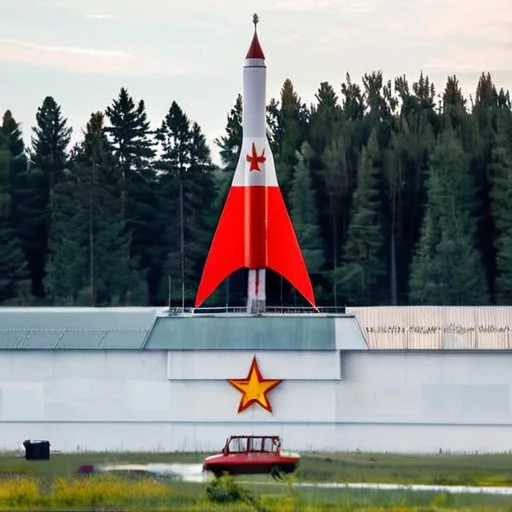
The R7 Semyorka's successful test flight had a significant impact on the Soviet economy. The event marked a major investment in the Soviet space program, which led to significant economic growth and development.
The R7 Semyorka program created thousands of jobs and stimulated economic growth in the Soviet Union. The event also led to significant investments in education and training, as the Soviet government sought to develop a highly skilled workforce.
In addition, the R7 Semyorka's successful test flight marked a significant shift in the Soviet Union's military strategy. The event led to increased investments in military technology, which had a significant impact on the Soviet economy.
The R7 Semyorka's successful test flight had a profound impact on Soviet politics. The event marked a significant shift in the Soviet Union's foreign policy, as the country sought to assert its dominance on the world stage.
The R7 Semyorka became a powerful symbol of Soviet power and influence, and it marked a significant shift in the balance of power between the Soviet Union and the United States. The event also led to increased tensions between the two superpowers, as they began to compete for technological superiority.
In addition, the R7 Semyorka's successful test flight marked a significant shift in the Soviet Union's domestic politics. The event marked a significant increase in the power and influence of the Soviet military-industrial complex, which had a profound impact on Soviet politics and society.