


In the annals of Spanish history, few events have sent shockwaves as intense as the 1981 coup attempt, when Lieutenant Colonel Antonio Tejero stormed the Spanish Congress of Deputies and held the country's government hostage. This brazen act of rebellion, which took place on February 23, 1981, remains a watershed moment in Spain's transition to democracy.
Following the death of Francisco Franco in 1975, Spain embarked on a journey of democratization, with King Juan Carlos I at the helm. The country was grappling with the complexities of transition, as the old authoritarian regime was dismantled and a new democratic system was being constructed. It was amidst this backdrop of uncertainty that Tejero's coup attempt unfolded.
Antonio Tejero, a staunch right-winger and a high-ranking officer in the Spanish Civil Guard, was the architect of the coup. His ideology was rooted in a deep-seated resentment towards the democratic system, which he perceived as weak and inefficient. Tejero saw himself as a savior, destined to restore authoritarian rule and impose order on a nation in chaos.
On that fateful evening, Tejero and a contingent of approximately 200 armed Civil Guards stormed the Spanish Congress of Deputies, while it was in session. The parliamentarians, including Prime Minister Adolfo Suárez, were taken hostage as Tejero demanded the government's surrender. The country was thrown into a state of paralysis, with the world watching in disbelief as the drama unfolded.
As the situation teetered on the brink of collapse, King Juan Carlos I stepped in, determined to salvage democracy. From the Zarzuela Palace, the King summoned top military officials, urging them to crush the rebellion and restore order. The monarch's decisive intervention proved pivotal, as key military units began to defect from Tejero's cause, paving the way for the eventual collapse of the coup.
The failed coup attempt had far-reaching consequences for Spain:
In the aftermath of the coup, public opinion swung decisively against Tejero and his cohorts. The event galvanized the nation, as citizens from all walks of life rallied behind the government and the monarchy. However, controversy still surrounds the role of certain high-ranking military officials, who were accused of tacitly supporting the rebellion.
"I would never have believed that such a thing could happen in Spain," declared King Juan Carlos I, in a televised address to the nation, hours after the coup's defeat.
The failed coup attempt serves as a poignant reminder of the fragility of democracy and the importance of vigilance in defending it. Today, Spain boasts one of the most robust and resilient democratic systems in the world, thanks in no small part to the nation's collective resolve to reject authoritarianism and uphold democratic principles.
The following timeline highlights key events surrounding the 1981 Spanish coup attempt:
The 1981 coup attempt stands as a testament to the power of democracy and the unwavering commitment of a nation to its values. It serves as a beacon of hope, reminding us that even in the darkest of times, the collective will of the people can overcome even the most daunting challenges.
The failed coup attempt of 1981 has been the subject of intense historiographical debate, with scholars diverging on its significance and implications for Spanish democracy. Some historians view the event as a pivotal moment in Spain's transition to democracy, while others argue that it was a mere blip on the radar of Spanish history.
One school of thought posits that the coup attempt was a desperate last stand by authoritarian forces, seeking to reclaim power in the face of democratization. This perspective emphasizes the bravery and pragmatism of King Juan Carlos I, who navigated the crisis with aplomb.
In contrast, revisionist historians argue that the coup was a symptom of deeper structural issues within Spanish society, including economic stagnation and social unrest. According to this view, the event served as a catalyst for much-needed reforms and a renewed commitment to democratic principles.

Antonio Tejero, the mastermind behind the 1981 coup attempt, remains an enigmatic figure, shrouded in mystery and controversy. Born in 1932, Tejero was a career military officer, known for his charismatic leadership and unwavering commitment to authoritarian values.
Despite his authoritarian leanings, Tejero was not without his contradictions. He was a complex figure, driven by a mix of ideological conviction and personal ambition. His motivations for staging the coup remain unclear, with some attributing it to a desire for power, while others see it as a genuine attempt to restore order to a chaotic nation.
The 1981 coup attempt occurred against the backdrop of a rapidly shifting geopolitical landscape. The Cold War was still raging, with the United States and Soviet Union vying for influence in Europe and beyond.
In this context, the coup attempt can be seen as an attempt by reactionary forces to push back against the rising tide of democracy and liberalization in Spain. The event was closely watched by Western powers, who feared the implications of a successful coup for regional stability.
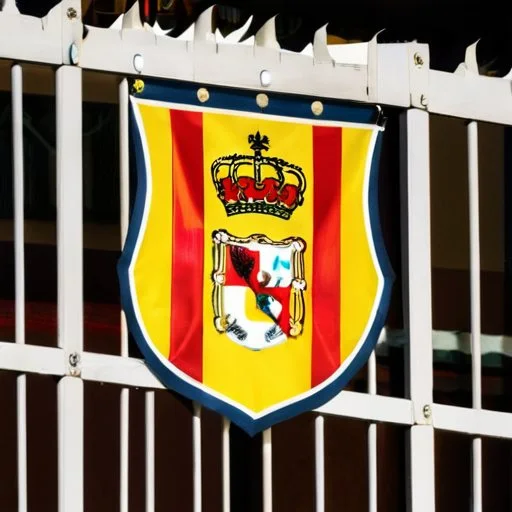
The failed coup attempt had a profound impact on Spanish culture, galvanizing a nation and inspiring a new wave of artistic expression. The event served as a catalyst for social change, mobilizing citizens to demand greater freedoms and democratic participation.
In the aftermath of the coup, Spanish artists, writers, and musicians responded with a surge of creative output, exploring themes of democracy, freedom, and national identity. The event also inspired a new generation of Spaniards to engage in politics and activism, shaping the country's cultural and political landscape for decades to come.
The 1981 coup attempt marked a turning point in the political career of King Juan Carlos I, cementing his reputation as a champion of democracy and a guardian of Spanish stability. The monarch's decisive intervention, rallying the military to crush the rebellion, was widely praised by observers and analysts alike.
The event also underscored the critical role of the monarchy in Spain's democratic transition, highlighting the institution's ability to adapt and evolve in response to changing circumstances. The king's leadership during the crisis demonstrated the importance of institutional continuity and stability in times of turmoil.