


After four decades of iron-fisted rule under General Francisco Franco, Spain embarked on a new era of freedom and democracy with the ascension of King Juan Carlos I. This pivotal moment marked the end of a fascist dictatorship, ushering in a modern, democratic state that would honor the principles of liberty, equality, and human rights.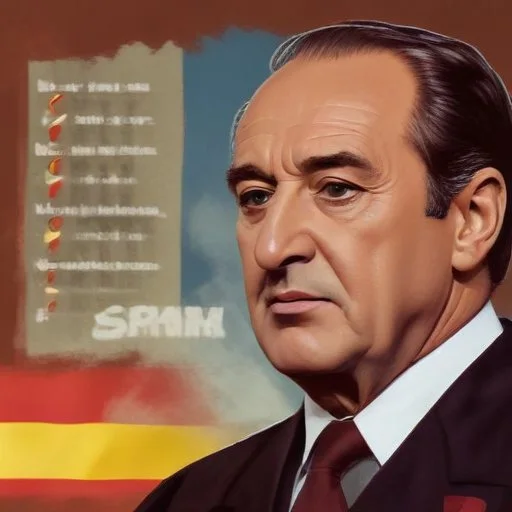
The Spanish Republic, established in 1931, was short-lived. The outbreak of the Spanish Civil War in 1936 led to Franco's rise to power, and by 1939, he had established a fascist regime that would last for nearly 40 years. Franco's regime was marked by censorship, repression, and human rights abuses, earning Spain international condemnation.
Following Franco's death in 1975, King Juan Carlos I, who had been groomed by Franco as his successor, began to subtly undermine the fascist regime. Through strategic alliances and clever maneuvering, the King paved the way for a peaceful transition to democracy, earning the nickname "Juan Carlos the Democrat."
In 1978, a new constitution was approved, enshrining democratic principles and human rights. This milestone marked a significant departure from Spain's authoritarian past, as the country took its first steps towards a modern, democratic state.
The transition to democracy had a profound impact on Spanish culture and society. The country experienced a creative boom, with a proliferation of art, literature, and music. The once-repressed Catalan and Basque cultures flourished, and women's rights and LGBTQ+ rights began to take center stage.
The transition was not without its challenges. Franco's loyalists, known as the "bunker," resisted change, and the King faced criticism for his perceived role in perpetuating the fascist regime. However, the King's commitment to democracy ultimately prevailed, and he earned widespread admiration for his leadership.
In an interview, King Juan Carlos I recalled the weight of responsibility he bore during the transition, saying, "I knew that I had to take a risk, to take a step forward, and to lead the country towards democracy."
Spain's transition to democracy served as a beacon of hope for other countries struggling to shake off authoritarian regimes. The King's deft leadership and strategic alliances provided a blueprint for peaceful transitions, inspiring countries like Portugal, Greece, and Chile to follow suit.
The King's role in Spain's democratic transition earned him numerous international awards, including the Prince of Asturias Award for International Cooperation and the Charlemagne Prize.
The end of fascist rule in Spain marked a new era of freedom, inspiring generations to come. As one Spanish citizen reflected, "We finally felt like we could breathe, like we could be ourselves without fear of repression."
Spain's democratic dawn signaled a brighter future, one where liberty, equality, and human rights would be cherished and protected. As the country looks to the future, it remembers the lessons of its past, ensuring that the mistakes of history will not be repeated.
Born in 1938, Juan Carlos I was the grandson of King Alfonso XIII, who had been forced into exile after the establishment of the Spanish Republic in 1931. From a young age, Juan Carlos was groomed for leadership, and his early life was marked by a series of tutelages and mentorships that would shape his future role in Spanish politics.
Under the watchful eye of General Francisco Franco, Juan Carlos received a military education and was trained in the art of statecraft. However, it was his mother, Queen Victoria Eugenia, who instilled in him a sense of duty and a commitment to democracy.
Despite being handpicked by Franco as his successor, Juan Carlos's own political leanings were decidedly more liberal. He was known to have secretly met with opposition leaders and to have plotted a democratic transition even before Franco's death.
The transition to democracy had a profound impact on Spanish culture, as the country experienced a creative explosion in the late 1970s and early 1980s. Censorship was lifted, and artists, writers, and musicians were finally able to express themselves freely.
The visual arts saw a surge in innovation, with the rise of artists like Joan Miró, Antoni Tàpies, and Eduardo Chillida. Literature also flourished, with writers like Manuel Vázquez Montalbán and Antonio Muñoz Molina gaining international recognition.
Music, too, played a significant role in this cultural renaissance, with the emergence of flamenco fusion and the rise of iconic singers like Joan Manuel Serrat and Victor Jara.
This cultural boom not only reflected the newfound freedom and creativity of the Spanish people but also helped to forge a sense of national identity and pride.
The transition to democracy in Spain was marked by a series of delicate negotiations and compromises between the old regime and the emerging democratic forces. King Juan Carlos I played a crucial role in brokering these deals, using his unique position to bring together erstwhile enemies.
The so-called "Pact of Forgetting" was one such compromise, where both sides agreed to put aside past grievances and focus on building a new, democratic Spain. This pact was instrumental in preventing a return to authoritarian rule and paved the way for a peaceful transition.
The new constitution, approved in 1978, was another example of this spirit of compromise. It balanced the demands of different regions and political groups, creating a framework for governance that was both democratic and inclusive.
The end of fascist rule in Spain was part of a larger movement towards democratization in Southern Europe. Portugal, Greece, and Italy were all undergoing similar transitions, as authoritarian regimes gave way to democratic governments.
This wave of democratization was, in turn, influenced by global events, including the Cold War and the rise of human rights as an international norm. The United States, in particular, played a significant role in supporting democratic transitions in Europe, seeing them as a bulwark against Soviet expansion.
Spain's transition, therefore, was not only a domestic affair but also part of a broader global trend, with the country playing a key role in shaping the course of European politics and contributing to the expansion of democracy worldwide.
The transition to democracy in Spain has been the subject of intense historiographical debate, with different interpretations emerging about the role of key figures, the dynamics of power, and the implications of the new constitution.
One such debate centers on the role of King Juan Carlos I, with some historians viewing him as a visionary leader who guided the country towards democracy, while others see him as a convenient figurehead for a transition that was driven by other forces.
Another area of contention is the legacy of Franco's regime, with some arguing that it was a fascist dictatorship, while others see it as a form of authoritarian nationalism. These debates reflect the complexity of the transition and the ongoing struggle to come to terms with Spain's past.