


On a fateful day in August 1977, Steve Biko, a 30-year-old anti-apartheid activist, was arrested at a police roadblock in King Williams Town, South Africa. What was meant to be a routine stop would ultimately prove to be a fatal encounter, as Biko would succumb to the injuries sustained during his arrest, sending shockwaves throughout the nation and beyond.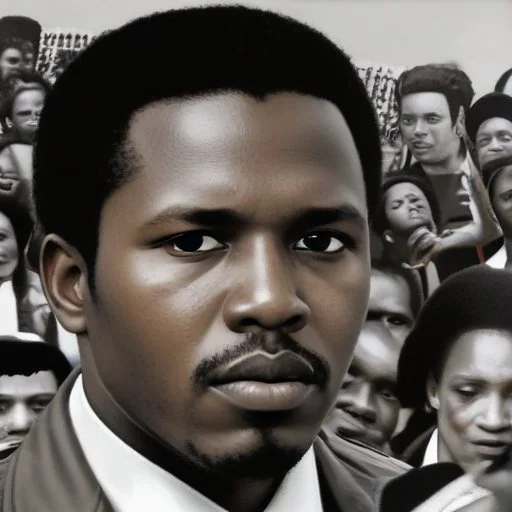
Steve Biko was no stranger to the harsh realities of apartheid. As a founding member of the Black Consciousness Movement, he had dedicated his life to fighting against the systemic oppression of black South Africans. His passion and conviction had earned him a reputation as a formidable opponent of the regime, and his words inspired a generation of young black men and women to stand up against their oppressors.
The Terrorism Act No. 83 of 1967 was a draconian law designed to silence dissent and crush opposition to the apartheid government. Under its provisions, the authorities were granted sweeping powers to detain, interrogate, and punish anyone deemed a threat to national security. It was under this very act that Biko was arrested, and would ultimately pay the ultimate price.
The events of that fateful day are still shrouded in controversy. What is known is that Biko was arrested at a police roadblock, and subsequently subjected to physical and psychological torture. The extent of his injuries was only revealed after his death, when an inquest revealed that he had suffered severe head injuries, likely as a result of a brutal beating.
The news of Biko's death sent shockwaves throughout South Africa and beyond. Protests and demonstrations erupted across the country, as people from all walks of life condemned the brutal actions of the apartheid regime. The international community was also galvanized into action, with world leaders and human rights organizations condemning the regime's actions.
Steve Biko's death was a turning point in the struggle against apartheid. His sacrifice inspired a new generation of activists to take up the mantle of resistance, and his legacy continues to inspire people around the world to stand up against oppression and fight for human rights.
Biko's life and legacy have inspired numerous cultural and artistic works, including films, books, and music. His story has also been immortalized in the iconic song "Biko" by Peter Gabriel, which has become an anthem for human rights activism around the world.
Steve Biko's death marked a turning point in the struggle against apartheid. The international outrage and condemnation that followed his death helped to galvanize the anti-apartheid movement, and paved the way for the eventual dismantling of the apartheid regime in the early 1990s.
In conclusion, Steve Biko's arrest and subsequent death at the hands of the apartheid regime was a pivotal moment in South African history. His sacrifice will never be forgotten, and his legacy continues to inspire people around the world to stand up against oppression and fight for human rights.
The cultural impact of Steve Biko's life and death was felt far beyond the borders of South Africa. His story inspired a generation of artists, musicians, and writers to create works that reflected the struggles and triumphs of the anti-apartheid movement.
In the world of music, Peter Gabriel's iconic song "Biko" became an anthem for human rights activism, while in literature, Biko's story has been immortalized in numerous books, plays, and poems.
In film, the 1987 movie "Cry Freedom" told the story of Biko's friendship with Donald Woods, a liberal white journalist who helped to expose the brutality of the apartheid regime to the world.
Biko's cultural impact extends beyond the arts, too. His legacy has inspired a new generation of activists and leaders to stand up against oppression and fight for human rights, from Nelson Mandela to Malala Yousafzai.
Steve Biko's death had a profound impact on the political landscape of South Africa. The international outcry that followed his killing helped to galvanize the anti-apartheid movement, leading to increased pressure on the apartheid regime to reform.
In the aftermath of Biko's death, the UN Security Council passed Resolution 417, condemning the apartheid regime and calling for the release of all political prisoners.
The news of Biko's death also reached the desk of US President Jimmy Carter, who would go on to impose economic sanctions on South Africa in 1977.
As the international community began to turn its back on the apartheid regime, the writing was on the wall: the days of apartheid were numbered.
Steve Biko was more than just an activist – he was a husband, a father, and a friend to many. Born into a poor family in King William's Town, Biko's early life was marked by tragedy, including the death of his father when he was just four years old.
Despite these challenges, Biko was a bright and curious student, going on to study medicine at the University of Natal.
It was during his time at university that Biko became involved in the anti-apartheid movement, eventually co-founding the Black Consciousness Movement.
Biko's personal life was marked by a deep commitment to his family and community, and his sacrifice will never be forgotten.
The apartheid regime's brutal treatment of Steve Biko was just one example of its ruthless suppression of dissent. The regime's clampdown on opposition was characterized by a network of informants, secret police, and torture chambers.
In the 1970s, South Africa was a key player in the Cold War, with the apartheid regime receiving support from Western governments eager to counter the spread of communism.
Despite this support, the apartheid regime was increasingly isolated on the global stage, with the UN declaring apartheid a "crime against humanity" in 1973.
The geopolitical context of the time helped to create a perfect storm of oppression, but it also laid the groundwork for the international outcry that would follow Biko's death.
Steve Biko's story has been retold and reinterpreted by historians and scholars over the years, but what do we really know about this pivotal figure?
One of the greatest challenges in understanding Biko's life and legacy is the lack of primary sources. Many of the documents and records from the time period have been lost or destroyed.
Despite these challenges, historians have pieced together a narrative of Biko's life using oral histories, newspaper articles, and other secondary sources.
As historians continue to uncover new evidence and reinterpret existing sources, our understanding of Steve Biko's life and legacy will only continue to grow.